


Book An
Appointment
Lorem ipsum dolor sit amet, consectetur adipiscing elit, sed do eiusmod tempor incididunt ut labore et
Our Services
Table of Contents
- Understand What You’re Dealing With: Private Line vs. Municipal Main
- Step 1: How to Shut Off the Main Water Supply Immediately
- Step 2: What to Do When a Water Pipe Bursts: Immediate Actions
- Step 3: Protect Your Home and Document Damage
- Step 4: Understanding Main Water Line Repair Cost and Timeline
- Step 5: How Long Does Water Line Repair Take and What to Expect
- Why Professional Help Matters for a Main Water Line Break
- Prepare Now: Prevention and Accessibility
- Frequently Asked Questions
Last Updated: October 21, 2026
Understand What You’re Dealing With: Private Line vs. Municipal Main
A main water line break occurs when the pipe carrying water from the municipal supply to your home ruptures or develops a significant leak. The key distinction is whether the break sits on your property or belongs to the city. This matters because your response and liability differ dramatically.
If water pools in your yard or your water pressure suddenly drops, you likely have a private service line break. The municipal main serves your entire neighborhood. When it breaks, multiple homes lose water simultaneously, and you’ll see city crews working in the street.
Private line breaks are your responsibility to repair. Municipal main breaks fall to the water utility. Understanding which you’re facing determines your next steps and who to call. We help homeowners quickly identify the break location so they can take appropriate action.
Step 1: How to Shut Off the Main Water Supply Immediately
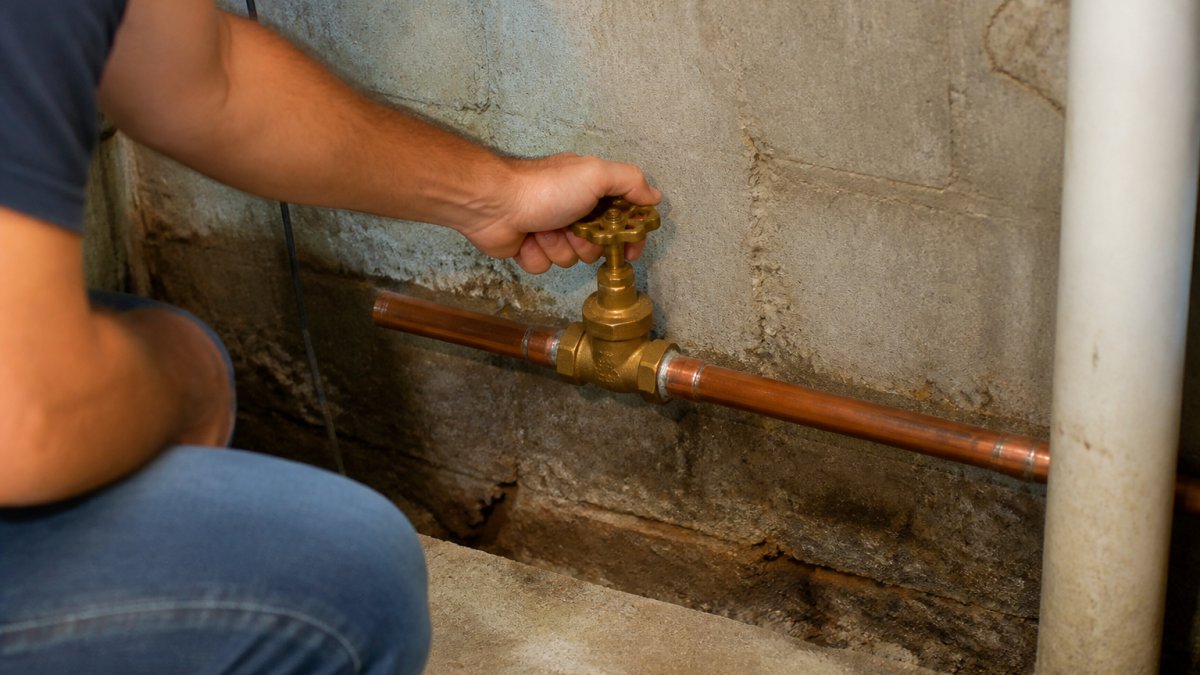
The first action in any water emergency is stopping the flow. Locate your main shut-off valve and turn it clockwise until it stops. This halts water entering your home and prevents further damage while you assess the situation.
Locating Your Main Shut-Off Valve
Your main shut-off valve sits where the water line enters your home. Common locations include:
- Basement or crawl space (most common)
- Utility room or laundry room
- Garage near the foundation
- Outside in a concrete box marked “water” (in warmer climates)
- Under the kitchen sink or in a cabinet
The valve looks like a knob or lever handle attached to a copper or PVC pipe. If you’ve never located it, find it now before an emergency strikes. Mark its location clearly so household members can find it in the dark.
What to Do If the Valve Is Stuck or Inaccessible
Stuck valves happen. Mineral buildup, corrosion, or years of disuse can freeze the handle in place. Don’t force it. Forcing a stuck valve can break it completely, leaving you unable to shut off water at all.
If the valve won’t budge, apply penetrating oil and wait 15 minutes. Try again gently. If it still won’t move, call a professional immediately. They have tools to work the valve safely.
If your shut-off valve is inaccessible or nonexistent, use local shut-off valves instead. These sit at individual fixtures like toilets, sinks, and washing machines. Turn off each one you can find. It’s slower than the main valve but reduces flow significantly.
Step 2: What to Do When a Water Pipe Bursts: Immediate Actions
Once you’ve stopped the main water supply, your next priority is protecting your home and limiting damage. A burst pipe in the first five minutes creates the most destruction. Speed matters.
Drain the System and Stop the Flow
After shutting off the main valve, water remains in your pipes under pressure. Open the lowest faucet in your home (usually a basement or ground-floor sink). This releases residual water and prevents it from leaking out of the break point.
Open all faucets throughout the house, starting high and moving low. This empties the system completely. Leave them open for several minutes. You should hear air rushing through the pipes as they drain.
If water is actively flooding, turn off electricity to affected areas if it’s safe to do so. Wet electrical systems create shock hazards. Move furniture, electronics, and valuables away from standing water immediately.
Address Safety Hazards: Electrical and Contamination Risks
Standing water and electricity are dangerous. If water is near outlets, light switches, or appliances, stay away. Call a licensed electrician to assess the situation before you touch anything.
Contaminated water poses health risks. If the break occurred near a sewer line or in contaminated soil, the water may carry bacteria or harmful chemicals. Avoid contact with floodwater. Wear gloves and wash your hands thoroughly after handling anything wet.
Mold growth begins within 24 to 48 hours in damp environments. Dry affected areas aggressively. Use fans, open windows, and dehumidifiers. Remove wet carpeting and padding promptly.
Step 3: Protect Your Home and Document Damage
Photograph everything before cleanup begins. Take close-up shots of water damage, wet materials, and affected areas. Document damaged belongings with photos and a written list. This protects your insurance claim.
Move wet items to a dry location if possible. Wet drywall, insulation, and flooring can be salvaged if dried quickly. Open walls to increase air circulation. Use a dehumidifier and fans continuously.
Contact your homeowner’s insurance company within 24 hours. Many policies cover water damage from burst pipes. Report the incident promptly and follow their documentation requirements. Keep receipts for any emergency cleanup or temporary repairs.
Step 4: Understanding Main Water Line Repair Cost and Timeline
Repair pricing for a private service line is driven by a handful of concrete factors, and knowing them helps you read an estimate instead of guessing. Most homeowners find the final bill lands somewhere between a few hundred dollars for a simple exposed-pipe repair and several thousand dollars when excavation, driveway replacement, or foundation work is involved. The spread is wide because the variables are wide.
What Drives the Price
- Depth and access. A line buried four feet down in open lawn is cheaper to reach than one under a concrete driveway, a mature tree’s root system, or a finished patio. Surface restoration (concrete, pavers, landscaping) is often a separate line item.
- Repair vs. replacement. A spot repair on a short section costs less than replacing the full run from the curb stop to the house. If the pipe is old galvanized steel or polybutylene, a plumber may recommend replacement because patching one leak often precedes the next.
- Pipe material. Copper, PEX, and PVC carry different material and labor costs, and matching the existing line matters for code compliance.
- Permits and inspection. Most jurisdictions require a permit for service-line work, and the permit and inspection fees are part of the total.
- Emergency and after-hours rates. Nights, weekends, and holidays typically carry a premium.
Reading the Estimate
Ask each plumber for a written estimate that separates labor, materials, excavation, restoration, and permit fees. A camera inspection of the line is a reasonable diagnostic step and helps confirm the break location before anyone digs; ask whether the inspection fee is credited toward the repair. Get at least two written estimates for anything beyond a minor repair.
Timeline Expectations
A straightforward repair on an accessible line often takes most of a working day. Jobs that require excavation, driveway cutting, or foundation work can run several days and may involve multiple visits: one to expose and repair, another to restore the surface. Weather matters; frozen ground slows digging and heavy rain can delay backfill. Ask your contractor how temporary water service will be handled while the line is down, and confirm the restoration scope in writing before work begins.
Document everything as you go: photographs of the break, the estimate, receipts for emergency cleanup, and any temporary repairs. Insurers commonly ask for this record, and having it ready speeds the claim without delaying the urgent safety steps above.
Step 5: How Long Does Water Line Repair Take and What to Expect
A simple repair might take four to eight hours. Complex jobs involving excavation, foundation work, or driveway replacement take several days. Some repairs require multiple visits.
The repair process typically involves:
- Excavating the damaged section (if buried)
- Removing the broken pipe
- Installing new pipe or patching the existing line
- Testing water pressure and quality
- Backfilling and restoring the surface
Weather affects timelines. Frozen ground slows excavation. Heavy rain can delay work. Plan for potential delays and discuss contingencies with your contractor before work starts.
You’ll be without water during repairs. Some plumbers can restore temporary water service while permanent repairs proceed. Ask about this option when getting estimates. Knowing your home will have water access speeds recovery considerably.
Why Professional Help Matters for a Main Water Line Break
Attempting DIY repairs on main water lines is risky. These pipes operate under significant pressure. Improper installation can cause leaks, contamination, or system failures.
Licensed plumbers carry insurance protecting you if something goes wrong. They understand local building codes and permit requirements. Unpermitted repairs can create problems when selling your home or filing insurance claims.
Professional plumbers have specialized equipment for locating breaks, excavating safely, and testing repairs. They work efficiently, minimizing disruption to your home and yard. They also handle permits and inspections required by local authorities.
Our experienced team responds to water emergencies with the tools and expertise to resolve them quickly. We handle everything from emergency shutoff guidance to complete pipe replacement, ensuring your water system is restored safely and correctly.
Prepare Now: Prevention and Accessibility
The best response to a water emergency is preventing one. Keep your main shut-off valve accessible. If it’s buried or blocked, have it relocated to an easy-to-reach spot. Label it clearly so everyone in your household knows where it is.
Insulate exposed pipes in unheated areas like basements, crawl spaces, and garages. Frozen pipes are a common cause of breaks. In winter, let faucets drip slightly during extreme cold. Moving water is less likely to freeze.
Have your water line inspected periodically. If your home is older or you’ve noticed pressure issues, a professional camera inspection can identify weak spots before they fail. Catching problems early prevents emergency situations.
Keep your plumber’s contact information posted in an accessible location. In an emergency, you won’t have time to search for numbers. Having a trusted professional’s information ready means faster response when minutes count.
Frequently Asked Questions
How long should it take to fix a water main break?
Repair time depends on the break’s location, severity, and whether it’s on your private service line or the municipal main. A simple repair may take a few hours, while a main water line break requiring excavation and replacement can take one to three days or longer. Emergency plumbers can often contain the immediate damage within the first hour, but full restoration requires professional assessment and may involve coordination with your water utility if the municipal main is affected.
What should I do immediately when a water pipe bursts in my home?
First, shut off the main water supply at your main shut-off valve to stop the flow. Next, drain the system by opening the lowest faucet in your home and any outdoor spigots. Move belongings away from the affected area and turn off electricity to that zone if water is near outlets or appliances. Document the damage with photos for your insurance claim, then contact a professional plumber. If the break is in your yard or foundation, you may also need to contact your water utility to determine if the municipal main is involved.
Who is responsible for repairing a broken main water line?
Responsibility depends on where the break occurs. If the break is on your property between the meter and your home (your private service line), you are responsible for repairs and the cost. If the break is on the municipal water main before your meter, your water utility is responsible. Contact your local water utility immediately to report the break and clarify responsibility. They can inspect the area and determine the break’s location, which is essential for insurance claims and determining who covers repair costs.
What causes a water line to break in a house?
Common causes include freezing temperatures that cause pipes to crack, age-related corrosion and material failure, high water pressure, tree root intrusion into buried lines, soil movement or settling, and ground shifting from earthquakes or heavy machinery. Copper and galvanized steel pipes deteriorate over time, especially in older homes. Knowing the cause helps prevent future breaks. A professional plumber can inspect your system and identify vulnerability points.
Water emergencies demand quick action and clear thinking. Knowing where your main shut-off valve is and how to use it puts you in control during a crisis. CW Plumbing is here when you need professional help. Book an appointment today to locate your main shut-off valve, inspect your water lines, or address any plumbing emergency.