


Best Ways to Fix Clogged Toilets: 2026 How-To Guide
Table of Contents
- What You’ll Need Before You Start
- How to Fix Clogged Toilets With a Plunger
- How to Unclog a Toilet Without a Plunger
- How to Use a Toilet Auger on Stubborn Clogs
- When to Call a Professional Plumber
- Preventing Future Toilet Clogs
- Conclusion
- Frequently Asked Questions
Last Updated: September 29, 2026
What You’ll Need Before You Start
A clogged toilet is one of the most common plumbing problems in any home, and most clogs clear with basic tools and patience. This guide from CW Plumbing walks through the best ways to fix clogged toilets, from a plunger to a toilet auger, plus the warning signs that mean it’s time to call a pro.
Before you start, gather a few supplies:
- A flange plunger or cup plunger
- Rubber gloves
- Old towels or a bucket
- Dish soap and hot water
- Baking soda and vinegar
- A toilet auger for stubborn clogs
Never keep flushing a clogged toilet to “see if it clears.” Each flush adds water, and the bowl can overflow onto your floor. If the water level is high, stop and let it settle first.
How to Fix Clogged Toilets With a Plunger
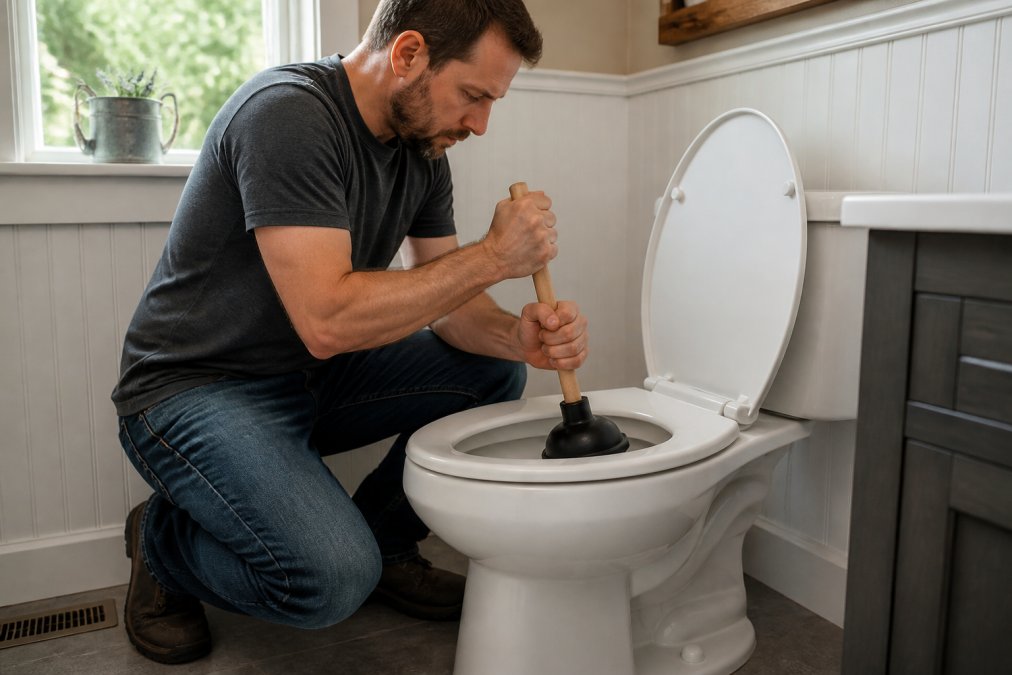
The plunger is the fastest first step and clears most simple clogs. The key is matching it to your toilet and sealing it properly for real suction.
Step 1: Match the Plunger to the Toilet Type
A flange plunger is best for toilets because its rubber flap folds out to fit the curved bowl opening. A cup plunger seals poorly and often just splashes water. On a narrow or oddly shaped bowl, check that the flange sits flat before you push.
Step 2: Seal the Flange and Break the Clog
- Place the plunger over the drain hole so the flange seals the opening.
- Push down slowly to force air out, then pull up fast to create suction.
- Keep a steady rhythm for 15 to 20 strokes.
- Watch the water level. If it drops, the clog is breaking up.
The push-and-pull motion matters more than force. Plunging too fast loses the seal and just moves water around instead of breaking the obstruction.
Add a little water to the bowl before plunging. Enough water to cover the plunger cup gives you a stronger seal and better suction.
How to Unclog a Toilet Without a Plunger
No plunger on hand? Two household methods often work on soft clogs, but which one you use depends on your toilet type and where the clog sits. Both rely on letting the clog break down over time rather than forcing it through.
First: Diagnose Before You Pour
Before adding anything to the bowl, figure out what kind of clog you have, the fix for a soft clog can make a hard obstruction worse.
- Water drains slowly but does drain: soft clog, likely paper or waste. Household methods work well.
- Water sits and does not move at all: hard obstruction or a blockage past the trapway. Skip the home remedies and go straight to an auger or a pro.
- Water rises when you flush, then settles: partial clog in the trapway. Household methods can work, but flush only once to test.
- Other drains in the home are slow or gurgling: the clog is in the branch line or main sewer, not the toilet. No bowl-level method will fix this.
Match the Method to Your Toilet Type
Not every toilet responds the same way. Low-flow and dual-flush models move less water per flush, so a clog a gravity-fed toilet would push through can sit in the trapway for hours.
- Older gravity-fed toilets (pre-1994): these use 3.5 gallons or more per flush and generate strong siphon action. Dish soap and hot water usually clears a soft clog in one pass.
- Low-flow toilets (1.6 gallons per flush, mandated since 1994): less water volume means the clog needs help breaking down before the flush can carry it. Give the soap and hot water a full 20 minutes, then add a bucket of hot water poured from waist height to add gravity assist.
- Dual-flush and high-efficiency toilets (1.28 gallons or less): the trapway is often narrower and the flush weaker. Baking soda and vinegar works better here than soap alone because the fizzing action mechanically disturbs the clog rather than relying on water volume.
Dish Soap and Hot Water Method
Squirt about a tablespoon of grease-cutting dish soap into the bowl, then pour in hot, not boiling, water. Boiling water can crack porcelain and soften the wax ring, turning a clog into a leak. The soap lubricates the trapway and the heat breaks down the clog. Wait 15 to 20 minutes, then flush once. If water rises instead of draining, stop and repeat the wait, do not flush again.
Baking Soda and Vinegar
Pour about a cup of baking soda into the bowl, followed by a cup of vinegar. The fizzing can loosen soft debris. Let it sit 30 minutes, then follow with hot water. It works best on light clogs and high-efficiency toilets where water volume alone is not enough, but won’t touch solid obstructions like toys, wipes, or mineral buildup.
If the Bowl Is Already Full
A bowl full to the rim changes the order of operations, adding soap or vinegar pushes water over the edge.
- Put on rubber gloves and lay old towels around the base.
- Turn off the water supply at the shutoff valve behind the toilet.
- Remove about a cup of water with a cup or a turkey baster and dump it into a bucket, never into a sink or tub.
- Now add your soap or baking soda and vinegar.
- Double-bag the waste and seal it before putting it in the trash. Wash your hands with soap and warm water for at least 20 seconds afterward.
Never mix baking soda and vinegar with a chemical drain cleaner. The reaction can splash caustic liquid out of the bowl and onto your skin or eyes. If you have already poured a chemical cleaner in, do not add anything else, ventilate the room and wait at least 30 minutes before flushing.
Soap, hot water, baking soda, and vinegar are safe for your pipes and septic system. Chemical drain cleaners are not, and they can damage older pipes and septic tanks. The Centers for Disease Control and Prevention recommends handwashing with soap and water for at least 20 seconds after any contact with wastewater.
CDC guidance on handwashing and household sanitation
How to Use a Toilet Auger on Stubborn Clogs
A toilet auger, also called a closet auger, is a flexible cable with a crank handle that reaches into the trapway. It’s the right tool when a plunger fails and the clog sits deeper in the pipe.
To use one:
- Put on gloves and place towels around the base.
- Feed the auger’s rubber sleeve into the bowl and down the drain.
- Crank the handle clockwise to push the cable forward.
- When you feel resistance, keep cranking to hook the clog.
- Pull the cable back slowly to remove the debris.
U.S. Environmental Protection Agency guidance on septic system care
When to Call a Professional Plumber
Some clogs point to a bigger problem in your sewer line, not just the toilet. Run a simple diagnostic before you pick up the phone.
The Two-Minute Diagnostic
- Check other fixtures. Run the bathroom sink, the tub, and a sink in another part of the home. If only the toilet is slow, the clog is local. If two or more fixtures drain slowly or gurgle, the blockage is in the branch line or the main sewer.
- Listen for gurgling. Gurgling from a tub or shower drain when you flush the toilet is a classic sign of a vent or main-line problem. A toilet-only clog does not cause gurgling elsewhere.
- Check the lowest fixture in the home. If a basement floor drain or laundry sink backs up when you flush, the main sewer line is blocked.
- Look at the water level in the bowl. If it rises and falls without draining, the clog is in the trapway. If it stays put, the clog is past the toilet.
Signs the Clog Is Local to the Toilet
- Only this toilet is affected.
- The clog clears with a plunger or auger, even if it comes back once.
- No gurgling from other drains.
- The bowl drains slowly but does drain.
A local clog that keeps returning usually means mineral scale buildup or a partial obstruction the auger can’t reach. A plumber can pull the toilet and clear the trapway directly.
Signs the Clog Is in the Main Sewer Line
Call a licensed plumber if you notice any of these:
- The clog returns within days.
- Multiple drains in the home are slow.
- You hear gurgling from other fixtures.
- Water backs up into the tub or shower.
- The toilet won’t flush even after augering.
- Sewage odor in the basement or yard.
- A wet or unusually green patch in the yard above the sewer line.
What to Do While You Wait
- Stop using all water in the home, no flushing, showers, laundry, or dishwasher.
- Do not pour chemical drain cleaner into any drain. It damages pipes and creates a hazard for the plumber.
- If sewage backed up into a tub or shower, do not run water to “flush it out”, it pushes waste further into the line.
- If the backup contains sewage, wear gloves and eye protection, disinfect with one part bleach to nine parts water, and wash your hands thoroughly afterward.
If sewage backs up into multiple fixtures, stop using water in the home. Running more water pushes waste further into the line and can cause a sanitary overflow. Contact your local health department if the backup reaches living space, many jurisdictions require professional cleanup after a Category 3 (black water) event.
What the Plumber Will Likely Do
- Auger the toilet first to rule out a local clog.
- Run a sewer camera through a cleanout to see the blockage directly.
- Hydro jet the line if the blockage is grease, roots, or scale. Hydro jetting uses water at 3,000 to 4,000 psi and is safe for most pipes but not for older clay or Orangeburg lines.
- Recommend repair or replacement if the camera shows a collapsed or root-invaded pipe.
Ask for the camera footage before approving any repair. A reputable plumber will show you what is in the line rather than describing it.
U.S. Environmental Protection Agency guidance on septic system care
Preventing Future Toilet Clogs
Prevention comes down to what goes in the bowl and how your system is maintained. A few habits cut repeat clogs:
- Flush only toilet paper and waste.
- Never pour grease, oil, or food scraps down any drain.
- Use a trash can for wipes, even “flushable” ones.
- Run hot water after each flush in low-flow toilets.
- Schedule a sewer line check if your home has older pipes or tree roots nearby.
CDC guidance on household hygiene and sanitation
Conclusion
A clogged toilet is stressful, but most clogs clear with a plunger, hot water, or an auger. The trick is knowing when a simple fix won’t cut it. If clogs keep returning or multiple drains slow down, the problem is in your sewer line, not the bowl.
Frequently Asked Questions
How to unclog a badly blocked toilet fast?
Start with a flange plunger, since the rubber flap creates a tighter seal than a flat cup model and works better on toilets. Add a cup of dish soap to the bowl and let it sit for 15 minutes, then plunge in short, firm strokes for 20 seconds before checking. If the water level stays high, use a toilet auger to reach past the trapway. A clog that survives both tools usually points to an obstruction in the sewer line, which needs a professional.
What is the strongest thing to unclog a toilet?
A toilet auger (also called a closet auger) is the strongest hand tool for a toilet clog. Its flexible cable reaches through the trapway and breaks up or retrieves solid debris that a plunger cannot move. Chemical drain cleaners are not stronger, they are riskier: they generate heat, can damage pipes, and create a splash hazard if the bowl is still full. For repeated clogs, professional hydro jetting clears the full pipe diameter rather than just poking a hole.
Why won’t my toilet unclog even with a plunger?
A plunger only works when it seals. If the flange does not cover the drain opening completely, water escapes and no suction builds. Other causes include overfilling the bowl (drain some water first so plunging does not overflow), a clog sitting deep in the trapway past the plunger’s reach, or a blockage in the sewer line itself. Switch to a toilet auger, and if the clog returns within weeks, have a camera inspection done to check for tree roots or pipe damage.
Is it safe to use chemical drain cleaners in a toilet?
Chemical drain cleaners work on some organic clogs but carry real risks. The chemicals can generate heat and pressure inside a sealed pipe, damage older pipes, and cause severe burns on contact. If the bowl is still full, plunging afterward can splash caustic liquid. Many manufacturers advise against using them in toilets at all. Mechanical tools like a plunger or auger are safer, and if a clog keeps coming back, a plumber can clear it without harsh chemicals.