


Book An
Appointment
Lorem ipsum dolor sit amet, consectetur adipiscing elit, sed do eiusmod tempor incididunt ut labore et
Our Services
Table of Contents
- Step 1: Identify What Keeps Causing Your Recurring Drain Clogs
- Step 2: Clear the Current Blockage the Right Way
- Step 3: Fix the Underlying Causes of Repeated Clogs
- Step 4: Install Drain Screens, Strainers, and Hair Catchers
- Step 5: Set a Drain Maintenance Schedule: How Often Should You Clean Your Drains?
- Step 6: Know the Signs of a Main Sewer Line Clog
- Step 7: Explore Professional Solutions: Benefits of Professional Hydro Jetting
- Step 8: Use the Best Enzyme Drain Cleaners for Maintenance
- Frequently Asked Questions
Last Updated: October 7, 2026
Step 1: Identify What Keeps Causing Your Recurring Drain Clogs
To stop recurring drain clogs, you have to know what causes them. A clog that keeps coming back is rarely random, something is still building up inside the pipe.
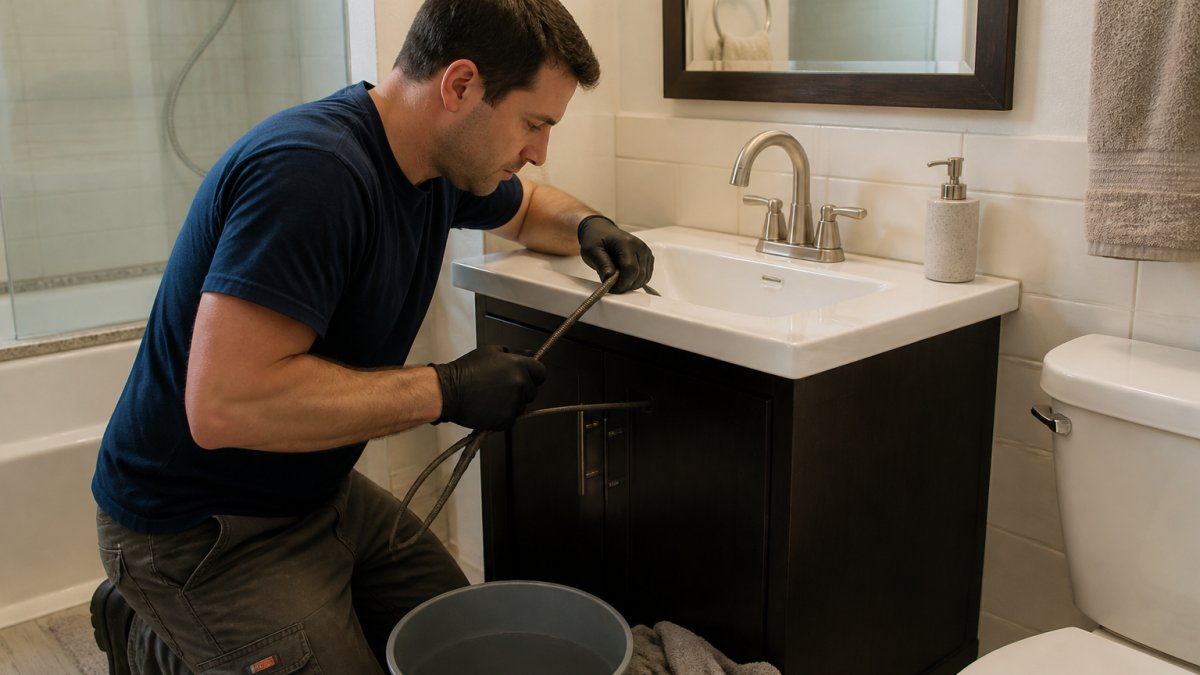
At CW Plumbing, we see the same pattern: most clogs come from a short list of culprits, and each leaves a layer that grabs the next bit of debris.
Hair Buildup in Bathroom Drains
Hair is the number one cause of bathroom drain problems. It tangles with soap and skin flakes into a sticky mass that clings to the pipe walls; every shower adds more. The result is a slow drain that becomes a full blockage, which is why the same shower drain clogs again and again.
Grease, Food Scraps, and Coffee Grounds in Kitchen Drains
Kitchen drains fail differently. Grease, oil, and fat go down as liquid and harden as they cool, coating the pipe like candle wax. Food scraps and coffee grounds stick to that coating, and hot water just pushes them deeper.
Never pour grease down the sink, even with hot water and soap. It cools and hardens further down the pipe, where you cannot reach it. That hidden layer is what feeds a repeated clog.
Step 2: Clear the Current Blockage the Right Way
Before you can prevent anything, clear what is already there. Start with the gentlest option and work up:
- Boiling water for light grease buildup in a kitchen sink
- A plunger for a partial blockage near the drain opening
- A drain snake or auger to pull out hair and debris
- A drain stopper removal to clean the pop-up assembly
Reaching for chemical drain cleaner first is a common mistake: it can damage older pipes, rarely fixes the cause, and leaves residue that harms the next tool you use. If a plunger and snake do not clear it, the blockage may be deeper, stop and call a professional.
Step 3: Fix the Underlying Causes of Repeated Clogs
Clearing a clog buys time; fixing the cause stops it from returning.
Two problems drive most repeated clogs: soap scum and hard-water minerals. Both build up slowly, so you notice only when the drain slows again.
Soap Scum and Product Residue
Soap scum is the chalky film left when soap meets minerals in water. Bar soap leaves far more residue than liquid soap. That film traps hair and skin cells, narrowing the pipe over time.
Switching to liquid soap and rinsing with hot water after each use slows this buildup. It does not remove what is already there.
Hard-Water Mineral Buildup
Hard water leaves calcium and magnesium deposits that form a rough crust inside the drainpipe; debris catches on it and starts a new clog.
A whole-home water softener reduces this problem at the source. For drains already affected, a professional can descale the line.
Run hot water for 30 seconds after every sink and shower use. It keeps soap scum and grease moving instead of settling. This one habit prevents more clogs than any store-bought product.
Step 4: Install Drain Screens, Strainers, and Hair Catchers
The cheapest fix is also the most effective: stop debris before it enters the pipe. Different fixtures need different tools:
| Fixture | Best Tool | What It Catches |
|---|---|---|
| Shower drain | Hair catcher | Hair, soap residue |
| Bathroom sink | Pop-up strainer | Hair, toothpaste grit |
| Kitchen sink | Basket strainer | Food scraps, coffee grounds |
| Tub drain | Mesh screen | Hair, lint |
Empty these catches into the trash, not the sink. A hair catcher that is never cleaned just becomes a new blockage.
Step 5: Set a Drain Maintenance Schedule: How Often Should You Clean Your Drains?
Most homeowners clean a drain only after it clogs. That is backwards. A simple schedule keeps drains clear, but it has to match the fixture and household, not just the calendar.
Why a Generic Schedule Fails
A kitchen sink and a shower drain do not accumulate debris at the same rate or from the same source.
Household size matters too: a two-person household with one shower may clean the hair catcher every two weeks, while a family of five sharing a bathroom may need every few days. Adjust the schedule below based on how quickly your strainers fill and drains slow.
Fixture-Specific Maintenance Tasks
Kitchen sink
- After every use: wipe grease and food scraps into the trash, not the sink. Run hot water for 15-30 seconds to move residual oils through the trap.
- Weekly: remove the basket strainer and scrub the underside with a bottle brush and dish soap. Food film builds on the strainer itself before it reaches the pipe.
- Monthly: fill the sink halfway with hot water, remove the strainer, and let it drain at full force to push loose debris through the trap.
Bathroom sink
- Weekly: pull the pop-up stopper and clean the hair and toothpaste grit wrapped around the pivot rod, the most neglected maintenance task in most homes.
- Monthly: flush with hot water for 30 seconds after removing the stopper.
- Quarterly: treat with an enzyme cleaner if the drain has a history of slow drainage.
Shower and tub
- Every few days to weekly: empty the hair catcher into the trash. A full catcher lets hair bypass it and enter the drain.
- Monthly: remove the strainer or hair catcher and scrub the drain opening with a stiff brush to dislodge soap scum at the rim.
- Quarterly: flush with hot water and treat with an enzyme cleaner if soap scum is visible on the strainer.
Toilet
- As needed: never flush wipes, paper towels, or feminine products, even if labeled flushable. These are a leading cause of main-line blockages.
- Annually: check the water level and flush valve for weak flushes that leave waste sitting in the bowl.
Seasonal Tasks
- Spring: After winter, check basement floor drains and drains in rarely used spaces. Dry traps allow sewer gas into the home; pour a quart of water down each floor drain to restore the seal.
- Fall: Before holiday cooking season, run an enzyme treatment on the kitchen drain and clear any grease buildup. Holiday cooking sends more fat and food down the sink than any other time of year.
- Winter: In freezing regions, insulate exposed pipes in crawl spaces and garages. A frozen pipe can crack and later cause a leak that masquerades as a clog.
Maintenance vs. Clog-Clearing: Know the Difference
Maintenance keeps a clear drain clear. It does not clear a blocked drain. If water is already standing in the sink or tub, you have moved past maintenance and into Step 2. Do not pour enzyme cleaner into standing water, it will dilute and sit without reaching the blockage.
Set a recurring reminder on your phone for the first weekend of each month. A two-minute strainer cleaning beats a two-hour emergency call. The homeowners who avoid repeat clogs are the ones who clean the catcher before it overflows, not the ones who buy the strongest chemical.
A Simple Tracking Method
Keep a note on your phone or a whiteboard under the sink. Log the date each time you clean a strainer, flush a drain, or treat with enzyme cleaner. After two months, you will see which fixture needs more attention. Most households find one drain, usually the shower or kitchen sink, accounts for most of their clog history.
Step 6: Know the Signs of a Main Sewer Line Clog
A single slow drain is usually local. When multiple fixtures act up, the cause is often deeper, but not always in the main line. Venting problems, partial main-line blockages, and even a failing septic system produce similar symptoms. Here is how to tell them apart.
Start With a Simple Diagnostic Test
Before you assume the worst, run this test:
- Run water in the lowest fixture in the home, typically a basement floor drain, laundry sink, or first-floor tub. If it drains normally while upstairs fixtures are slow, the blockage is likely local to the upstairs fixture.
- Run two fixtures at once, for example, the kitchen sink and the bathroom sink. If both slow down or back up simultaneously, the shared line between them is restricted.
- Flush a toilet while a nearby sink is running. If the sink gurgles or the toilet bubbles, the shared drain or vent is involved.
- Check the lowest drain in the home. If water backs up there when you run water upstairs, the main line is likely blocked downstream of that point.
Symptom-to-Cause Guide
| Symptom | Likely Cause | What It Means |
|---|---|---|
| One fixture slow, others fine | Local fixture clog | Hair, grease, or debris in that fixture’s trap or branch line |
| Two or more fixtures slow at the same time | Partial main-line blockage | Debris or grease restricting the shared drain line |
| Gurgling from toilets or tubs when other fixtures drain | Venting issue or partial blockage | Air cannot enter the pipe to replace draining water |
| Sewage smell in basement or yard | Main-line blockage or broken pipe | Wastewater is backing up or leaking underground |
| Water pooling around floor drain | Main-line blockage downstream | The lowest drain is the first to overflow when the main line is restricted |
| Toilet bubbles when sink drains | Vent or shared drain issue | Air is being pulled through the toilet trap |
| Multiple fixtures back up after heavy rain | Stormwater infiltration or root intrusion | Rainwater is entering the sewer line through cracks or joints |
Local Fixture Clog vs. Main-Line Blockage
A local fixture clog is confined to one drain, the trap or branch line feeding it. A plunger, snake, or stopper removal usually clears it. These clogs recur when the underlying buildup, hair, soap scum, grease, is not fully removed.
A main-line blockage affects multiple fixtures because they drain into the same pipe, downstream of where the branch lines meet. Plunging a single fixture will not clear it. Signs include:
- Two or more drains backing up at the same time
- Water backing up in the lowest fixture when you run water in a higher one
- Sewage smell in the basement, yard, or lowest floor
Venting Problems: The Often-Missed Cause
Every drain needs air behind it to flow. The vent stack, the pipe running up through the roof, lets air enter as water drains. If debris, a bird’s nest, or frost blocks it, drains slow and gurgle even though the drain line is clear.
Signs of a venting problem:
- Drains are slow but no standing water accumulates
- Gurgling from multiple fixtures
- Toilets flush weakly or bubble
A venting issue will not respond to snaking or hydro jetting. It requires a plumber to inspect the vent stack from the roof or use a camera to locate the obstruction.
When to Call a Professional
Call a licensed plumber if any of the following apply:
- More than one fixture is backed up at the same time
- Sewage is backing up into the home
- You smell sewage indoors or in the yard
What Professional Equipment Can and Cannot Do
- Snaking (drain auger): Cuts through or pulls out a blockage in a branch or main line. It does not remove grease or mineral buildup from pipe walls, so clogs can return.
- Hydro jetting: Uses high-pressure water to scour the full interior of the pipe, removing grease, soap scum, and mineral crust. It is the most thorough cleaning method for recurring clogs, but it cannot fix a collapsed or root-crushed pipe.
- Sewer camera inspection: Shows the inside of the pipe on video and identifies root intrusion, cracks, offsets, and bellies (sagging sections) that snaking and jetting cannot fix. It is the only way to confirm the pipe is structurally sound after clearing.
If a camera inspection reveals a broken, collapsed, or root-invaded pipe, the solution is repair or replacement, not more cleaning. That is where recurring clogs stop being a maintenance issue and become a repair project.
Multiple slow drains point to the main line, but gurgling without standing water often points to a vent. Test the lowest fixture first. If it backs up when you run water upstairs, the problem is downstream. If it drains fine but everything gurgles, check the vent. The wrong diagnosis leads to the wrong tool, and the clog comes back.
Step 7: Explore Professional Solutions: Benefits of Professional Hydro Jetting
When clogs keep returning, the pipe itself needs a full clean. The benefits of professional hydro jetting come down to one thing: it removes the buildup, not just the blockage.
Hydro jetting uses high-pressure water to scour the pipe interior, stripping grease, soap scum, and mineral crust from the walls.
The advantages are clear:
- Removes the full buildup, not just the center of the clog
- Cleans the pipe walls so debris has nothing to cling to
- Reaches deep into the main line where tools cannot go
For a clog that keeps coming back, this is often the long-term solution. At CW Plumbing, we use both hydro jetting and sewer camera inspection to find the cause and fix it for good.
Step 8: Use the Best Enzyme Drain Cleaners for Maintenance
The best enzyme drain cleaners share a few traits:
- Safe for pipes, septic systems, and the environment
- Designed for regular use, not one-time fixes
- Effective on organic matter like grease, soap, and food
They will not clear a full blockage. Use them on a schedule to keep organic film from building up between professional cleanings.
Homeowners who want a low-effort routine between professional cleanings, especially in kitchens and bathrooms with steady use.
Recurring drain clogs are a symptom, not the problem.
CW Plumbing is a family and locally owned business serving homes and businesses throughout Pinellas County.
Book an appointment with CW Plumbing and get a drain that stays clear, not one you clear every few weeks.
Frequently Asked Questions
What causes frequent drain clogs in a home?
Recurring drain clogs usually come from a mix of hair, soap scum, grease, food scraps, and hard-water minerals that build up on pipe walls. In bathrooms, hair and soap residue are the main culprits. In kitchens, grease and coffee grounds are common. If clogs return quickly, there may be a partial blockage or pipe damage deeper in the system. Identifying the specific cause in each drain is the first step to stopping the cycle.
Does pouring salt or baking soda down a drain actually work?
Baking soda and vinegar can help with minor, fresh clogs by loosening light buildup, but they won’t clear a solid blockage or remove years of grease and hair. Salt may act as a mild abrasive, but it doesn’t dissolve organic matter effectively. For recurring clogs, these home remedies are best used as maintenance between professional cleanings, not as a permanent fix. If water still drains slowly after trying them, the blockage is likely deeper.
When should you call a professional for recurring drain issues?
Call a professional if you’ve cleared the same drain more than twice in a few months, if multiple drains are slow at the same time, or if you notice sewage odors or gurgling sounds. These signs often point to a main sewer line clog or pipe damage that DIY tools can’t reach. A plumber can use a sewer camera to inspect the line and recommend hydro jetting or repairs to fix the root cause.
How does hard water contribute to drain buildup?
Hard water leaves behind calcium and magnesium deposits that stick to pipe walls and create a rough surface. Soap and debris catch on that rough surface, forming a sticky layer that narrows the pipe over time. This mineral buildup speeds up clog formation, especially in shower and sink drains. Installing a water softener or periodically flushing drains with hot water can slow the process, but professional descaling may be needed for heavy buildup.