


Book An
Appointment
Lorem ipsum dolor sit amet, consectetur adipiscing elit, sed do eiusmod tempor incididunt ut labore et
Our Services
Last Updated: October 23, 2026
Quick Summary
For stubborn tree roots, hydro jetting is generally better than snaking because it shears roots off the full pipe wall and flushes debris downstream, while a snake only bores a channel through the blockage. The hydro jetting vs snaking choice still depends on pipe condition, so a camera inspection should come first.
- A drain snake cuts a channel through roots, but roots pressed against the pipe walls stay put and grow back.
- A straightforward snake job often finishes in under an hour, while jetting can take one to three hours.
- Snaking is the safer call when the pipe is fragile, badly deteriorated, or already partially collapsed.
- Neither method repairs the entry point, so roots return without a spot repair, liner, or replacement.
- Inspection should precede either method when the line is old, has a history of backups, or roots are suspected.
Table of Contents
- Hydro Jetting vs Snaking: How the Two Methods Work
- Signs of Tree Roots in Your Sewer Line
- Hydro Jetting vs Snaking: Cost, Time, and Follow-Up
- Pipe Condition: When Each Method Is Safe
- Sewer Camera Inspection Cost and Why It Comes First
- Hydro Jetting Cost per Hour and What Drives the Bill
- After the Roots Are Cleared: Repair, Prevention, and Follow-Up
- Frequently Asked Questions
Hydro Jetting vs Snaking: How the Two Methods Work
Tree roots find sewer lines because they contain water, oxygen, and nutrients, and a hairline crack is all the invitation a root needs. The question of whether hydro jetting or snaking is better for clearing stubborn tree roots from sewer lines comes down to what each tool actually does inside the pipe. The honest answer is that they solve different problems.
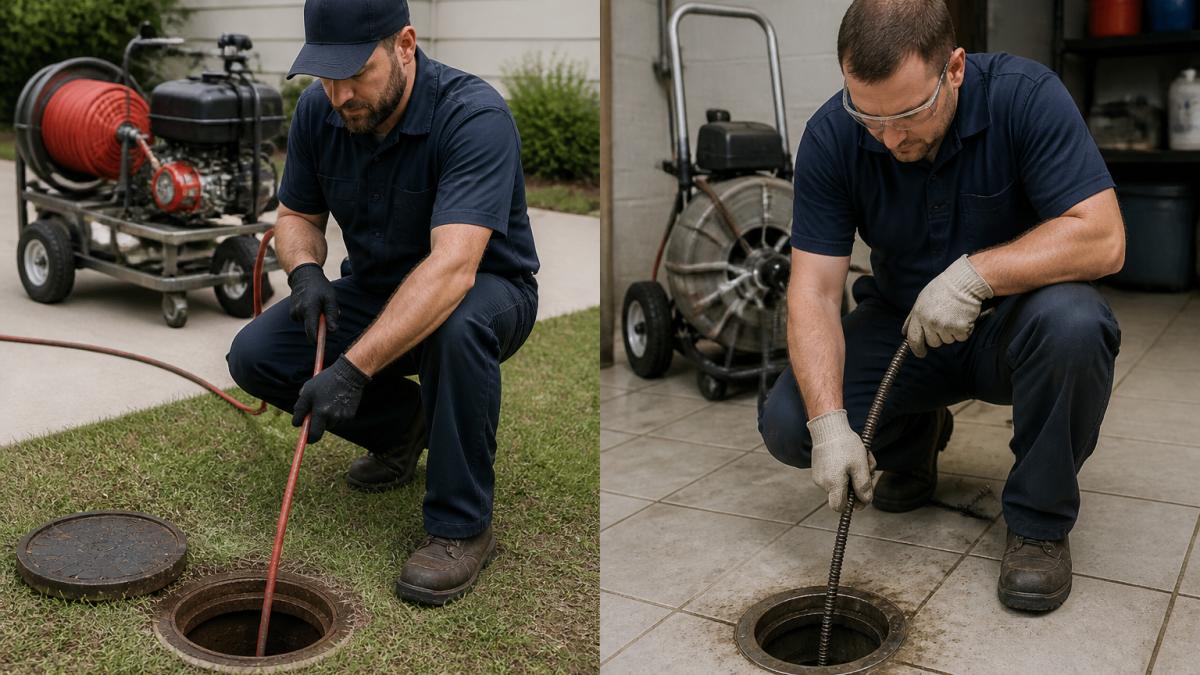
Hydro jetting vs snaking is a comparison between high-pressure water cleaning and mechanical cutting. A drain snake is a steel cable with a blade that bores a channel through a blockage. A hydro jetter is a hose with a forward-facing nozzle that blasts water at high pressure to scour the full pipe wall.
That difference decides everything that follows.
What a Drain Snake Actually Does to Roots
A drain snake, or sewer auger, cuts a hole through the root mass. It restores flow, but only through the channel it carved. Roots pressed against the pipe walls stay put, and they grow back into that opening.
Think of it as pruning a hedge with a single pass of shears. The hedge is still there. A root-cutting blade attached to the cable does more than a plain auger, but the reach is limited and the cleaning is local, not full-length.
What a Hydro Jetter Does to Roots
A hydro jetter attacks the whole circumference of the pipe. High-pressure water shears roots off the pipe walls, then flushes the debris downstream. It cleans grease buildup and soft blockage at the same time, which a cable cannot do.
The catch: jetting removes what grew into the pipe. It does not seal the crack the roots came through. For a deeper look at how the process handles root masses, read our guide on whether hydro jetting can remove tree roots.
Signs of Tree Roots in Your Sewer Line
Slow drains across multiple fixtures, gurgling toilets, and a sewer smell in the yard usually point to root intrusion. One clogged drain is often local. Several backing up at once suggests a problem in the sewer main.
Watch for these signs of tree roots in your sewer line:
- Repeated clogs in the same spot, often within a few months
- Sinks and tubs draining slowly in more than one room
- Gurgling sounds from toilets after water runs elsewhere
- Soggy patches or unusually green grass over the sewer line
- Backup that returns even after a plumber clears it
Recurring clog is the loudest signal. If a line clogs again three weeks after it was cleared, roots are the likely cause and a camera inspection should confirm it.
Hydro Jetting vs Snaking: Cost, Time, and Follow-Up
Neither method wins on price alone, because the real cost is the follow-up. Snaking usually costs less up front and takes less time on site. Hydro jetting costs more per visit but cleans more of the pipe, which often means fewer repeat calls.
| Factor | Drain Snaking | Hydro Jetting |
|---|---|---|
| Upfront cost | ||
| Time on site | Shorter, often under an hour for a simple clog | Longer, often one to three hours depending on line length and debris |
| Pipe coverage | Localized channel through the blockage | Full circumference of the pipe wall |
| Grease and soft debris | Left largely in place | Scoured and flushed downstream |
| Likely follow-up | Recurring clog at the same spot | Less frequent, but roots return without repair |
| Best for | Simple, localized clogs and fragile pipes | Root buildup, grease, and debris across a sound line |
What drives the price of snaking. The main variables are access (a cleanout versus pulling a toilet), the length of the cable run, whether a root-cutting blade is needed instead of a plain auger, and whether the clog is in a branch line or the main.
What drives the price of hydro jetting. Line diameter, access difficulty, the pressure and flow required, and the volume of debris to be flushed all affect the bill. A short run from an accessible cleanout is a different job from a long main with a dense root mass.
Time expectations. A straightforward snake job often finishes in under an hour. Jetting takes longer because the technician works the nozzle along the pipe in passes, then flushes debris and verifies with a camera.
Follow-up logic. If the same line clogs again within a few months, the first cleaning did not address the cause. A camera inspection after clearing tells you whether roots are still entering through a crack or joint.
Here is the part most homeowners miss: both methods are temporary solutions for root intrusion. Neither repairs the entry point. If you want longer-lasting results, the pipe itself has to be addressed.
Pipe Condition: When Each Method Is Safe
Pipe condition decides which method is safe, not preference. Hydro jetting sends high-pressure water against the pipe walls, and an old, cracked, or root-damaged line may not take it. Snaking is the safer call when the pipe is fragile, badly deteriorated, or already partially collapsed.
Start with material and age. Clay tile and older cast iron are the common concern in established neighborhoods. Clay joints shift and crack, and cast iron corrodes from the inside until the wall thins. Both can fail under jetting pressure. PVC and ABS in good condition generally tolerate jetting well.
Then assess condition. A camera inspection reveals cracks, offset joints, bellies, scale, and partial collapses. The decision rule is simple: if the pipe wall is compromised, do not jet it. A cable can open a path through a blockage in a fragile line with far less risk of turning a crack into a break.
When inspection must come first. Inspection should precede either method when the line is old, has a history of backups, has never been camera-inspected, or when the blockage is in the main rather than a branch.
Signs the line may be too far gone for either method. Sewage surfacing in the yard, repeated backups across the whole house, and a camera showing a collapsed section all point to repair or replacement rather than cleaning. In those cases, clearing the line is a temporary measure at best.
Jetting a deteriorated pipe can turn a partial crack into a full break, and that is a repair bill instead of a cleaning bill. If the line is old or has a history of backups, confirm condition with a camera before anyone runs a jetter through it.
When unsure, inspecting before cleaning protects the pipe and gives you the information to choose between a cleaning, a spot repair, and a longer-term fix.
Sewer Camera Inspection Cost and Why It Comes First
A sewer camera inspection is the step that makes the whole decision, and it should come before either method. The camera shows pipe material, the location of root intrusion, blockage severity, and whether the walls can survive jetting.
Sewer camera inspection cost varies with line length, access, and whether the inspection includes a locate. We do not quote a figure without seeing the property, because access alone can change the job. For a full breakdown of what drives the price and what the process reveals, see our sewer camera inspection cost guide.
If you are ready to schedule the inspection itself, our team provides sewer camera inspection in Pinellas County and can walk you through the footage.
Ask for the camera footage, not just a verbal summary. Watching the recording yourself makes the difference between a cleaning and a repair obvious, and it gives you a record if the same spot fails again.
Hydro Jetting Cost per Hour and What Drives the Bill
Hydro jetting cost per hour depends on line size, access difficulty, the equipment needed, and how much debris has to be flushed. A short run from an accessible cleanout is a different job from a long main with a tough root mass.
Pricing is quoted per job after inspection, not pulled from a flat rate sheet. To see how the service works, review our hydro jetting in Pinellas County page.
The cheapest clean is the one that does not come back. Paying for inspection and the right method once usually costs less than three repeat visits with the wrong one.
After the Roots Are Cleared: Repair, Prevention, and Follow-Up
Clearing roots is the start, not the finish. Roots return to the same entry point because the crack or joint that let them in is still open. The durable fix is a repair at that point, whether a spot repair, a liner, or full replacement.
Prevention matters too. Root treatments applied to the line slow regrowth, and a maintenance schedule catches new intrusion before it becomes a backup. For ongoing care, our sewer and drain service in Pinellas County covers routine maintenance and follow-up.
A final word on safety: sewage backups carry bacteria, and standing water near a cleanout should be treated as contaminated. If you see signs of a severe sewer-line failure, such as repeated backups across the whole house or sewage surfacing in the yard, stop using water and call a plumbing professional.
Tree roots in a sewer line will not fix themselves, and guessing between two methods wastes money. CW Plumbing is a family and locally owned business serving residential and commercial clients, with advanced hydro jetting and sewer camera inspection equipment and emergency service when a line fails. We inspect first, explain what the footage shows, and recommend the method the pipe can actually take. Book an appointment with CW Plumbing and get your sewer line diagnosed and cleared by a team that knows the difference.
Frequently Asked Questions
What is the best way to remove tree roots from a sewer line?
There is no single best method for every line. A root-cutting auger handles a localized clog and is gentler on fragile pipe, while hydro jetting scours the full pipe wall and flushes out the root mass and grease that roots cling to. The deciding factors are pipe material, age, and blockage severity. A sewer camera inspection before any work tells you which method fits, and it is the step that separates a fix from a repeat visit.
Can hydro jetting damage old sewer pipes?
It can if the pipe is already failing. High-pressure water is safe in sound clay, cast iron, PVC, and concrete lines, but it can worsen cracks, collapsed sections, and deteriorated joints. That is why a camera inspection comes first. If the line shows structural damage, a root-cutting cable or a targeted repair is the safer path. Ask your plumber to show you the camera footage before approving jetting on an older line.
How much does it cost to clear roots from a sewer line?
Pricing depends on line length, access, blockage severity, and whether a camera inspection is included, so ask for a quote rather than a ballpark. Hydro jetting typically carries a higher rate than snaking because of the equipment and time involved. Treat any quote as incomplete if it does not include an inspection, since clearing roots without seeing the pipe condition is how repeat clogs happen.
How often should you clear roots from sewer lines?
If roots have found a way in, they will return, often within a year or two, because the entry point at a joint or crack stays open. Many homeowners schedule an annual inspection and clearing once root intrusion is confirmed. The longer-term fix is repairing or lining the section where roots enter. Root treatments can slow regrowth, but they do not close the opening the roots came through.
