


Book An
Appointment
Lorem ipsum dolor sit amet, consectetur adipiscing elit, sed do eiusmod tempor incididunt ut labore et
Our Services
Table of Contents
- What Is a Sewer Line Inspection?
- Why a Sewer Line Inspection Matters Before Purchase
- Signs of Sewer Line Damage in a House
- What Happens During the Inspection Process
- Sewer Scope Inspection Cost and What Affects Price
- Who Pays for Sewer Inspection When Buying a Home
- What to Do If Issues Are Found
- Frequently Asked Questions
Last Updated: October 3, 2026
What Is a Sewer Line Inspection?
A sewer line inspection is a visual examination of your home’s main sewer line using a small camera attached to a flexible rod. The camera travels through your pipes and sends video back to a monitor, showing the condition of your plumbing infrastructure from inside.
A professional plumber inserts the camera through a cleanout access point, usually in your yard or basement, capturing tree roots, cracks, blockages, and pipe material without any digging.
The best time to get a sewer line inspection is before you buy a home. It costs far less than discovering a collapsed pipe after closing day. If you already own your home, get one if you notice slow drains, frequent backups, or sewage smells in your yard.
This inspection takes 30 to 60 minutes and reveals issues that would otherwise stay hidden until they become expensive emergencies.
Why a Sewer Line Inspection Matters Before Purchase
Buying a home is the biggest investment most people make. A damaged sewer lateral can cost tens of thousands to repair.
The sewer line belongs to you once you own the property. Everything from your home to the municipal connection is your responsibility.
Many buyers skip this step or assume the standard home inspection covers it.
An inspection during the purchase contingency period gives you leverage. If problems are found, you can:
- Negotiate with the seller to cover repairs
- Request a credit toward closing costs
- Walk away from the deal entirely
- Plan for repairs after you take ownership
Without an inspection, you’re buying blind. With one, you have data.
A sewer line inspection before buying a home is your only way to see what’s actually in those pipes. It costs a few hundred dollars and can save you from a $10,000+ repair surprise after closing.
Signs of Sewer Line Damage in a House
Certain warning signs indicate you should get a sewer line inspection before buying.
Common indicators of sewer line problems:
- Slow drains throughout the house (multiple fixtures, not just one)
- Frequent backups in toilets or showers
- Sewage smell in the yard or near the foundation
- Patches of extra-green grass (caused by sewage seeping into soil)
- Cracks in the foundation or settling in the house
- Gurgling sounds from drains when water runs elsewhere
- Lush vegetation growing over the sewer line route
A single slow drain usually means a local clog.
Pipe Material Risk Assessment
The material of your sewer line is one of the strongest predictors of whether problems exist. If you know what’s underground, you know what to watch for:
Orangeburg Pipe (1950s-1970s)
This tar-and-paper composite deteriorates from the inside out, becoming brittle and collapsing under ground or tree root pressure. Homes built 1950-1975 likely have Orangeburg. An inspection is nearly mandatory. Repair costs often exceed $15,000 because the entire line typically needs replacement.
Clay Tile (pre-1970)
Clay tile pipes are porous and attractive to tree roots.
Concrete (1960s-1980s)
Concrete pipes are susceptible to root intrusion at joints and ground settling cracks.
Age-Based Risk Framework
Regardless of material, home age is a strong predictor:
- Built before 1970: High priority for inspection. Original materials (clay, Orangeburg, cast iron) are now 50+ years old and at elevated failure risk.
- Built 1970-1985: Moderate priority. Materials may be transitional (late cast iron, early PVC). Inspection recommended if you see any warning signs.
- Built 1985-2000: Lower priority unless warning signs appear. PVC is standard and relatively reliable.
- Built after 2000: Lowest priority. Modern PVC and proper installation make problems rare. Inspect only if warning signs emerge.
Offset Joints and Other Structural Red Flags
Watch for offset joints, where two pipe sections meet at an angle instead of straight.
If you’re buying a home built before 1975, assume the sewer line material is high-risk (Orangeburg, clay, or old cast iron). A pre-purchase inspection is not optional, it’s essential due diligence. The inspection cost ($300-$500) is negligible compared to the repair bill you’ll face if the line fails after closing.
What Happens During the Inspection Process
Here’s the step-by-step process:
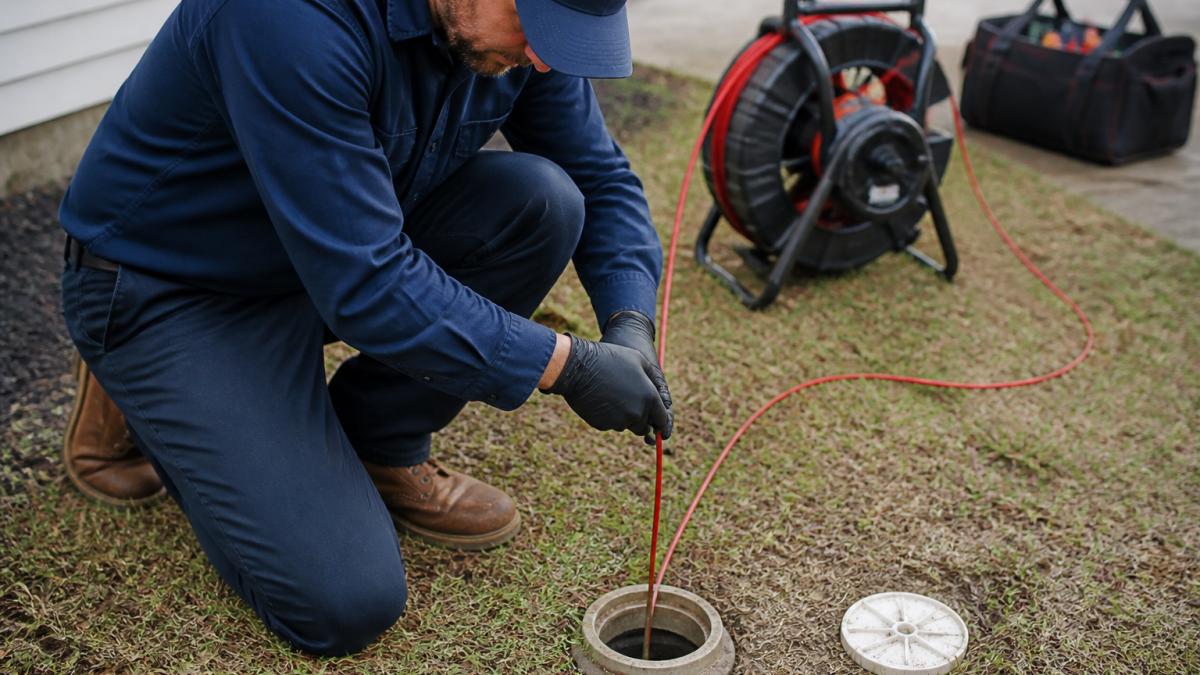
- Locate the cleanout, usually a capped pipe in your yard, basement, or crawl space.
- Insert the camera, a flexible rod with a small camera head and guide.
- Record the journey, sending video to a monitor in real time.
- Document findings, marking problem areas with distance measurements.
- Review results, explaining findings and implications.
The camera navigates bends and follows the line to the municipal connection. Most inspections take 30 to 60 minutes.
What the camera reveals:
- Root intrusion, Tree roots pushing through cracks or joints
- Blockages, Grease buildup, debris, or foreign objects
- Pipe collapse, Complete failure of the pipe structure
- Cracks and breaks, Damage from age, settling, or ground movement
- Structural damage, Separation of joints or misalignment
You receive a detailed inspection report with video footage to review, share with your real estate agent, or use to negotiate repairs.
If the inspection finds a collapsed section or major root intrusion, do not ignore it. These problems get worse over time and eventually cause sewage backups inside your home. Budget for repair estimates immediately after the inspection.
Sewer Scope Inspection Cost and What Affects Price
The cost of a sewer line inspection varies based on several factors.
Factors that affect the cost:
- Length of the line, Longer lines take more time to inspect
- Accessibility of the cleanout, If it’s buried or hard to find, inspection takes longer
- Condition of the pipes, Blockages or debris slow the process
- Location, Rural areas may cost more due to travel time
- Time of day, Emergency or after-hours inspections cost more
- Report complexity, Detailed video reports with measurements cost more than basic inspections
Contact a local plumber for a quote specific to your property.
A repair for a collapsed sewer line or major root intrusion can exceed $10,000. An inspection costing a few hundred dollars is one of the best investments during a home purchase.
Who Pays for Sewer Inspection When Buying a Home
This is a negotiation point, not a fixed rule. Here’s how it typically works:
The buyer usually pays for the inspection, as they control the decision to buy or negotiate.
The seller might pay if:
- Your real estate agent negotiates it as part of the offer
- The inspection reveals problems and the seller agrees to cover the cost as part of repairs
- Local custom in your area favors the seller covering it
- You make it a contingency of your offer
The cost is shared in some cases. For example, if the inspection finds damage, the seller might cover the inspection cost plus a portion of repairs.
Ask your real estate agent about local practice before making an offer.
If you’re buying in a market with older homes or known sewer issues, push for the seller to cover it. You have use during negotiation.
What to Do If Issues Are Found
An inspection report showing damage means you have information and options.
Step 1: Get a repair estimate and understand the timeline.
Repair timelines vary significantly by damage type:
- Root intrusion (minor): Hydro-jetting to clear roots takes 2-4 hours. Cost: $300-$800. Can be done before closing.
- Root intrusion (severe): Trenchless pipe bursting or excavation and replacement takes 3-7 days. Cost: $3,000-$15,000. May not finish before closing.
- Pipe collapse (partial): Trenchless repair or spot excavation takes 2-5 days. Cost: $2,500-$10,000. Tight timeline for closing.
- Pipe collapse (full line): Complete excavation and replacement takes 5-14 days depending on line length and yard access. Cost: $10,000-$25,000+. Unlikely to complete before closing.
- Offset joints or minor cracks: Spot repair or relining takes 1-3 days. Cost: $1,500-$5,000. Usually completable before closing.
- Blockage (grease, debris): Cleaning takes 1-2 hours. Cost: $150-$400. Can be done before closing.
Step 2: Understand insurance implications.
This is where many buyers get blindsided. Most homeowners insurance policies do not cover pre-existing sewer line damage. Here’s what you need to know:
What homeowners insurance typically covers:
- Sudden, accidental damage (a tree falls and ruptures the line)
- Damage from events like earthquakes or sinkholes (depending on your policy)
- Backup of sewage into the home (limited coverage, usually $5,000-$10,000)
What homeowners insurance does NOT cover:
- Pre-existing damage (anything that existed before you bought the home)
- Gradual deterioration (rust, corrosion, root intrusion over time)
- Damage from lack of maintenance
- Damage discovered during a pre-purchase inspection
**If you take a credit instead of requiring repairs, you’re accepting a known defect.
Step 3: Decide your next move.
You have three realistic options:
-
Ask the seller to repair it before closing. This is common and the cleanest solution. The seller hires a plumber, fixes the problem, and you close on a home with a repaired sewer line. Confirm the repair timeline aligns with your closing date. Get a final inspection video from the plumber before closing.
-
Negotiate a credit. The seller gives you money at closing to cover the repair. You hire a plumber after you own the home. This works if the repair is straightforward (hydro-jetting, minor root clearing) and can be done quickly. For major repairs (collapse, full line replacement), this is risky, you may discover additional damage once work begins, and costs can exceed the credit.
-
Walk away. If the repair is too expensive, the timeline is too tight, or the damage is severe, you can cancel the purchase. This is why the inspection happens during the contingency period. Use it.
Step 4: Plan the repair timeline and choose a plumber carefully.
If you take a credit or buy as-is, decide when repairs happen.
Not all plumbers handle sewer line repairs. Some specialize in trenchless technology (hydro-jetting, pipe bursting, pipe relining). Others use traditional excavation and replacement. Get multiple estimates, at least two, and ask about:
- Warranty on the repair work (typically 5-10 years for trenchless, 10-25 years for replacement)
- Whether they pull permits (required in most jurisdictions for sewer work)
- Timeline and whether they can work around your schedule
- Whether they provide a final inspection video
If repair requires excavation, confirm the plumber has located underground utilities (call 811 before digging).
If the inspection finds a collapsed section or major root intrusion, do not delay repair. These problems get worse over time and eventually cause sewage backups inside your home, creating health hazards and expensive water damage. If you’re taking a credit instead of requiring pre-closing repair, budget for repairs within 30 days of closing.
Known sewer damage found during inspection is not covered by homeowners insurance. If you buy the home without repair, you own the problem entirely. Factor full repair costs into your negotiation, and if the seller won’t repair or credit adequately, walk away. A $500 inspection that saves you from a $15,000 surprise is one of the best investments in a home purchase.
Frequently Asked Questions
Is a sewer line inspection worth it before buying a home?
Yes. A sewer line inspection reveals hidden problems with your plumbing infrastructure that could cost thousands to repair after purchase. The inspection identifies root intrusion, pipe collapse, blockages, and structural damage before you close on the property. This gives you negotiation leverage and prevents expensive surprises. Many buyers discover issues that reduce the home’s value or require immediate repairs, information that changes your offer price.
What are the most common red flags found during a sewer inspection?
The most common issues detected include root intrusion (tree roots breaking into pipes), offset joints (misaligned pipe sections), blockages from debris or grease buildup, pipe collapse from age or ground settling, and material degradation in older pipes like Orangeburg or clay tile. Video recording during the inspection shows exactly where problems exist. Older homes with clay tile or Orangeburg pipe are at higher risk for multiple issues.
How long does a professional sewer scope inspection take?
A typical sewer scope inspection takes 1 to 2 hours from start to finish. The plumber accesses the cleanout point, runs the camera through the lateral line to the municipal sewer connection, records the video, and reviews findings with you. If the plumber encounters blockages or needs to clear debris to see the full pipe, the process may take longer. You receive a detailed inspection report and video recording for your records.
What should I do if the inspection finds sewer line damage?
First, get a repair estimate from a licensed professional. Costs vary based on the problem, minor repairs may be inexpensive, but pipe collapse or trenchless repair can be significant. Use the inspection report as negotiation leverage with the seller. They may cover repairs, credit you at closing, or reduce the purchase price. If you’re buying in a real estate transaction, discuss findings with your real estate agent and lender before closing. Some repairs can wait; others require immediate attention.