


Book An
Appointment
Lorem ipsum dolor sit amet, consectetur adipiscing elit, sed do eiusmod tempor incididunt ut labore et
Our Services
Table of Contents
- How to Tell If Your Water Heater Is Failing
- Warning Signs Your Water Heater Is Failing
- Reduced Hot Water and Temperature Fluctuations
- Rising Energy Bills and Water Heater Life Expectancy
- Water Heater Repair vs Replace: Making the Right Call
- Average Cost to Replace a Water Heater
- Preventive Maintenance to Avoid Failure
- Frequently Asked Questions
Last Updated: October 2, 2026
How to Tell If Your Water Heater Is Failing
Signs your water heater is failing usually show up as strange noises, leaks, rusty water, or hot water that runs out fast. Catching these early can save you from a flooded floor and a cold shower.
The three signs that matter most are leaks, rusty water, and rumbling sounds. Any one of them means you should act soon, not wait.
Why Catching the Warning Signs Early Matters
Early action turns a disaster into a repair: a small leak caught today is a cheap fix, but next month it can mean a flooded room and a full replacement. Water heaters sit in garages, closets, and basements, where a slow leak can soak drywall, warp flooring, and grow mold before you notice.
DIY vs. Professional Assessment
Some checks you can do yourself; others need a licensed plumber. Here’s what you can handle on your own:
- Look for water pooling around the base
- Listen for popping or banging
- Check if hot water runs out faster than usual
- Test the temperature at the tap
- Note any rust-colored water
Call a pro for anything involving gas, wiring, or a leaking tank. Gas leaks and electrical faults are dangerous, and a cracked tank can’t be patched.
Never try to fix a gas line, a pilot light, or a leaking tank yourself. These are the jobs that cause house fires and carbon monoxide poisoning. Call a licensed plumber.
Warning Signs Your Water Heater Is Failing
Here are the warning signs to watch for, each pointing to a specific problem.
Unusual Noises: Rumbling, Popping, and Banging
Rumbling and popping come from sediment buildup at the bottom of the tank. Minerals settle there, the burner heats through the crust, and trapped water boils underneath.
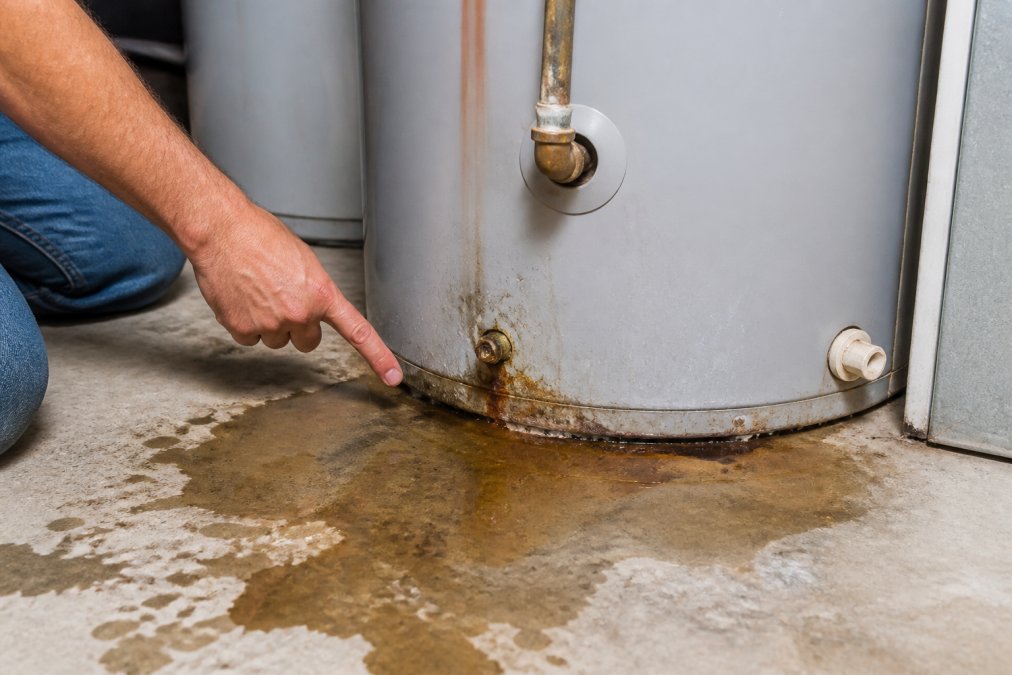
Water Leaks and Pooling Around the Tank
A leak is the clearest sign of trouble: water pooling at the base points to a cracked tank or loose fitting.
Discolored or Rusty Water
Rust-colored water from your hot tap points to corrosion inside the tank, where the steel lining has broken down. Rusty cold water usually comes from old pipes; hot-side rust almost always means the tank is dying. If you see rust, the anode rod is likely gone, once that rod is used up, the tank starts to rust from the inside.
Reduced Hot Water and Temperature Fluctuations
Hot water that runs out fast points to a failing heating element or heavy sediment, your hot water recovery rate has dropped.
Watch for these changes:
- Showers go cold halfway through
- The tap runs hot, then cold, then hot
- You wait longer for hot water to arrive
- The unit runs out after one load of dishes
Low Water Pressure and Varying Temperatures
Low water pressure on the hot side often means mineral deposits have clogged the lines; thermal expansion and a failing pressure relief valve can also cause pressure swings. Varying temperatures point to a bad thermocouple on gas units or a failing element on electric ones. Tankless units show different signs, no leaking tank, but watch for cold spots, error codes, and scale buildup in the heat exchanger.
Rising Energy Bills and Water Heater Life Expectancy
A jump in utility costs with no change in habits points to a struggling unit, as sediment and corrosion force it to burn more fuel for the same hot water.
| Sign | Likely Cause | DIY or Pro? |
|---|---|---|
| Rumbling or popping | Sediment buildup | Pro flush |
| Water at the base | Cracked tank or fitting | Pro |
| Rusty hot water | Corrosion, bad anode rod | Pro |
| Runs out fast | Sediment or bad element | Pro |
| High energy bills | Sediment, failing parts | Pro |
| Varying temperature | Thermocouple or element | Pro |
Write the install date on the side of your tank with a marker. When a plumber asks how old it is, you’ll know in seconds. That one detail often decides repair vs. replace.
Water Heater Repair vs Replace: Making the Right Call
Water heater repair vs replace is the decision that matters most once you’ve spotted a symptom. “If it’s old, replace it” isn’t enough, weigh age, failure type, repair bill, and what a new unit gets you.
The 50% Rule, Explained
The most common industry guideline: if a repair costs more than half the price of a comparable new unit, replace. A repair buys time, not a new lifespan. Run the math on the whole picture, not just the part:
- Repair cost, the part plus labor, plus any related work the tech finds while in there
- Remaining life, a unit at year 10 of an 8-to-12-year tank has little runway left
- Efficiency gap, a new standard tank or tankless unit typically uses less energy for the same hot water, so the old unit’s higher operating cost is part of the true repair price
- Risk of collateral damage, a tank that has already leaked once is more likely to leak again, and the next leak may hit finished space
A Simple Decision Matrix
| Situation | Age | Recommended Call |
|---|---|---|
| Bad heating element or thermocouple | Under 8 years | Repair |
| Sediment flush needed | Any age, no leak | Repair (flush) |
| Leaking tank body or rusted through | Any age | Replace, a cracked tank cannot be patched |
| Repair quote over half a new unit | Over 10 years | Replace |
| Repair quote over half a new unit | Under 8 years | Repair, then reassess |
| Repeated failures in 12 months | Over 10 years | Replace |
| Failing anode rod, no tank damage | Under 10 years | Repair (replace rod) |
Why “Leaking Tank = Replace” Is Non-Negotiable
A tank leaks because the steel liner has corroded through. No patch, weld, or sealant restores a pressure vessel from the inside, and any product claiming otherwise is a temporary fix that will fail, usually at the worst time. Fittings are different: a leak at the temperature pressure relief valve, the cold water inlet, or a threaded connection is often a gasket, nipple, or torque issue, and those are legitimate repairs.
The Hidden Costs That Change the Math
A repair quote is rarely final. Common add-ons include:
- A new pressure relief valve if the old one is seized or weeping
- Updated venting or a new expansion tank to meet current code
- New flexible connectors and shut-off valves if the old ones are corroded
- Permit and inspection fees where required
Ask for the quote to separate the repair from these extras. A $400 repair that becomes an $800 job changes the 50% math fast.
When to Get a Second Opinion
If a tech recommends replacement on a unit under 8 years old with no leak or rust, get a second quote. Legitimate reasons to replace a young unit exist, a cracked tankless heat exchanger, for example, but they’re the exception; repair is usually the right first move.
Before you decide, write down three numbers: the unit’s install date, the repair quote, and the price of a comparable new unit. If the repair is more than half the new price and the unit is past year 10, replace. If not, repair and revisit in a year.
Never authorize a repair on a tank that has already leaked from the body. No sealant, epoxy, or clamp holds on a pressurized tank. The next failure can release dozens of gallons into your home.
Average Cost to Replace a Water Heater
The average cost to replace a water heater depends on four things: unit type, tank size or flow rate, fuel source, and how hard the old unit is to reach and remove. Two homes on the same street can see quotes differ by hundreds for the same model because of install conditions.
What Drives the Price
Unit type. A standard tank-style heater is cheapest to buy and install. A tankless unit costs more upfront but lasts longer and may reduce standby energy loss. Heat pump water heaters sit in between on price and can cut operating cost in the right climate.
Common Add-Ons That Show Up on the Quote
- New pressure relief valve and discharge pipe if the old one doesn’t meet current code
- Expansion tank where required by local code or a closed plumbing system
- New flexible connectors, shut-off valve, and drain pan
- Updated venting for gas units, including proper clearance and material
- Permit and inspection fees
- Haul-away and disposal of the old unit
Ask for these as line items, a lump-sum quote hides where the money goes and makes bids hard to compare.
How to Compare Quotes Fairly
Get at least two written quotes, each listing:
- The exact make and model of the new unit
- The unit’s capacity and first-hour rating
- Whether the price includes the add-ons above
- The warranty terms on both parts and labor
- Whether a permit is included
A lower quote that excludes the expansion tank, permit, or haul-away isn’t actually lower. Compare total installed price, not the headline number.
Questions to Ask Before You Sign
- Is the new unit sized correctly for my household?
- Does the price include removal and disposal of the old unit?
- What warranty covers labor, and for how long?
- Will you pull the permit, or do I need to?
- What happens if the install reveals a problem you didn’t quote for?
Ask for the quote in writing with the model number on it. Then you can price the same unit yourself and see exactly what the labor and add-ons cost. That transparency is the fastest way to know if a bid is fair.
Don’t choose a quote on price alone. The cheapest bid often skips the permit, the expansion tank, or the code-required venting, and those omissions become your problem at inspection or at the next failure.
Preventive Maintenance to Avoid Failure
Routine care adds years to your unit. A yearly plumbing inspection catches small problems before they grow.
Here’s a simple maintenance plan:
- Flush the tank once a year to clear sediment
- Test the pressure relief valve every six months
- Check the anode rod every two to three years
- Inspect for leaks and rust monthly
- Keep the area around the unit dry and clear
Frequently Asked Questions
How do I know if my water heater needs replacing?
If your water heater is over 10 years old and you notice rusty water, leaks, or inconsistent temperatures, replacement is likely the better option. Repairing a unit that is already past its water heater life expectancy often leads to more breakdowns and higher utility costs. A plumbing professional can inspect the tank, heating element, and anode rod to give you a clear recommendation.
What is the most common cause of water heater failure?
Sediment buildup is the leading cause of water heater failure. Minerals settle at the bottom of the tank, forcing the heating element to work harder and causing overheating, cracking, and premature tank failure. Regular flushing removes sediment and helps prevent scale buildup, extending the life of your unit and keeping your water heater running efficiently.
Can a failing water heater cause a flood?
Yes. A leaking tank or a failed pressure relief valve can release several gallons of water per minute, causing significant property damage. If you see pooling water around the base of your water heater, turn off the cold water inlet and the emergency shut-off valve, then call a licensed plumber right away. Ignoring a small leak can lead to a full tank rupture.
Should I repair or replace my water heater?
The decision depends on age, repair cost, and severity of the issue. If your unit is under 8 years old and the problem is a thermocouple or heating element, repair is usually worth it. If it is over 10 years old, leaking from the tank, or the repair estimate exceeds half the average cost to replace a water heater, replacement is the more cost-effective choice.
A failing water heater rarely gives you a clean warning. It leaks, rumbles, and spikes your bills first. When those signs show up, you need a team you can trust. CW Plumbing is family and locally owned, with emergency service and experienced pros who handle everything from a bad thermocouple to a full replacement. We work with homes and businesses alike, and we’ll tell you straight whether to repair or replace. Book an appointment with CW Plumbing and get your hot water back.