


Book An
Appointment
Lorem ipsum dolor sit amet, consectetur adipiscing elit, sed do eiusmod tempor incididunt ut labore et
Our Services
Table of Contents
- How to Identify a Plumbing Emergency
- Steps to Take Before a Plumber Arrives
- Finding Your Water Shutoff Valve Location
- 24 Hour Plumber Availability in Pinellas County
- Emergency Plumbing Repair Cost and Transparency
- How to Choose and Verify an Emergency Plumber
- Plumbing Emergency Checklist for Homeowners
- Frequently Asked Questions
Last Updated: October 6, 2026
How to Identify a Plumbing Emergency
Emergency plumbing services address any water-related issue that poses an immediate risk to your home, health, or safety. The distinction matters because not every leak or clog requires emergency service, but some absolutely do.
The most common signs that require immediate attention include burst pipes, active water leaks inside walls or ceilings, sewer backups, no hot water in winter, and complete loss of water pressure.
Here’s what separates a call that can wait from one that cannot: Does the situation risk structural damage, health hazards, or significant water loss right now? A slow drip under the sink is annoying.
When in doubt, call. CW Plumbing’s team can assess your situation quickly and tell you whether you need emergency service or can schedule routine maintenance instead. The cost of ignoring a real emergency far exceeds the cost of addressing it immediately.
Steps to Take Before a Plumber Arrives
The minutes between discovering a plumbing problem and a technician arriving are critical. Your immediate actions can prevent thousands of dollars in damage.
First, locate and shut off your water supply. This is the single most important step. Stopping the flow of water stops the damage from getting worse.
Second, contain the water already present. Use towels, buckets, or a wet vacuum to collect standing water.
Third, document everything with photos and video. Take pictures of the damage, the affected areas, and the source of the problem if visible.
Fourth, do not attempt repairs yourself unless you have genuine plumbing experience. Temporary patches often fail and can make the problem worse. Let the professionals handle it.
Finally, turn off the gas supply if the emergency involves gas lines or if you smell gas. Leave the building immediately and call emergency services.
Finding Your Water Shutoff Valve Location
Understanding your water shutoff system is essential for any homeowner. Most homes have two shutoff points: the main shutoff valve and fixture-specific shutoff valves.
The main shutoff valve controls all water entering your home. It’s typically located in the basement, crawl space, or utility room near where the water line enters the building.
Fixture-specific shutoff valves sit behind individual sinks, toilets, and water heaters. These allow you to stop water to one fixture without affecting the rest of the house.
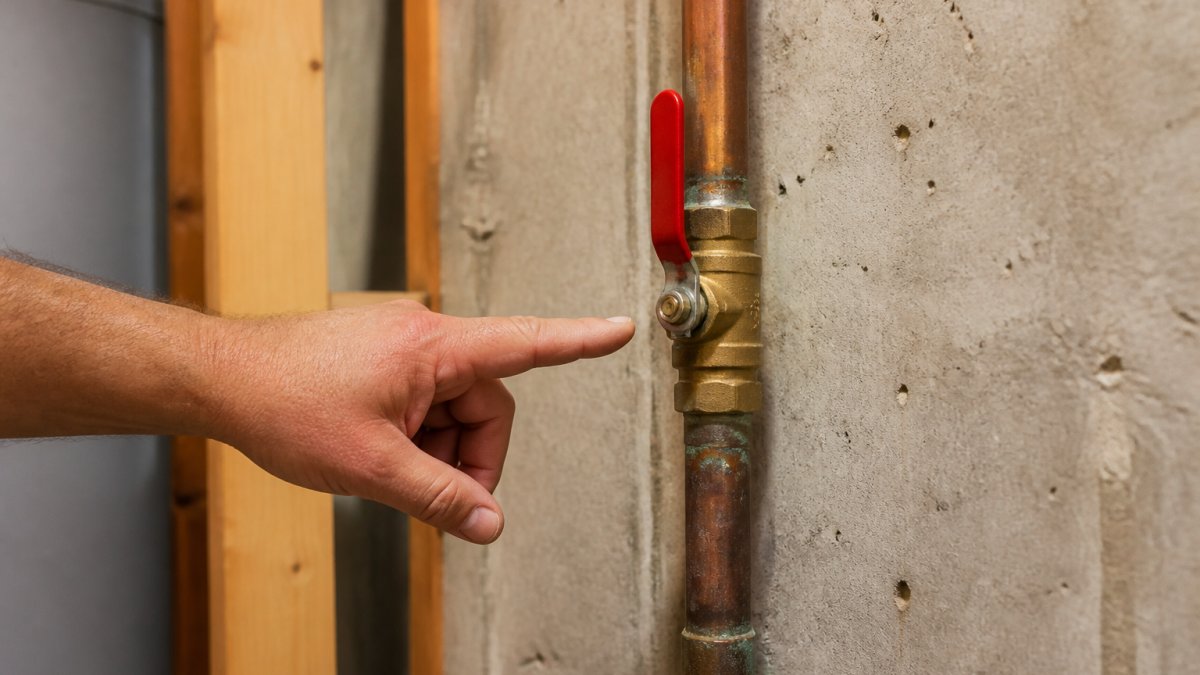
Know where both are located before an emergency happens. If a valve is stuck or won’t turn, have CW Plumbing service it before you need it in an emergency.
24 Hour Plumber Availability in Pinellas County
When a plumbing emergency strikes at 2 a.m. or on a Sunday, you need to know help is available. Around-the-clock plumbing service means someone is ready to respond regardless of the time or day.
What to expect from 24/7 emergency plumbing service: A licensed plumber arrives at your home, diagnoses the problem, and begins repairs or mitigation immediately.
CW Plumbing provides emergency plumbing services throughout Pinellas County. Our experienced team responds to urgent calls 24/7, meaning you get professional help when you need it most, not when it’s convenient for the plumber.
When you call, have the following information ready: your address, a description of the problem, whether water is actively leaking, and any recent plumbing work or issues. This helps the dispatcher prioritize your call and ensures the technician arrives prepared.
Emergency Plumbing Repair Cost and Transparency
Cost is the first question most homeowners ask when they call an emergency plumber at 11 p.m., and it is the topic the ranking service pages almost never address in detail. Here is how emergency plumbing pricing actually works, what drives the number up or down, and the questions that keep you in control.
The three charges that make up most emergency bills
Most emergency plumbing invoices combine three separate line items:
- Diagnostic or service-call fee. A flat charge for the technician to travel to your home, inspect the problem, and identify the cause. This fee is often credited toward the repair if you approve the work.
- Labor. Billed either hourly or as a flat rate per job. Emergency and after-hours labor typically carries a premium over standard weekday rates because the technician is working outside normal business hours.
- Parts and materials. Pipes, fittings, valves, water heaters, sump pumps, and similar components. Parts that must be sourced from a supplier after hours can add both cost and delay.
Some companies also charge a separate after-hours or overtime fee on top of labor, and some charge a trip charge that is distinct from the diagnostic fee. Ask which of these apply before you agree to dispatch.
What actually moves the price
- Time of day. A weekday afternoon call is usually the cheapest window. Nights, weekends, and holidays carry the highest premiums.
- Access and complexity. A shutoff valve under a sink is a quick fix. A slab leak, a sewer line under a driveway, or a pipe inside a finished wall takes longer, requires more equipment, and costs more.
- Whether the problem is contained. A single leaking supply line is a straightforward repair. A burst pipe that has flooded two rooms may require water extraction, drying equipment, and coordination with your insurer, work that goes beyond plumbing.
- Whether parts are on the truck. Standard fittings and common water heater components are usually stocked. Specialty parts may need to be ordered, which can mean a temporary fix tonight and a permanent repair later.
Questions to ask before you approve the work
- What is your diagnostic or service-call fee, and is it credited toward the repair?
- Is there an after-hours or overtime charge on top of labor?
- Can you give me a written estimate before starting?
- If you find additional problems, will you stop and get my approval before doing more work?
- What payment methods do you accept, and is financing available for larger repairs?
Ask for the estimate in writing, text or email is fine, before the technician starts. A written estimate protects you if the final invoice does not match what was quoted.
Why the lowest quote is often the most expensive
A suspiciously low emergency quote usually means one of three things: the technician is unlicensed, the price will climb once work begins, or the repair will be a temporary patch that fails within weeks. A licensed, insured plumber who provides a written estimate, explains the repair, and stands behind the work is almost always the better financial decision, even when the upfront number is higher.
CW Plumbing provides transparent pricing and walks you through what the repair involves before any work begins. If additional problems surface during diagnosis, we explain the options and costs before proceeding, so there are no surprises on the invoice.
How to Choose and Verify an Emergency Plumber
When water is spreading across your floor, you do not have time to comparison-shop. The right move is to identify a plumber you trust before you need one, and to know exactly how to verify that trust in the moment. Here is a practical checklist you can run through in under five minutes.
Step 1: Verify the license
Plumbing is a licensed trade. Ask for the license number and confirm it is active before you authorize work. In most states you can look up a contractor’s license through the state or county licensing authority’s public database. A legitimate plumber will give you the number without hesitation. Hesitation, vague answers, or ‘we’re licensed’ without a number is a red flag.
Step 2: Confirm insurance
Ask for two things:
- General liability insurance, covers damage to your property if the plumber causes it.
- Workers’ compensation insurance, covers the technician if they are injured on your property.
If a technician is injured in your home and the company does not carry workers’ comp, the claim can come back to you. Ask for a certificate of insurance, or at minimum the carrier name and policy number, before work begins.
Step 3: Get a written estimate
A written estimate, text, email, or paper, should include the diagnostic fee, the labor rate or flat rate, the expected parts, and any after-hours charges. Verbal-only quotes leave you exposed if the final bill is higher. If the plumber refuses to put anything in writing, call someone else.
Step 4: Check reputation, not just star ratings
Read recent reviews on more than one platform. Look specifically at:
- How the company responds to negative reviews (a professional response is a good sign).
- Whether reviewers mention surprise charges, no-shows, or repeat visits for the same problem.
- Whether the company has a physical local address and a history in your area.
Step 5: Watch for these red flags
- Cash-only payment with no receipt.
- Pressure to approve work immediately, before you have had time to read the estimate.
- No written estimate, no license number, or no insurance information.
- A price that is dramatically lower than every other quote you received.
- A technician who will not explain what they are doing or why.
Never let an unlicensed technician work on gas lines, sewer mains, or your main water shutoff. These are high-risk systems where a bad repair can cause a fire, a flood, or a health hazard, and where an unpermitted repair can complicate an insurance claim later.
Step 6: Keep the number saved
The best time to choose an emergency plumber is before you have an emergency. Save a licensed, insured local plumber’s number in your phone and on your refrigerator now, so you are not searching for one at 2 a.m. while water is rising.
CW Plumbing is fully licensed and insured, serves residential and commercial clients throughout the area, and provides documentation on request. We would rather answer your questions before you hire us than have you guess in the middle of a crisis.
Plumbing Emergency Checklist for Homeowners
Use this checklist to prepare for and respond to a plumbing emergency:
| Action | When to Do It | Priority |
|---|---|---|
| Locate main water shutoff valve | Before emergency | High |
| Test shutoff valve operation | Before emergency | High |
| Know fixture-specific shutoff locations | Before emergency | Medium |
| Identify your plumber before calling | Before emergency | High |
| Turn off water when emergency occurs | During emergency | Critical |
| Contain visible water | During emergency | High |
| Document damage with photos | During emergency | Medium |
| Call licensed plumber immediately | During emergency | Critical |
| Provide clear problem description | When calling | High |
| Avoid DIY repairs | During emergency | Critical |
Keep a list of emergency contacts near your phone or on your refrigerator. Include your plumber’s number, your water company, your insurance company, and emergency services. When panic sets in, having numbers readily available saves precious minutes.
Frequently Asked Questions
What should I do while waiting for an emergency plumber?
First, shut off the main water supply at the meter or shutoff valve to stop water flow and prevent further damage. Move valuables and furniture away from the affected area. If water is actively leaking, place buckets or towels to contain it. Document the damage with photos for insurance purposes. Keep the area accessible so the plumber can work quickly once they arrive. Avoid attempting complex repairs yourself, as this can worsen the problem.
How do I know if I have a plumbing emergency?
A plumbing emergency requires immediate professional attention to prevent water damage, health hazards, or structural issues. Signs include burst or actively leaking pipes, sewage backups, no water pressure or flow, major leaks from appliances, water heater failures, or gas smell near plumbing. If water is flooding your home, pooling in unexpected places, or you smell sewage, call an emergency plumber right away. When in doubt, it’s safer to call, waiting can turn a small problem into expensive damage.
Are you licensed and insured for emergency plumbing work?
Yes, a legitimate emergency plumber should be fully licensed, insured, and bonded. Licensing ensures they meet local code requirements and have the proper training. Insurance protects you if damage occurs during the repair. Before hiring, ask to see proof of current licensing and insurance certificates. Licensed plumbers carry credentials specific to your state and county. This verification protects both your home and your legal rights if something goes wrong during the emergency repair.
A plumbing emergency doesn’t have to become a disaster. Knowing what constitutes an emergency, understanding how to shut off your water, and having a trusted plumber’s number on hand puts you in control. CW Plumbing is available 24/7 to handle emergency plumbing services in Pinellas County. When you need help, we’re ready, call us immediately for rapid response and professional repairs that protect your home and your peace of mind.