


Book An
Appointment
Lorem ipsum dolor sit amet, consectetur adipiscing elit, sed do eiusmod tempor incididunt ut labore et
Our Services
Table of Contents
- How Hydro Jetting Works to Remove Tree Roots
- Does Hydro Jetting Cut Roots Effectively?
- Hydro Jetting vs Rooter for Tree Roots
- Sewer Camera Inspection for Tree Roots
- Tree Root Removal from Sewer Pipe Cost and Considerations
- Signs of Root Intrusion and When to Act
- What Happens After Hydro Jetting: Preventing Recurring Blockages
- Frequently Asked Questions
Last Updated: October 19, 2026
How Hydro Jetting Works to Remove Tree Roots
Hydro jetting is a high-pressure water cleaning method that uses pressurized water to clear blockages from sewer lines and drain pipes, and can hydro jetting remove tree roots from your sewer line.
We use hydro jetting equipment to tackle root intrusion in sewer pipes. The process involves directing a powerful stream of water through your sewer line to cut through root masses and flush debris downstream.
High-Pressure Water and Root Cutting
High-pressure water jetting uses nozzles that produce water streams at pressures ranging from 3,000 to 4,000 PSI (pounds per square inch). This force cuts through tree roots and breaks apart the blockage. The jetting hose pushes water through your entire sewer line, clearing accumulated sludge, grease, and mineral buildup along with the roots.
The process works like this:
- A technician inserts the jetting hose into your sewer line
- High-pressure water blasts through the pipe
- Root fragments and debris flush downstream toward the main sewer
The real advantage is speed and thoroughness. A mechanical rooter cuts roots but leaves debris behind. Hydro jetting flushes everything out.
Why Roots Grow Into Sewer Lines
Tree roots seek moisture and nutrients. Your sewer line is essentially a nutrient-rich water highway running underground. Roots exploit even tiny cracks or loose pipe joints to enter the line.
Older sewer pipes are especially vulnerable. Clay pipes, cast iron, and concrete develop cracks over decades. Roots find these weak points and push through. Newer PVC pipes with sealed joints resist root intrusion better, but no pipe is completely immune if roots are determined enough.
Does Hydro Jetting Cut Roots Effectively?
Yes, hydro jetting can remove tree roots effectively in the moment. The high-pressure water stream slices through root masses and clears the blockage. Water flow resumes, and your drains work normally again.
The catch: this is temporary relief, not a permanent fix. Hydro jetting removes the roots that are currently blocking your line. It does not remove the root cause, the crack or joint where roots entered in the first place.
What Hydro Jetting Can and Cannot Handle
Hydro jetting works best when:
- Your sewer pipe is structurally sound (no major cracks or breaks)
- Root intrusion is moderate (roots fill part of the pipe, not the entire cross-section)
- The pipe material can withstand high pressure (PVC and newer concrete pipes tolerate it; older clay pipes may not)
Hydro jetting struggles or fails when:
- Your sewer pipe has significant cracks or damage
- Roots have completely filled the pipe or crushed it
- Your line is made of fragile clay or has deteriorated concrete joints
This is where pre-service inspection matters. A sewer camera inspection shows exactly what you’re dealing with before a technician pressurizes your line. If your pipe is already compromised, hydro jetting might cause more harm than good.
Pushing high-pressure water through a damaged pipe can split it further or dislodge sections. Always get a camera inspection first to confirm your pipe can handle the pressure.
Hydro Jetting vs Rooter for Tree Roots
Both hydro jetting and mechanical rooters remove tree roots. The difference lies in method, effectiveness, and risk.
A mechanical rooter uses a spinning blade or auger to cut roots as it moves through the pipe. It works fast and costs less than hydro jetting.
Hydro jetting flushes the entire line and removes debris along with roots. It’s gentler on intact pipes but more expensive and requires more time.
When to Choose Mechanical Cutting Over Jetting
Choose a mechanical rooter when:
- Your budget is tight and you need immediate relief
- Your sewer pipe is old, fragile, or already damaged
- Root intrusion is mild and you just need the line cleared
Choose hydro jetting when:
- Your pipe is in good condition and can handle pressure
- You have heavy root buildup plus grease or mineral deposits
- You want the most thorough cleaning possible
Many homeowners use a rooter first for quick relief, then schedule hydro jetting later if the problem persists. Others go straight to jetting if their pipe is sound. There’s no universal “best” choice, it depends on your specific situation.
Ask your plumber to recommend the method based on your pipe’s condition. A camera inspection takes 30-45 minutes and costs far less than choosing the wrong solution.
Sewer Camera Inspection for Tree Roots
A sewer camera inspection is a video examination of your sewer line from inside. A small, waterproof camera on a flexible cable travels through your pipe and sends real-time images to a monitor.
This inspection is the most important step before any root removal service. It answers the critical question: Is my pipe worth saving, or do I need replacement?
Before and After Inspection Process
Before hydro jetting or rooter service, a camera inspection reveals:
- Exact location of root intrusion
- Size and severity of the blockage
- Condition of the pipe (cracks, breaks, deterioration)
- Whether roots are entering at joints or through cracks
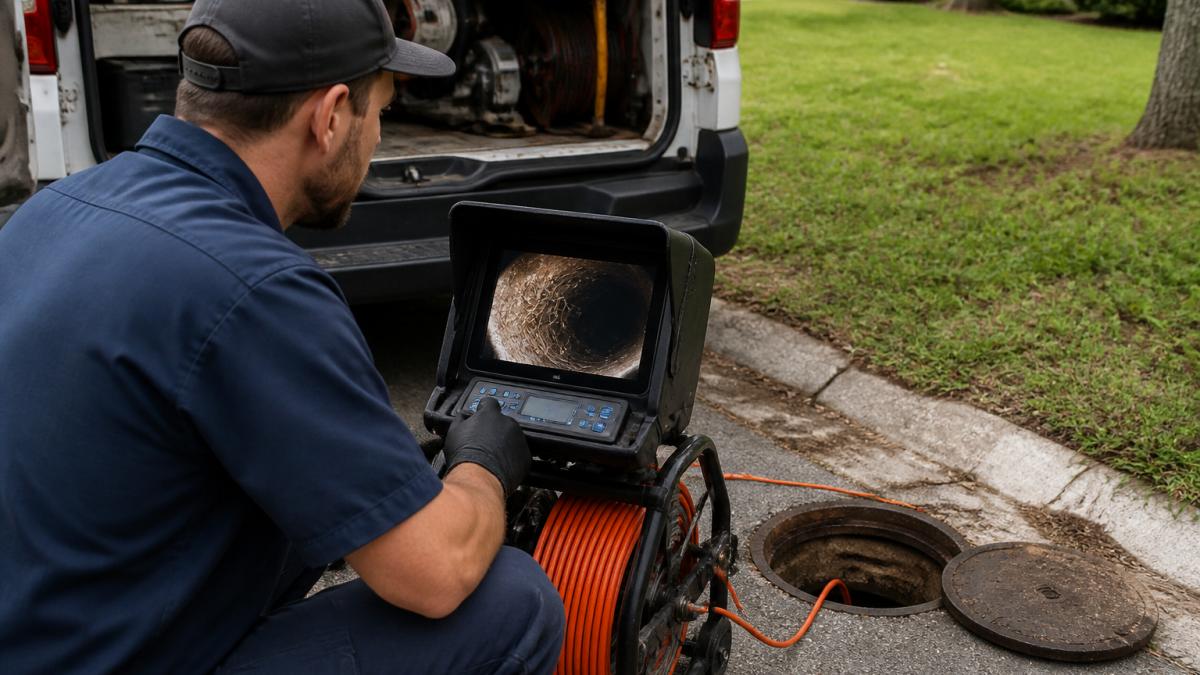
After root removal, a follow-up camera inspection confirms:
- Whether the blockage is completely cleared
- If debris was successfully flushed downstream
- Whether the pipe sustained any new damage during cleaning
- What preventive steps make sense next
Many homeowners skip the post-service inspection. This is a mistake. Knowing whether your pipe is truly clear and intact guides your next decision: Do you monitor it, schedule preventive maintenance, or plan for pipe repair?
Tree Root Removal from Sewer Pipe Cost and Considerations
Homeowners searching for root removal pricing deserve a realistic range, not a deflection. While every job is different, you can use the following framework to budget and compare quotes.
Typical Cost Ranges by Method
Your quote will depend on the factors below.
What Drives the Final Price
- Severity of root intrusion. Light roots at one joint cost less to clear than a mat filling the pipe cross-section.
- Pipe location and depth. A shallow cleanout near the foundation is faster to access than a deep line under a driveway or mature landscaping.
- Pipe material and condition. Fragile clay or deteriorated cast iron may require gentler methods, camera verification, or repair before cleaning.
- Equipment and method. Hydro jetting uses more water volume and specialized nozzles than a mechanical rooter, which is reflected in the price.
How to Compare Quotes Fairly
Ask each plumber to itemize the quote: inspection, cleaning method, disposal, and any follow-up visit. A low rooter price that leaves debris and requires a return visit may cost more than a bundled jetting-plus-camera package. Confirm whether the quote includes a post-service camera check, skipping it is a common way to save $100 today and spend $1,000 later.
Budget for inspection first, then choose the method that matches your pipe’s condition. The cheapest clearing today can be the most expensive path if it damages a fragile pipe or leaves roots to regrow.
When Repair Beats Repeated Cleaning
If you are paying for rooter or jetting service more than once a year, run the math. Two annual cleanings at $250-$400 each quickly approach the cost of a spot repair that eliminates the entry point. A camera inspection tells you whether you are maintaining a sound pipe or throwing money at a failing one.
Signs of Root Intrusion and When to Act
Recognizing root intrusion early helps you avoid emergency situations. Common warning signs include:
- Slow drains throughout your home (not just one fixture)
- Gurgling sounds from drains or toilets
- Sewage backups in your lowest drains (basement, ground floor)
- Unusually lush patches of grass over your sewer line (roots feed on nutrients)
If you notice any of these, don’t wait. Root blockages worsen quickly. A small intrusion becomes a major clog within weeks or months. Early action prevents costly emergency repairs.
What Happens After Hydro Jetting: Preventing Recurring Blockages
Hydro jetting clears the inside of the pipe, but it does not seal the crack or joint where roots entered. That distinction is the single most important thing to understand after service: you have restored flow, not repaired the pipe. What you do next determines whether you are back to normal for years or calling a plumber again in months.
The Post-Service Camera Check
A follow-up camera inspection immediately after jetting confirms three things: the line is fully clear, no new damage occurred during cleaning, and the pipe’s condition is documented for future comparison. Ask for the video or a written summary. If the inspection shows a sound pipe with roots entering at one or two joints, monitoring and preventive maintenance may be enough.
A Decision Guide Based on Inspection Findings
- Sound pipe, minor root entry at joints: Schedule preventive cleaning every 12-24 months and consider a foaming root inhibitor applied after each cleaning.
- Recurring roots at a specific joint or crack: A spot repair that replaces that section or seals the joint stops the intrusion at the source.
- Multiple cracks or deteriorated clay/cast iron: Trenchless lining or section replacement is usually more cost-effective than repeated cleaning.
- Collapsed or severely offset pipe: Excavation or trenchless replacement is required; jetting is not appropriate.
Realistic Expectations for Service
Most residential hydro jetting appointments take one to three hours depending on access, blockage severity, and whether camera inspection is included. You will need a cleanout accessible; if none exists, the plumber may need to pull a toilet or install one, which adds time and cost. Expect some disruption to water use during service and a short period afterward while the line is verified.
Prevention That Actually Works
- Regular inspection and cleaning on a 12-24 month schedule for lines with known root history.
- Root inhibitor treatments applied after cleaning; these discourage new growth but do not repair pipe defects.
- Joint sealing or spot repair at identified entry points.
- Landscaping awareness: avoid planting water-seeking species near the sewer line and consider a physical root barrier if you are replanting.
Ask your plumber to note the date, location, and method of each service. A simple maintenance log makes it easy to spot whether roots are returning faster than expected and when repair becomes the better investment.
The goal after hydro jetting is not a one-time fix but a documented plan: clear the line, verify with camera, address the entry point when it makes economic sense, and monitor on a schedule that matches your pipe’s condition.
Frequently Asked Questions
Does hydro jetting cut tree roots permanently?
Hydro jetting cuts through tree roots that have invaded your sewer line, but it clears them temporarily rather than permanently. The roots will regrow unless you address the underlying cause. If your sewer pipe has cracks or deteriorated joints where roots entered, those entry points remain. A sewer camera inspection before and after hydro jetting shows whether the pipe itself needs repair to prevent recurring blockages. Many homeowners find that combining hydro jetting with pipe repair or root barriers offers longer-lasting protection.
Can hydro jetting damage an old or cracked sewer pipe?
High-pressure water from hydro jetting can worsen existing damage in aging or already-cracked pipes. Water pressure typically ranges from 3,000 to 4,000 PSI, which is powerful enough to cut through roots but also to enlarge small cracks or separate pipe joints. This is why a sewer camera inspection before jetting is critical. If your pipe shows significant damage, cracks, or deterioration, a mechanical rooter or drain snake may be safer. Your plumber can assess the pipe condition and recommend the safest approach for your specific situation.
How much does tree root removal from a sewer pipe cost?
Cost depends on the severity of the blockage, the depth and length of your sewer line, whether a camera inspection is needed first, and what repair or prevention measures follow. A sewer camera inspection typically costs less than hydro jetting alone, but both are often necessary to diagnose the problem and confirm the solution worked. For a complete cost estimate tailored to your home’s sewer system, contact a licensed plumber. CW Plumbing can evaluate your situation and provide transparent pricing based on what your specific line requires.
Should I get a sewer camera inspection before hydro jetting?
Yes. A sewer camera inspection before hydro jetting shows where roots have entered, how much damage exists, and whether the pipe can safely handle high-pressure water. This inspection prevents costly mistakes like jetting a pipe that’s already severely cracked or deteriorated. After hydro jetting, a follow-up camera inspection confirms that roots are cleared and the line is flowing freely. This two-step process ensures you understand the real problem and that the solution actually worked.