


Book An
Appointment
Lorem ipsum dolor sit amet, consectetur adipiscing elit, sed do eiusmod tempor incididunt ut labore et
Our Services
Last Updated: October 23, 2026
Quick Summary
Hydro jetting is safe for pipes that are structurally sound, but it is not safe for every pipe. Safety depends on three things: pipe material, pipe condition, and the pressure setting the technician chooses. Most risk comes from skipping the diagnosis, not from the cleaning itself.
- A sewer camera inspection before hydro jetting is a hard rule at CW Plumbing: no inspection, no jetting.
- Cast iron and clay pipe can often still be jetted, but only at reduced pressure after a camera inspection.
- Orangeburg and badly corroded lines are usually not jettable at all because of collapse risk.
- Choose snaking for a simple, single blockage in a fragile line; choose jetting for recurring clogs or coated pipes.
- Watch for new joint leaks, gurgling drains, sewage smells, or returning slow drainage in the days after service.
Table of Contents
- How Hydro Jetting Works and Why Safety Depends on Your Pipes
- Is Hydro Jetting Safe for Pipes? The Honest Answer
- Hydro Jetting Old Pipes: Where the Real Risk Sits
- Why Sewer Camera Inspection Before Hydro Jetting Is Non-Negotiable
- Hydro Jetting vs Snaking: Which Method Fits Your Clog
- Hydro Jetting Cost: What Drives the Estimate
- A Pre-Service Checklist and What to Watch for Afterward
- Conclusion
- Frequently Asked Questions
How Hydro Jetting Works and Why Safety Depends on Your Pipes
Hydro jetting is a drain cleaning method that uses high-pressure water to blast away grease, mineral deposits, and tree roots from inside a pipe.
The equipment is not complicated. A flexible hose feeds a special nozzle into your drain line. A pump pushes water through at high pressure, and the nozzle sprays it backward and forward to scour the pipe walls.
What the Nozzle Actually Does Inside a Drain Line
The nozzle does two jobs at once. Forward-facing jets cut through the blockage. Rear-facing jets pull the hose deeper and flush the loosened debris toward the main line. Water flow does the rest, carrying grease buildup and mineral deposits out of the system.
That force is the whole point. It is also the whole risk.
Hydro jetting removes what snaking leaves behind. But the same pressure that scrubs a pipe clean can crack one that is already weak.
Is Hydro Jetting Safe for Pipes? The Honest Answer
Yes, hydro jetting is safe for pipes that are structurally sound. It is not safe for every pipe. The honest answer depends on three things: pipe material, pipe condition, and the pressure setting the technician chooses.
Most of the risk comes from skipping the diagnosis, not from the cleaning itself. A qualified technician who inspects first and adjusts pressure second can clean most drain lines without damage.
Pros and Cons of High-Pressure Water Cleaning
Pros:
- Clears grease, scale, and tree roots that a cable cannot reach
- Restores full water flow instead of just poking a hole
- Works as preventive maintenance, not only as an emergency fix
Cons:
- Unsafe on fragile pipes, including some old cast iron and clay
- Requires proper equipment and training, so it costs more than snaking
- Does nothing for a pipe that already needs repair
The pros win out for healthy lines. The cons are why inspection comes first.
Hydro Jetting Old Pipes: Where the Real Risk Sits
Old pipes are where hydro jetting safety gets serious. Age alone does not disqualify a pipe, but age usually brings corrosion, cracks, and thin walls. High-pressure water finds every weak spot.
The key point most homeowners miss: a professional does not run one pressure setting for every line. Pressure and nozzle choice are matched to the pipe, and that matching is what makes jetting safe on a 60-year-old cast iron line while making it dangerous on a 60-year-old Orangeburg line.
Pipe Materials and How They Handle Pressure
| Pipe Material | Typical Condition | Pressure Tolerance | What the Technician Adjusts | Watch For |
|---|---|---|---|---|
| PVC (schedule 40) | Usually sound | High | Standard jetting pressure; watch joint glue lines | Loose joints, crushed sections, poorly glued fittings |
| Cast iron (service weight) | Often scaled and corroded | Low to moderate | Reduced pressure, softer nozzle, slower pass | Corrosion pits, hairline cracks, scale hiding wall loss |
| Clay tile | Variable; joint-dependent | Low | Low pressure, root-cutting nozzle only after camera pass | Cracks, offset joints, root intrusion at the bells |
| Copper (drain lines) | Rare in drains; thin-walled | Low | Low pressure, non-cutting nozzle | Pinholes, solder joint weakness |
| Orangeburg (bituminized fiber) | Frequently collapsing | Very low | Often not jettable at all | Collapse risk, deformation, soft walls |
Cast iron and clay pipe can often still be jetted, but only at reduced pressure after a camera inspection confirms the walls are intact. Orangeburg and badly corroded lines are usually a no.
How Pressure and Nozzle Choice Are Actually Matched to the Pipe
A hydro jetting machine can produce a wide range of pressure, and the technician’s job is to pick the lowest setting that clears the blockage without stressing the pipe. A common pattern among experienced operators:
- Sound PVC and newer lines: run closer to the machine’s rated pressure with a standard penetrating or flue nozzle.
- Older cast iron and clay: drop pressure substantially and switch to a nozzle with fewer, softer jets so the water scours rather than cuts.
- Root intrusion: use a root-cutting nozzle only after the camera confirms the pipe walls can take the cutting action.
Nozzle selection matters as much as pressure. A penetrating nozzle focuses a tight stream to punch through a clog; a flue or chain nozzle spreads force across the pipe wall to scrub buildup. Putting a cutting nozzle into a fragile clay line is how a cleaning job becomes a repair job.
Jetting a compromised clay or cast iron line at full pressure can turn a clog into a collapsed pipe. That changes a cleaning job into an excavation and repair project.
What Failure Actually Looks Like
Damage from over-pressure rarely looks dramatic in the moment. Common patterns include a joint that starts weeping hours later, a section of cast iron that cracks along a corrosion pit, or a clay bell that separates at an offset. That is why the post-service check matters as much as the pre-service inspection, and why the technician should document the line’s condition before and after.
Why Sewer Camera Inspection Before Hydro Jetting Is Non-Negotiable
A sewer camera inspection before hydro jetting is the step that separates a safe cleaning from a gamble.
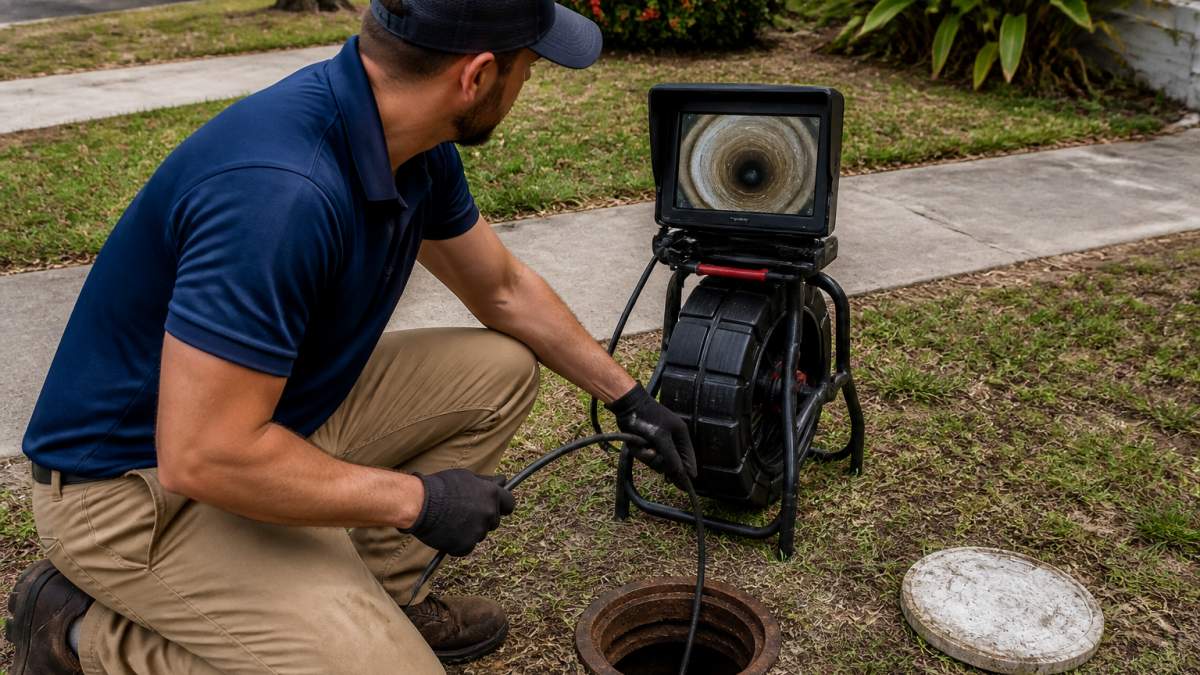
We treat this as a hard rule, not an upsell. No inspection, no jetting.
What a Camera Inspection Can and Cannot Tell You
A camera can confirm pipe material, spot cracks and corrosion, find root entry points, and show whether the line is clear after cleaning. It cannot measure wall thickness precisely, and it cannot always see damage hidden under heavy scale. That is why the technician’s judgment matters as much as the footage.
The Decision Process: What the Footage Must Show Before Jetting Is Approved
A camera pass is only useful if it drives a decision. A practical way to think about it:
- Material and wall condition confirmed. The technician identifies the pipe material and confirms the walls are intact enough to take pressure.
- No structural defects that pressure would worsen. Cracks, offsets, bellies, and collapsed sections are stop signs for full-pressure jetting.
- Root intrusion located and characterized. Roots at joints can often be cut; roots that have cracked the pipe usually mean repair, not cleaning.
- Blockage type identified. Grease, scale, and soft debris respond to jetting; a foreign object or a collapsed section does not.
- Pressure and nozzle plan set. Only after steps 1-4 does the technician choose a pressure setting and nozzle.
If the footage shows a defect the technician cannot confidently jet around, the right answer is to stop and discuss repair or an alternative method, not to proceed and hope.
What You Should Disclose Before Authorizing Work
The homeowner’s history is part of the inspection. Before the technician arrives, tell the company about:
- Repeated backups in the same fixture or line
- Slow drains that return after snaking
- Gurgling sounds from other fixtures when one drains
These details help the technician decide whether a camera pass is enough or whether the line needs a closer look before any pressure is applied.
Ask the company to show you the camera footage and explain what it means before work begins. A reputable technician will walk you through the screen and point out the material, the blockage, and any defect that changes the plan.
Aftercare and Signs of Damage to Watch For
Inspection does not end when the hose comes out. In the days after service, watch for new leaks at joints, gurgling drains, sewage smells, or slow drainage that returns. Any of these warrants a follow-up call and a recheck of the line. Take a photo of your cleanout and any floor drains before the job so you have a baseline to compare against afterward.
Hydro Jetting vs Snaking: Which Method Fits Your Clog
Hydro jetting and snaking solve different problems. Snaking, or drain snaking with a mechanical auger, bores a channel through a clog. Hydro jetting scours the entire pipe wall.
| Factor | Hydro Jetting | Snaking |
|---|---|---|
| Best for | Grease, scale, roots | Isolated, soft clogs |
| Cleans pipe walls | Yes | No |
| Safe on fragile pipe | Only after inspection | Generally yes |
| Cost | Higher | Lower |
Choose snaking for a simple, single blockage in a fragile line. Choose hydro jetting when the clog keeps returning or the pipe is sound but coated in buildup.
Hydro Jetting Cost: What Drives the Estimate
Hydro jetting cost depends on several factors, so we quote after we see the line. Expect the estimate to reflect:
- Line length and how far the equipment must reach
- Whether a camera inspection is included
- Severity of the blockage, including heavy roots
Pricing depends on the job, not a flat rate. Ask for the inspection and cleaning to be quoted together so nothing surprises you mid-job.
A Pre-Service Checklist and What to Watch for Afterward
Before any technician arrives, run through this checklist:
- Ask whether a camera inspection comes first
- Confirm the company is licensed and insured
- Note any slow drains or gurgling sounds beforehand
Signs of Damage to Check in the Days After Cleaning
Watch for new leaks at joints, gurgling drains, sewage smells, or slow drainage that returns. Any of these means call the technician back for a recheck. Most damage shows up fast, which is why the first week matters.
Take a photo of your cleanout and any floor drains before the job. If something looks different afterward, you have a baseline to compare against.
Conclusion
A recurring clog or a slow sewer line is a problem worth solving properly, not patching again and again. CW Plumbing pairs advanced hydro jetting with sewer camera inspections so every line is checked before it is cleaned, and we serve residential and commercial properties with the same care. Our team is family and locally owned, and we are ready when a drain stops behaving.
Frequently Asked Questions
Can hydro jetting damage old pipes?
It can, if the pipe is already compromised. Cast iron that has thinned from corrosion, clay pipe with existing cracks, and lines with offset joints or bellies can fail under high-pressure water. That is why a camera inspection comes first. A qualified technician confirms the pipe is structurally sound before jetting and adjusts the nozzle and water pressure to match the material. If the line is too fragile, drain snaking or a targeted repair is the safer route. Skipping the inspection is where most damage stories start.
Should a plumber inspect pipes before hydro jetting?
Yes. A sewer camera inspection before hydro jetting shows cracks, corrosion, tree root intrusion, offset joints, and pipe material, none of which you can see from a drain opening. It establishes whether the line can handle jetting and which pressure setting is appropriate. The camera also gives you a before-and-after record, so you know the clog is actually gone rather than pushed further down the line. Ask for the footage and a plain explanation of what it shows before work begins.
Is hydro jetting safer than snaking for older pipes?
Not automatically. Hydro jetting vs snaking is a question of what is in the line, not age alone. Snaking uses a mechanical auger to punch a hole through a clog, which clears the blockage but leaves grease and scale on the pipe walls, so the clog often returns. Jetting scours the full diameter, which is better for grease buildup and mineral deposits. On fragile pipe, the auger’s lower, more focused force can be the gentler choice. A camera inspection settles which method fits.
Can I hydro jet my own pipes?
Consumer drain cleaners and small jetters do not produce the pressure or control of professional jetting equipment, and they give you no way to see what is happening inside the line. Renting a jetter without a camera inspection means you could send high-pressure water into a cracked or root-damaged pipe and cause a failure you cannot detect until it backs up again. For a single slow sink, a hand auger or plunger is reasonable. For a main sewer line or a clog that keeps returning, call a qualified technician.
