


Book An
Appointment
Lorem ipsum dolor sit amet, consectetur adipiscing elit, sed do eiusmod tempor incididunt ut labore et
Our Services
Quick Summary
To choose a bathroom remodeling plumber, first confirm the project actually needs one, since moving fixtures, adding a shower, or changing supply and drain lines does. Then verify a valid state license and active liability and workers’ compensation insurance, check references from similar remodels, and compare written, itemized estimates from each bathroom remodeling plumber.
- Moving fixtures, adding a shower, or changing supply, drain, or venting lines calls for a plumber.
- Look up the license number yourself on your state’s public licensing lookup.
- Request a current certificate of insurance covering liability and workers’ compensation.
- Call two or three recent similar remodel clients about schedule and final cost.
- Compare itemized estimates line by line, including permits and inspection scheduling.
Table of Contents
- Deciding Whether Your Bathroom Project Needs a Plumber
- Plumbing Specialist or General Contractor: Who Should Lead the Remodel?
- Verifying Plumber License and Insurance Before You Hire
- Reading Bathroom Remodeling Plumber Reviews and References
- Questions to Ask a Plumber Before Hiring
- Budgeting for Bathroom Remodel Plumbing Costs in Pinellas County
- Booking Your Bathroom Plumbing Consultation With CW Plumbing
- Frequently Asked Questions
Deciding Whether Your Bathroom Project Needs a Plumber
Last Updated: November 17, 2026
Not every bathroom project needs a plumber, but the ones that do should not be handled by an unlicensed hand. If you’re planning a bathroom remodel, the first question is whether the work touches water supply lines, drain lines, or the venting system. Those are plumbing jobs, and they carry real risk when done wrong.
Here’s a quick way to sort the work. Cosmetic changes like new paint, tile, cabinet hardware, or a new vanity top usually don’t involve plumbing. Moving a sink, adding a shower, replacing a tub, or relocating a toilet almost always does. So does any change to where water comes in or where it goes out.
A few situations make the call easy:
- Moving fixtures: Relocating a sink, toilet, or shower changes the drain and supply layout, which requires a plumber.
- Adding fixtures: A new shower, freestanding tub, or second sink needs new lines and proper venting.
- Old galvanized or cast iron pipes: These often need replacement during a remodel, and that work belongs to a licensed plumber.
- Visible leaks or water damage: Behind-the-wall problems need diagnosis before anything gets covered up.
Many homeowners assume a general contractor can handle all of this. Sometimes they can, but plumbing is a specialized trade with its own licensing rules. Knowing where your project falls on this list tells you what kind of professional to look for next.
Plumbing Specialist or General Contractor: Who Should Lead the Remodel?
A plumbing specialist focuses on water supply, drainage, and fixture installation. A general contractor manages the whole remodel, from demolition and framing to tile, electrical coordination, and final finishes. Either can lead a bathroom project, but the right choice depends on how much of the work is plumbing.
If your remodel is mostly plumbing, with a new shower, relocated drains, and new supply lines, a plumbing specialist is usually the better lead. They handle the rough-in work correctly the first time and can coordinate inspections directly. If your remodel is mostly finish work, with tile, cabinetry, and lighting, and only minor plumbing changes, a general contractor can often manage the job and bring in a plumber for the specific tasks.
Ask each candidate who will be pulling the permits and scheduling the rough-in and final inspections. Confusion here causes delays. Plumbing permits and inspections should be handled correctly before walls close up, so get that responsibility assigned in writing.
Pros and Cons of Independent Plumbers Versus Larger Firms
Independent plumbers and larger firms each have trade-offs worth weighing before you sign anything.
Independent plumbers
- Pros: Direct communication with the person doing the work, often more flexibility on scheduling, and sometimes lower overhead costs passed to you.
- Cons: Limited crew size can stretch timelines, and a single person may be juggling several jobs at once. Backup coverage is thinner if they get sick or need to step away.
Larger firms
- Pros: Dedicated crews, established processes for permits and inspections, and more capacity to keep a project on schedule.
- Cons: You may deal with account managers rather than the people doing the work, and smaller jobs sometimes get less attention.
Neither option is automatically better. A well-run independent plumber can outperform a large firm on a small, focused project. For a full bathroom remodel with multiple trades involved, a larger firm’s coordination capacity often matters more.
Verifying Plumber License and Insurance Before You Hire
Before you agree to anything, confirm that the plumber holds a valid state license and carries both liability and workers’ compensation insurance. Plumbing contracting is a licensed trade in many states, and a bathroom remodel that moves supply lines, drains, or vents typically calls for a licensed plumbing contractor rather than a handyman or a general remodeler.
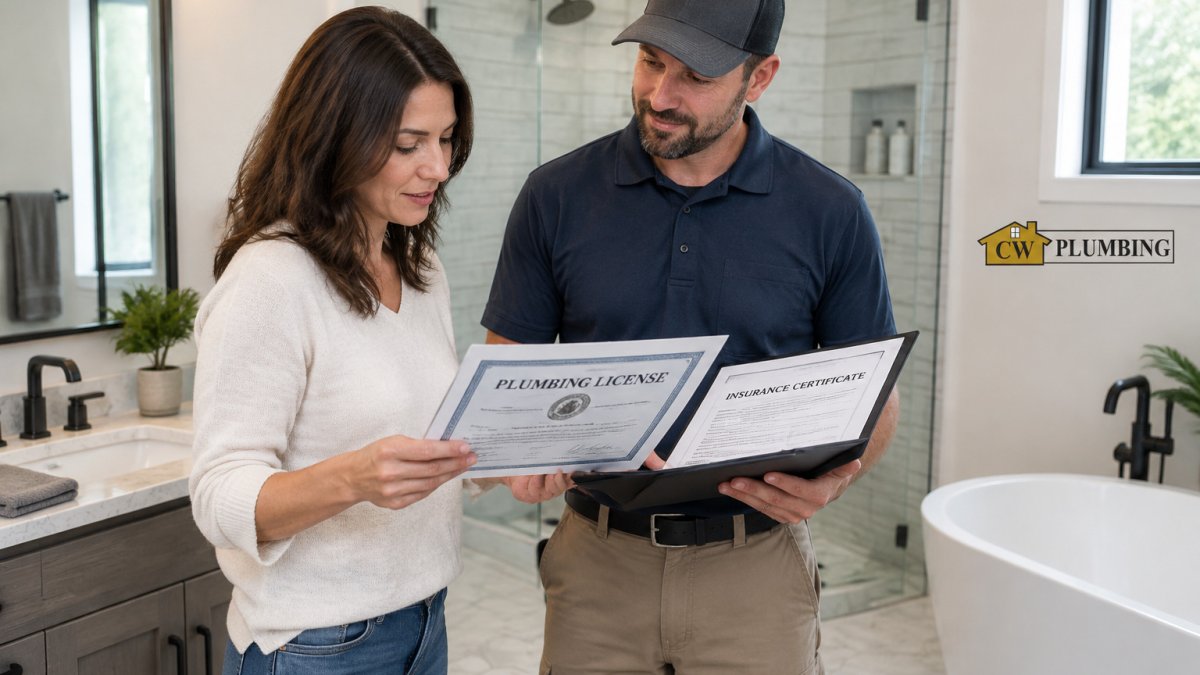
Ask for the license number and check it yourself rather than relying on the contractor’s paperwork. Learn why licensed plumbing contractors matter before you choose one. Our Florida plumbing license requirements guide explains what a valid license should look like there.
Watch out: a license that shows as active may still differ in scope from the work you need. Confirm the license type matches the work in your bathroom, not just that a number exists.
Insurance protects you if something goes wrong during the remodel. Ask for a current certificate of insurance and confirm the coverage is active by calling the insurer if the certificate looks altered or expired. Workers’ compensation matters because an uninsured worker injured on your property can create liability problems for you. Liability coverage protects your home if the plumber causes damage, such as a pipe failure that floods a subfloor.
Licensing rules and requirements change over time, so verify them directly with your state’s licensing authority rather than assuming a plumber’s credentials are current.
Reading Bathroom Remodeling Plumber Reviews and References
Online reviews offer a useful starting point, but read them carefully. Look for patterns across many reviews rather than reacting to a single strong opinion. Pay attention to how the business handled problems, since every contractor hits snags, and the response to a problem often says more than a flawless record.
References matter more than reviews for a project of this size. Ask for two or three recent bathroom remodels similar to yours, and call those customers. Good questions include whether the project finished on schedule, whether the final cost matched the estimate, and whether the plumber communicated well when issues came up.
If possible, ask to see photos or visit a past project. A portfolio tells you how careful the work looks up close, especially around fittings, joints, and the finish on visible pipes.
Questions to Ask a Plumber Before Hiring
The right questions reveal how a plumber operates before you commit money. Keep these in front of you during every consultation:
- Are you licensed for this type of work, and can I see the license number?
- Do you carry liability and workers’ compensation insurance? Can I get a certificate?
- Who pulls the permits, and who schedules the inspections?
- Will you provide a written estimate with itemized labor and materials?
- What is your timeline, and how do you handle delays?
- Who will be on site day to day, and who is my main point of contact?
- What warranty do you offer on labor and parts?
Be cautious of red flags such as pressure to pay the full amount upfront, a refusal to put terms in writing, or estimates that are vague about scope. Our sewer camera inspection cost guide explains how transparent pricing works for a common service. A reputable plumber will explain the work clearly and welcome questions.
The right questions reveal how a plumber operates before you commit money. Keep these in front of you during every consultation:
| Question | What to look for | Red flag |
|---|---|---|
| Are you licensed, and can I see the license number? | A valid license number you can verify | No number, or one you cannot look up |
| Do you carry liability and workers’ comp insurance? | A current certificate of insurance | Refusal to provide a certificate |
| Who pulls the permits and schedules inspections? | A named party, agreed in writing | Vague or unassigned responsibility |
| Will you provide a written, itemized estimate? | Labor and materials itemized | Vague scope or no written estimate |
| What is your timeline and how do you handle delays? | A clear schedule and a delay plan | No answer on timing |
| Who is my day-to-day contact? | A named person on site | Unclear point of contact |
| What warranty do you offer on labor and parts? | A stated warranty period | No warranty offered |
Budgeting for Bathroom Remodel Plumbing Costs in Pinellas County
Plumbing costs make up a meaningful share of most bathroom remodels, so build a realistic budget before you hire. Our bathroom remodel plumbing cost guide breaks down rough-in, fixture, and labor pricing. Plumbing work generally breaks into three parts: rough-in work (the supply and drain lines installed before walls close), fixture installation (sinks, toilets, showers, and tubs), and labor for connecting and testing everything. Older homes can add cost when drains must be relocated or corroded lines are discovered after demolition.
Pricing depends on how much of the existing layout you keep. Working with the current plumbing layout usually costs less than moving drains or adding new lines. Older homes may also reveal outdated pipes once walls open, which can change the budget mid-project.
Rather than comparing a single lump-sum number, ask each plumber for an itemized estimate and check that every bid covers the same line items. A useful line-item checklist for a bathroom remodel plumbing estimate includes:
- Rough-in labor for supply and drain lines, listed by fixture
- Permit fees and inspection scheduling, stated separately
- Fixture rough-in valves and trim (shower valve, tub spout, sink and toilet supply stops)
- Water heater replacement or relocation, if applicable
- Drain relocation or replacement, with the length and material noted
- Shutoff valve replacement and accessible cleanout installation
- Final connection, testing, and inspection sign-off
- Contingency line for concealed conditions found after demolition
Costs depend on your project’s scope, materials, and site conditions, so contact CW Plumbing directly for a quote. Request a written, itemized estimate from each plumber you consider, then compare line by line. Make sure every estimate covers the same scope of work, or the comparison means little. Build a contingency into your budget for surprises behind the walls.
Watch out: a bid that omits permit fees or inspection scheduling is not necessarily cheaper, it often means those costs appear later as a change order, after demolition has already started.
Booking Your Bathroom Plumbing Consultation With CW Plumbing
CW Plumbing is a family and locally owned business serving residential and commercial clients. We handle kitchen and bathroom remodeling, along with hydro jetting and sewer camera inspections. Our team can walk through your bathroom plans and identify which plumbing changes your project requires.
If you’re ready to talk through your bathroom remodel, book an appointment to see how we approach the work from start to finish.
Frequently Asked Questions
Is $10,000 enough for a bathroom remodel?
A $10,000 budget can cover a basic bathroom remodel in many homes, such as new fixtures, a refinished or replaced tub or shower, and new flooring, but it is tight once plumbing relocation is involved. Moving a drain, adding a shower valve, or repiping old supply lines can add significant labor. Ask your bathroom remodeling plumber for a written estimate that separates plumbing work from the rest of the project so you can see where your money goes and what to trim if needed.
How much does it cost to redo plumbing in a bathroom?
Plumbing cost depends on how much of the existing system changes. Replacing fixtures in the same locations is far less expensive than relocating a sink, toilet, or shower drain, which requires new drain lines, vent connections, and water supply runs. Pricing varies with the home’s age, access to walls and floors, and local permit requirements. CW Plumbing can provide a site-specific quote for your project, so contact the office directly for current pricing rather than relying on general estimates.
What should you ask a plumber before hiring them for a bathroom remodel?
Ask whether they hold a current state plumbing license, carry liability and workers’ compensation insurance, and have completed recent bathroom remodels similar to yours. Confirm who pulls the permits and schedules inspections, how change orders are priced, and what the warranty covers. Request a written estimate and a written contract with a defined scope of work before any payment is made.
What are red flags when hiring a plumbing contractor?
Watch for requests for large cash payments up front, no physical business address, reluctance to provide license or insurance details, and estimates given without a site visit. Be cautious of contractors who refuse to put the scope of work in writing or who pressure you to sign quickly. A legitimate bathroom remodeling plumber will welcome questions, provide references, and explain how they handle permits and inspections.
