


Book An
Appointment
Lorem ipsum dolor sit amet, consectetur adipiscing elit, sed do eiusmod tempor incididunt ut labore et
Our Services
Table of Contents
- What Drives Tankless Water Heater Installation Cost
- Tankless Water Heater Installation Quote: What’s Included
- Cost to Convert to a Tankless Water Heater
- Tankless vs. Traditional Water Heater Cost Comparison
- Tankless Water Heater Maintenance Cost and Long-Term Ownership
- How to Evaluate Your Installation Quote and Spot Red Flags
- Frequently Asked Questions
Last Updated: October 8, 2026
What Drives Tankless Water Heater Installation Cost
At CW Plumbing, we help homeowners understand that the tankless water heater installation cost breaks down into two categories: the unit itself and the labor to get it running.
Your final bill depends on equipment cost, labor rates, and site-specific complexity. A straightforward swap in an ideal location runs considerably less than converting from a traditional tank system in an older home.
Equipment Cost vs. Labor Cost
The unit price typically represents 30-40% of your total installation cost; the remaining 60-70% covers labor, materials, permits, and upgrades. Verify this ratio first when comparing quotes.
Labor costs depend on your plumber’s rates and installation complexity. A straightforward replacement might take one to two days; one requiring gas line extensions, venting modifications, or electrical upgrades can stretch to three or four.
Site-Specific Installation Complexity
Your home’s existing infrastructure determines much of the cost variability. A property with accessible utility connections, proper venting paths, and adequate electrical service costs less to convert.
Location matters too. A basement with easy access and nearby utility connections stays straightforward; a unit tucked into a closet, attic, or garage complicates the work. Difficult venting, multiple story heights, long vent runs, or tight roof access add cost and time.
Tankless Water Heater Installation Quote: What’s Included
When you receive a quote for a tankless water heater installation cost, a fair estimate should itemize every component. Too many quotes lump everything together, making it impossible to spot where the real expense sits.
A complete quote includes the unit, fittings and connections, venting materials, gas or electrical work, labor hours, and permits, plus any code-required upgrades like gas line upsizing or panel modifications.
Permit and Inspection Fees
Permit costs vary by jurisdiction but typically range from under $100 to several hundred dollars. The permit covers the inspection confirming your installation meets building codes.
Inspection fees sometimes appear separately from permit fees, sometimes bundled. A thorough contractor includes these costs upfront; if a quote doesn’t mention permits, that’s a red flag. CW Plumbing always ensures compliance with local codes and regulations.
Venting, Gas Line, and Electrical Upgrades
Venting modifications often represent a significant line item. Tankless units require specific venting specifications; improper venting creates safety hazards and voids warranties.
Gas line upgrades happen when existing lines lack capacity, since most tankless units demand higher flow rates than traditional tanks and require larger diameter piping.
These upgrades aren’t optional add-ons, they’re essential for safe, code-compliant operation.
Cost to Convert to a Tankless Water Heater
Converting from a traditional tank water heater to a tankless unit costs more than a simple replacement because you’re changing your home’s plumbing and utility infrastructure. A cost to convert to a tankless water heater includes removing and disposing of the old system and installing new connections and upgrades.
Tank Removal and Disposal
Removing and disposing of an old water heater typically costs $150 to $300, depending on size and condition. The contractor drains the tank, disconnects it from gas or electrical service, removes it, and hauls it away.
Proper disposal matters: old tanks contain sediment and residual water that must be handled correctly, and professional removal ensures safe recycling or disposal.
Infrastructure Modifications
Converting to tankless usually requires modifications beyond simple removal and installation. Plumbing lines may need rerouting for the new unit’s location and connection points; moving the unit elsewhere means new supply and return lines.
Gas or electrical infrastructure often needs adjustment: gas conversions may require line upsizing and new regulators, while electric conversions demand panel upgrades or dedicated circuits.
Tankless vs. Traditional Water Heater Cost Comparison
Comparing the upfront tankless vs. traditional water heater cost reveals why many homeowners hesitate to convert. A traditional tank system costs less initially, but the long-term picture differs once you factor in operating expenses and equipment lifespan.
A traditional tank installation costs less upfront because the equipment is simpler and the process more standardized. Tankless systems require more specialized work, increasing initial expense, but operating costs and maintenance requirements differ substantially.
Gas Unit Pricing and Installation
A gas tankless unit costs more upfront than a comparable gas tank system, but it heats water on demand, avoiding the standby energy loss tanks experience.
Installation complexity for gas units centers on venting and gas supply. Proper venting is critical for safety and gas line sizing must match the unit’s demands, requirements that add cost but are non-negotiable.
Electric Unit Pricing and Installation
Electric tankless units cost less than gas units but demand significant electrical capacity; many homes need panel upgrades, which can offset the lower equipment cost.
Electric tankless units avoid venting complications since they produce no combustion byproducts, but create electrical demands instead. The trade-off varies by your home’s existing infrastructure.
Tankless Water Heater Maintenance Cost and Long-Term Ownership
The tankless water heater maintenance cost is typically lower than tank system maintenance over the unit’s lifespan, since tankless systems lack the sediment buildup issues that plague traditional tanks.
Annual tankless maintenance involves professional inspection and cleaning, costing $150 to $300 per year. Traditional tanks need similar maintenance plus component replacements like heating elements or anode rods.
Building a Simple Payback Estimate
You can build a rough payback estimate yourself with four inputs:
- Upfront premium, the difference between your tankless quote and a comparable tank replacement quote.
- Annual energy savings, the difference between your current water heating bill and the projected tankless bill. Tankless units avoid standby losses, so savings are largest in households with low, spread-out hot water use and smallest in households that draw hot water constantly.
- Annual maintenance difference, tankless descaling and inspection versus tank anode rod replacement and eventual tank replacement.
- Expected service life, tankless units commonly run 15-20 years; tanks commonly run 8-12 years. Over a 20-year horizon, a tank household may buy two tanks while a tankless household buys one unit.
A common pattern: the upfront premium is recovered somewhere in the middle of the tankless unit’s service life. The strongest case belongs to homeowners staying long enough to capture second-tank savings; the weakest to those who sell within a few years, since the premium is largely sunk.
Maintenance Schedule and What It Actually Costs
Tankless maintenance is not zero-maintenance. A realistic schedule:
- Annual descaling, flushing the heat exchanger with a descaling solution, typically $150-$300 per year when done professionally. In hard-water areas, twice-yearly may be recommended.
- Inlet filter cleaning, often a homeowner task, a few times per year depending on water quality.
- Vent and combustion check, on gas units, verifying the vent path and combustion readings during the annual service.
- Ignition and sensor components, these can fail over a long service life and are typically covered under parts warranty for a period, then out of pocket.
Tank systems have their own recurring costs: anode rod replacement every few years, sediment flushing, and eventual tank replacement when the liner fails. The comparison is tankless-versus-tank, and both have real annual costs.
Financing and Total Cost of Ownership
If you finance the installation, interest belongs in your total-cost-of-ownership math. A longer term lowers the monthly payment but increases total interest, which can erase energy savings for years. Ask for the total of payments, not just the monthly figure.
Payback estimates depend heavily on your local utility rates, your household’s hot water usage pattern, and your home’s existing infrastructure. Treat any single “payback in X years” claim, including one from a contractor, as an assumption to verify, not a fact.
The right question is not “does tankless save money?” but “does tankless save money for my usage pattern, my utility rates, and my expected time in this home?” Run the four-input estimate above before you commit to the premium.
How to Evaluate Your Installation Quote and Spot Red Flags
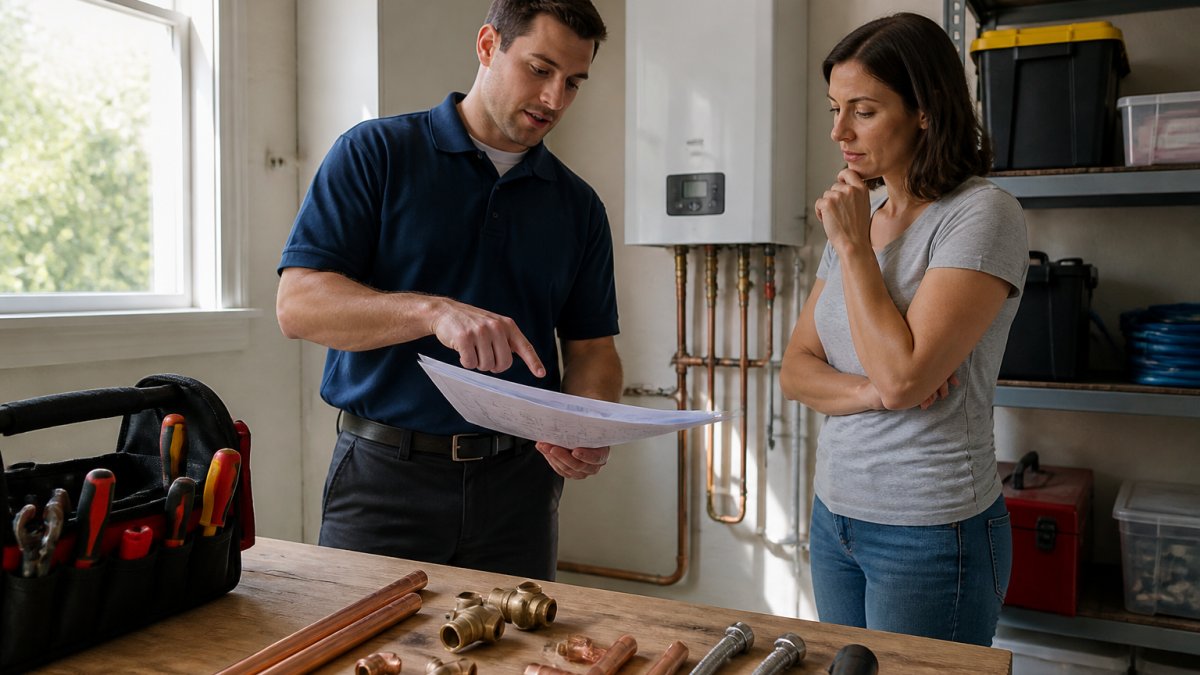
A good tankless water heater installation cost quote shows the contractor understands your situation and priced the work fairly. Red flags signal inexperience, corner-cutting, or hidden costs.
The Itemized Line-Item Framework
A single headline number is useless when two contractors hand you totals that differ by thousands. The only reliable way to compare bids is to force every quote into the same line-item structure. Ask each contractor to break their estimate into these categories:
- Equipment, manufacturer, model number, rated flow (gallons per minute at a stated temperature rise), fuel type, and whether the unit is condensing or non-condensing.
- Labor, hours or days estimated, hourly or flat rate, and whether the rate changes for after-hours or weekend work.
- Venting, vent material (PVC, CPVC, polypropylene, or stainless steel), length of run, number of elbows, and whether a roof or sidewall penetration is included.
- Gas or electrical work, gas line size and length, regulator, shutoff valve, dedicated circuit, breaker, wire gauge, or panel work.
- Permits and inspection, the actual permit fee and who pulls the permit (the contractor should, not you).
- Removal and disposal, draining, disconnecting, hauling away, and recycling the old unit.
- Commissioning, flushing, setting the temperature, verifying flow and pressure, and confirming combustion analysis on gas units.
- Warranty, manufacturer parts warranty term, heat exchanger term, and the contractor’s own labor warranty length.
Lined up this way, differences become obvious. One bid may look cheaper only because it excludes venting or assumes your gas line is adequate; another may look higher because it includes a panel upgrade the other contractor omitted.
Red Flags That Signal a Bid Is Too Low or Too High
A dramatically lower bid is usually not a bargain. Common reasons:
- No permit line item. Unpermitted work creates liability at resale and can void manufacturer warranties.
- No venting or gas line scope. The contractor plans to reuse existing infrastructure that may not meet the unit’s requirements.
- Vague equipment description. “50-gallon equivalent tankless” is not a model number. Without a model, you cannot verify capacity, warranty, or efficiency.
- No commissioning step. Skipping combustion analysis on a gas unit or flow verification on any unit is a shortcut.
- Payment terms front-loaded. A large deposit before materials arrive is a warning sign; progress payments tied to milestones are normal.
A dramatically higher bid is not automatically more thorough. Ask what justifies the premium, a longer labor warranty, a higher-tier unit, included maintenance, or a more complex scope. If the contractor can’t point to concrete differences, it may just be padding.
Questions to Ask Before Hiring
Before signing, ask whether the quote includes permits and inspections, and confirm the contractor is licensed and insured for plumbing and gas work.
Clarify the timeline and what happens if complications emerge.
Ask for references from recent tankless installations and follow up. Real feedback reveals whether the contractor delivered on time, managed costs, and provided quality work.
A quote you cannot itemize is a quote you cannot compare. Insist on the eight-line breakdown above before you sign anything, and treat any missing line as a question to resolve rather than a discount to enjoy.
Frequently Asked Questions
How much does it cost to install a tankless water heater?
Tankless water heater installation costs depend on unit type (gas or electric), your home’s existing infrastructure, and local labor rates. Equipment alone ranges widely, but installation labor, permits, and necessary upgrades like gas lines or electrical work add significant expense. Get a detailed quote from a licensed contractor who can assess your site-specific conditions and provide an itemized breakdown.
What is the cost to convert to a tankless water heater from a traditional tank?
Conversion costs include the new unit, labor, removal and disposal of your old tank, and any upgrades needed to your gas, venting, or electrical systems. If your existing infrastructure matches the tankless unit’s requirements, conversion is less expensive. However, older homes often need significant modifications, increasing total cost. A professional inspection determines what upgrades your space requires.
How does tankless water heater maintenance cost compare to traditional water heaters?
Tankless units typically require less frequent maintenance than tank models, but annual descaling and professional servicing are essential to maintain efficiency and prevent mineral buildup. Maintenance costs are modest but should be factored into long-term ownership expenses. Budget for routine service calls and understand your warranty coverage before installation.
Why should I get multiple installation quotes before deciding?
Quotes vary based on how contractors assess your site conditions, required upgrades, and labor scope. A detailed quote should itemize equipment, labor, permits, inspections, and any necessary modifications. Comparing multiple quotes helps you understand what’s included, spot inconsistencies, and avoid overpriced or underspecified proposals that could lead to problems later.