


Book An
Appointment
Lorem ipsum dolor sit amet, consectetur adipiscing elit, sed do eiusmod tempor incididunt ut labore et
Our Services
Last Updated: November 6, 2026
Quick Summary
A clearwater plumber should be licensed with the Florida Department of Business and Professional Regulation, carry general liability and workers’ compensation insurance, and give written estimates that separate labor, parts, and permit fees. Read recent reviews in the middle ratings to judge consistent behavior rather than relying on the star average alone. Confirm the company serves your address and offers after-hours service before you book.
- Confirm the license through the Florida Department of Business and Professional Regulation.
- Ask for proof of general liability and workers’ compensation insurance.
- Sort reviews by newest first and read the three- and four-star ratings.
- Get written estimates that separate labor, parts, and permit fees.
- Ask whether a diagnostic or trip fee applies if you decline the repair.
Table of Contents
- What a Clearwater Plumber Typically Handles
- Clearwater Plumber Reviews: What to Look For Beyond the Star Rating
- Finding Clearwater Plumbers Near Me: Service Area and Emergency Availability
- Licensing, Insurance, and Permits to Verify in Florida
- Pricing Transparency and Estimate Policies
- How to Pick the Best Clearwater Plumber for Your Job
- Booking Your Plumbing Appointment With CW Plumbing
- Frequently Asked Questions
What a Clearwater Plumber Typically Handles
Choosing a plumber starts with knowing what you actually need done. A clearwater plumber handles many kinds of work, from a dripping faucet to a sewer line that has backed up into a bathtub. Knowing the difference helps you ask better questions and judge whether a company has the right skills for your job.
Residential plumbing services
Most homeowners call a plumber for leaks, clogged drains, running toilets, water heater problems, and fixture replacement. Residential work also often includes kitchen and bathroom remodeling, where the plumber moves or adds supply and drain lines.
Ask any residential plumber whether they can diagnose the cause before they start cutting walls. A good answer means they will inspect first and explain the options before quoting the repair.
Commercial plumbing services
Commercial work follows different rules and usually happens on tighter schedules. Restaurants, offices, rental properties, and retail spaces need plumbing that can handle heavier use and inspections. Property managers often need advanced diagnostics such as sewer camera inspections and hydro jetting to find the source of recurring backups.
If you manage a commercial property, confirm that the plumber has experience with buildings your size. Ask how they schedule work around business hours and whether they keep records of past inspections.
Clearwater Plumber Reviews: What to Look For Beyond the Star Rating
Star ratings are a starting filter, not a decision. In the Clearwater and Pinellas County market, most plumbing companies carry ratings in a similar range, so the useful signal comes from how reviews are written, how recent they are, and how the company responds when something goes wrong. A review methodology helps you separate verified facts from customer impressions and avoid choosing a company on the strength of a handful of short, undated comments.
A simple review-reading method
Read reviews in three passes rather than scrolling the star average:
- Sort by newest first. Plumbing companies change ownership, staffing, and service policies. A five-star review from several years ago says little about the crew that would arrive at your door today. Recent reviews are more relevant to current operations.
- Read the middle ratings. Five-star and one-star reviews tend to be emotional extremes. Three- and four-star reviews often describe the actual experience in detail, including what went wrong and whether the company made it right.
- Look for specifics tied to your job type. A review that names the problem (a slab leak, a sewer backup, a water heater replacement) and describes the diagnosis and outcome is more useful than a review that says only that the plumber was nice.
What to verify versus what to treat as impression
Customer reviews are impressions, not verified facts. A reviewer’s claim that a price was fair or that a repair failed is one person’s account. Treat the following as things to verify independently rather than accept from reviews:
- License status. Confirm the license through the Florida Department of Business and Professional Regulation rather than relying on a review that says the company is licensed.
- Insurance. Ask the company directly for proof of general liability and workers’ compensation coverage.
- Permits. For major work, confirm with the local building department that a permit was pulled and inspected.
Reviews are most reliable for patterns of behavior: punctuality, whether the technician explained the problem, whether the final bill matched the estimate, and how the company handled a callback. Those patterns repeat across many customers and are harder to fake than a single glowing comment.
How companies respond to criticism
A professional response to a negative review is a useful signal. Look for replies that acknowledge the specific problem, explain what the company did or will do, and invite the customer to resolve it offline.
Watch out: a cluster of recent one-star reviews describing surprise charges, no-shows, or unpermitted work is a pattern worth taking seriously even if the overall star average remains high.
Local context for Clearwater and Pinellas County
Reviews that mention specific local conditions are more informative. Comments about slab leaks, salt-air corrosion on outdoor fixtures, sewer line roots, and storm-related drainage problems tell you the company has handled the kinds of issues common in Pinellas County. Reviews that mention response times during storm season or after-hours availability are also relevant, since emergency demand in the area rises during heavy rain.
Finding Clearwater Plumbers Near Me: Service Area and Emergency Availability
When you search for plumbers near me, confirm that the company actually serves your address. Many businesses list a city but cover only certain neighborhoods or nearby towns.
Emergency availability matters just as much as location. A burst pipe at 9 p.m. cannot wait until morning. Ask whether the company offers after-hours service and how quickly a technician can reach you.
Licensing, Insurance, and Permits to Verify in Florida
Before hiring any plumber, verify their license with the Florida Department of Business and Professional Regulation. A licensed plumber has passed required exams and meets state standards for their work.
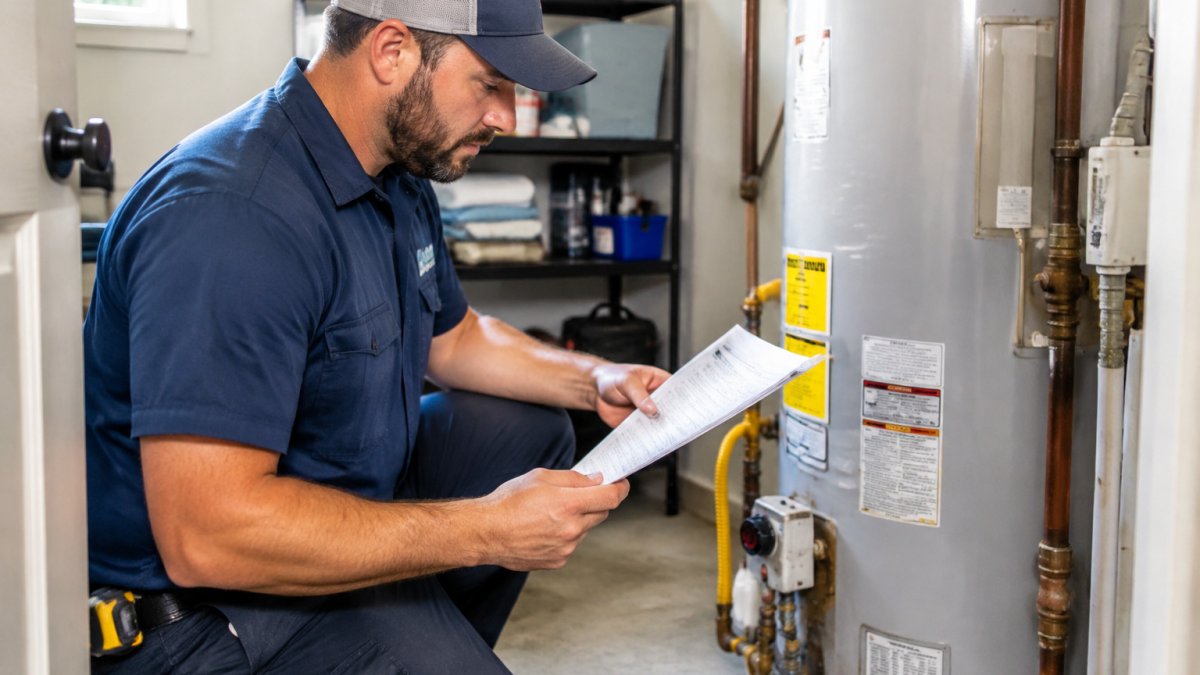
Major repairs and new installations often require a permit from your local building department. Ask any licensed contractor how they handle permits and inspections. Be cautious of anyone who suggests skipping permits to save money.
Pricing Transparency and Estimate Policies
Most plumbing companies do not publish full price lists, so the practical skill is learning how to read an estimate and what questions to ask before you approve work. Pricing transparency is less about finding the cheapest quote and more about understanding what is included, what can change, and who bears the risk if the job turns out to be larger than expected.
What actually drives the price
Plumbing costs in Clearwater and Pinellas County are shaped by a handful of variables that a reputable company should be able to explain before work begins:
- Access and labor time. A leak under a slab, behind a tiled shower wall, or in a cramped crawlspace takes longer to reach than a fixture in an open garage. Labor time is usually the largest line item.
- Pipe material and age. Older galvanized or polybutylene lines often require different fittings and may fail again nearby, which can change the scope from a spot repair to a partial repipe.
- Parts availability. Specialty or older-model parts may need to be ordered, which adds time.
Diagnostic fees, trip charges, and estimates
A common pattern in the industry is a diagnostic or trip fee that covers the technician’s time to inspect the problem and produce an estimate. Ask three questions before booking:
- Is there a diagnostic or trip fee, and how much is it?
- Is the estimate free, or is it included in the diagnostic fee?
- If I decline the repair, do I still owe the fee?
A written estimate should separate labor, parts, permit fees, and any after-hours or emergency surcharge. An estimate described only as a single lump sum is harder to compare against another company’s quote and harder to audit if the final bill differs.
Firm quotes versus time-and-materials
Estimates generally fall into two categories. A firm or flat-rate quote commits the company to a set price for a defined scope, which shifts the risk of unexpected complications to the contractor. Time-and-materials billing charges for actual hours and parts, which can be fair for exploratory work but leaves the final total open.
Watch out: any estimate that omits permit fees for work that clearly requires a permit, or that quotes a price before anyone has inspected the problem, is a warning sign rather than a bargain.
How to compare estimates side by side
When you collect two or three estimates for the same job, compare them on scope rather than headline price. Confirm that each quote covers the same repair method, the same parts grade, permit handling, cleanup, and any warranty on labor and materials. A lower quote that excludes permit fees, uses builder-grade parts, or offers no labor warranty is not actually cheaper once those items are added back. Ask each company to state in writing what would cause the price to change and how they will notify you before doing additional work.
The article breaks down the main cost drivers and the questions to ask before approving work.
| Cost factor | What it affects | Why it matters |
|---|---|---|
| Access and labor time | Labor, usually the largest line item | Hard-to-reach leaks take longer to fix |
| Pipe material and age | Fittings and scope | Old lines may need a partial repipe |
| Parts availability | Timing | Specialty parts may need to be ordered |
| Permits and inspections | Separate line items | Permit fees should not be hidden in labor |
| Time of service | Emergency surcharge | Ask for after-hours rates in writing |
| Diagnostic or trip fee | Upfront cost | Ask if it applies if you decline the repair |
How to Pick the Best Clearwater Plumber for Your Job
The right plumber depends on the job. For a simple leak repair, a company with strong reviews and fast response times may be enough. For sewer work or remodeling, look for experience with sewer camera inspections, hydro jetting, or larger installations.
Use this checklist when comparing companies:
- Valid Florida license and proof of insurance
- Written estimates with clear line items
- Experience with your specific type of job
Watch out: avoid any plumber who insists on immediate payment before work starts or refuses to put the estimate in writing.
Booking Your Plumbing Appointment With CW Plumbing
If you need a licensed plumber in Pinellas Park, CW Plumbing is a family and locally owned business serving homes and commercial properties across Pinellas County. We offer emergency service, sewer camera inspections, hydro jetting, and kitchen and bathroom remodeling.
To schedule a service visit, contact our team today or request a plumber in Pinellas Park. For guidance on what we handle, see our overview of Clearwater plumbing services, and check how 24-hour plumbing pricing works before you call. Licensing questions are covered in why hiring licensed plumbing contractors matters.
Frequently Asked Questions
How much does a plumber cost for three hours in Clearwater, FL?
Plumber charges in Clearwater vary by job type, parts, time of day, and whether the work is an emergency. Hourly and flat-rate structures both exist, so a three-hour job can be billed very differently depending on the company. For a current price or a written estimate for your specific job, contact CW Plumbing directly through its website. Ask for the rate structure in writing before any work begins, including any trip fee, minimum charge, and what happens if the job takes longer than expected.
How do I tell if a plumber is overcharging me?
Compare the written estimate against the scope of work the plumber describes, and ask them to explain each line item. Be cautious of companies that refuse to itemize, pressure you to decide immediately, or change the price significantly after the work starts. Getting a second written estimate from another licensed provider is a reasonable step for larger repairs. A transparent company will explain what is included, what could change the price, and how additional work is approved.
What should I ask before hiring a Clearwater plumber?
Ask whether the plumber holds a Florida license for the work being done, whether they carry liability insurance and workers’ compensation, and whether they pull permits when a job requires one. Confirm their service area covers your address, including Pinellas Park, and whether they offer emergency or same-day service. Request a written estimate, ask how they handle unexpected findings, and find out who will be on site and what their experience is with your type of plumbing problem.
How do I check reviews for a Clearwater plumber?
Read reviews on several platforms rather than relying on one star rating. Look for patterns in comments about punctuality, honesty about pricing, cleanup, and whether problems were fixed the first time. Pay attention to how the business responds to negative reviews, and check the dates to see whether feedback is recent. Treat a handful of very recent glowing reviews with some caution, and weigh detailed reviews describing specific jobs more heavily than vague praise.
