


Book An
Appointment
Lorem ipsum dolor sit amet, consectetur adipiscing elit, sed do eiusmod tempor incididunt ut labore et
Our Services
Last Updated: October 25, 2026
Quick Summary
Preventing sewage backups in older homes means inspecting your sewer lateral with a camera, installing a backwater valve, and keeping grease, wipes, and paper products out of the drain. Sewage backups happen most often in older houses because aging pipes, tree roots, and overloaded sewer systems combine to block the line.
- Cast-iron laterals should be inspected every one to two years, and yearly if roots have ever been found.
- A backwater valve is a one-way check valve that closes when the main sewer starts pushing wastewater back.
- Pour cooking grease into a can, let it set, and throw it out instead of pouring it down the drain.
- Seal floor drains you do not need with a plug or watertight cover to stop backflow at that fixture.
- Photograph sewage damage and call your insurer before you start cleaning.
Table of Contents
- Why Older Homes Are More Vulnerable to Sewage Backups
- Signs of a Sewer Line Clog You Should Never Ignore
- Step 1: Schedule a Sewer Line Inspection Before Problems Start
- Step 2: Change How You Dispose of Grease, Wipes, and Paper Products
- Step 3: Plan Backwater Valve Installation for Flood Protection
- Step 4: Seal Floor Drains and Other Sewage Entry Points
- Step 5: Keep Sewer Lines Clear With Routine Cleaning and Maintenance
- Step 6: Handle Sewage Backup Cleanup Safely and Document Everything
- What to Do Next
- Frequently Asked Questions
Why Older Homes Are More Vulnerable to Sewage Backups
Preventing sewage backups in older homes starts with understanding one uncomfortable fact: the pipes under your house were never built for the way we live now. If you are considering an older property, our sewer line inspection before buying home guide explains what the inspection reveals.
Sewage backups are the reverse flow of wastewater from a blocked or overloaded sewer line into a home through drains, toilets, or floor drains. They happen most often in older houses because the plumbing itself has aged out of step with the load it carries.
Aging Pipes, Tree Roots, and Overloaded Sewer Systems
Three forces combine to make older homes the usual suspects.
- Aging pipes. Cast-iron pipe rusts from the inside out and snags waste on the rough surface. Clay pipe cracks at the joints. Both were standard in mid-century construction.
- Tree roots. Roots find the smallest crack or loose joint and grow toward the water inside. Root intrusion is one of the most common causes of a sewer blockage found on older lots with mature trees.
- Overloaded sewer systems. Heavy rain pushes stormwater and runoff into aging mains. When the main sewer fills, wastewater has nowhere to go but backward, into the lowest drains in your home.
That third point explains why so many backups happen during a storm rather than on a dry Tuesday. If you want to understand how roots get in and whether they can be cleared, read our guide on whether hydro jetting removes tree roots.
Signs of a Sewer Line Clog You Should Never Ignore
The warning signs of a sewer line clog are easy to dismiss until they are not. Catch them early and you are looking at a cleaning.
Watch for these:
- Multiple drains draining slowly at the same time
- Gurgling sounds from toilets or floor drains
- Water backing up in one fixture when you use another
That last one matters most. A clog that keeps coming back is telling you the problem is in the pipe, not in what you flushed. A common mistake is treating a recurring drain blockage with store-bought drain cleaner again and again.
Step 1: Schedule a Sewer Line Inspection Before Problems Start
Sewer line inspection is the single highest-value step for any older home, and it is the one most homeowners skip. A camera inspection sends a small camera down the lateral and shows you exactly what is happening inside the pipe: cracks, root intrusion, bellies where the line has sagged, and grease buildup you cannot see from above.
What a Camera Inspection Reveals About Your Sewer Lateral
The camera shows the condition and material of the pipe, the location of any root intrusion or crack, and how much of the line is still clear. That turns a guess into a plan. You find out whether you need a cleaning, a spot repair, or a full pipe replacement, and roughly where the problem sits before anyone digs.
An Age-Specific Inspection and Maintenance Plan
The right inspection schedule depends on what your pipe is made of, how old it is, whether it has been repaired before, and what is growing over it.
- Cast-iron laterals (common in mid-century homes). These rust from the inside out, so the rough interior snags waste and roots. Inspect every one to two years, and yearly if roots have ever been found. Ask the camera operator to note the wall thickness and any scale buildup.
- Clay tile laterals (common in older neighborhoods). These crack at the joints and shift with soil movement. Inspect every two years, and after any major excavation or landscaping work near the line.
- Orangeburg or bituminous fiber pipe (found in some mid-century builds). These deteriorate over time and can collapse. Inspect yearly, and plan for replacement rather than repeated cleaning if the camera shows deformation.
A practical pattern for an original mid-century lateral is a camera inspection before purchase, then yearly if roots or cast iron are present, and every two years if the line is clay in good condition with no tree pressure. Keep the camera report, it becomes the baseline for every future inspection and for any insurance or repair decision.
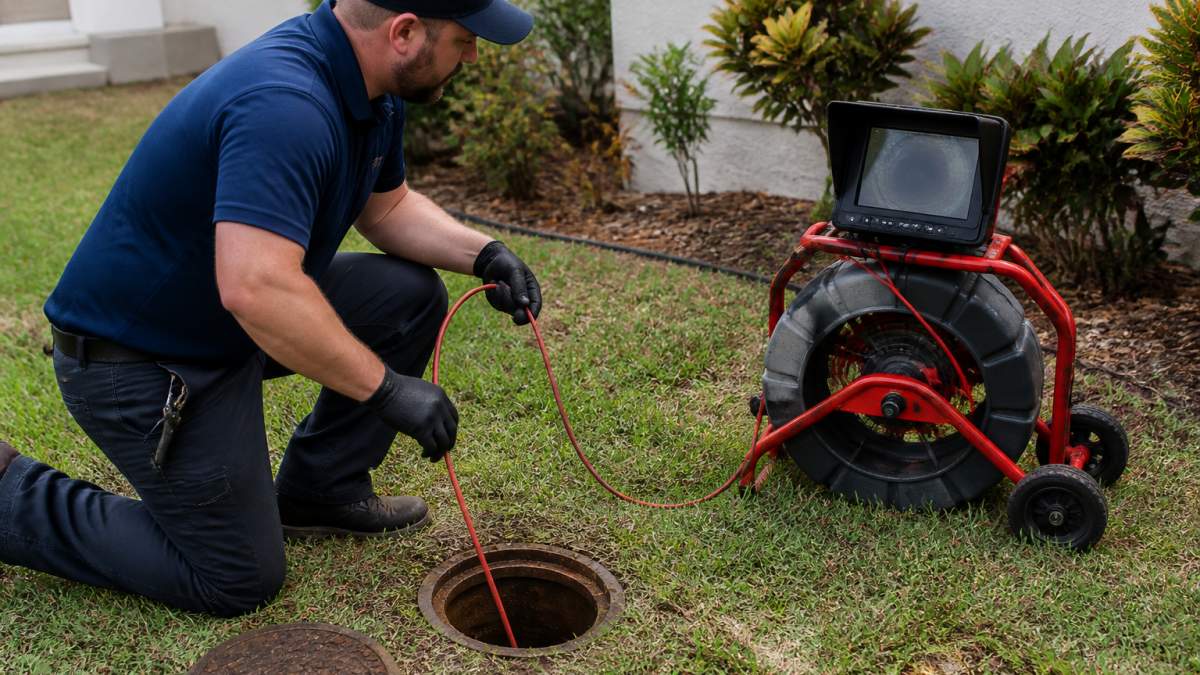
We recommend an inspection before you buy an older home, and every couple of years after that if the line is original. If you are ready to schedule one, you can book a sewer camera inspection in Pinellas County. If you want to know what the process involves and what it typically reveals before you commit, our guide to sewer camera inspection costs and what they cover walks through it.
How often to inspect depends on what your lateral is made of and what is growing over it.
| Pipe type or condition | Inspection frequency | Note |
|---|---|---|
| Cast-iron laterals | Every one to two years | Yearly if roots have ever been found |
| Clay tile laterals | Every two years | Also after major excavation or landscaping near the line |
| Orangeburg or bituminous fiber pipe | Yearly | Plan for replacement if camera shows deformation |
| PVC or repaired sections | Every two to three years | Transition joints are common failure points |
| Mature trees over the lateral | Yearly | Pair with hydro jetting when roots appear |
Step 2: Change How You Dispose of Grease, Wipes, and Paper Products
Most sewage backups start in the kitchen and the bathroom, not in the yard.
Grease and food residue are the worst offenders.
Then there are the products labeled flushable. Flushable wipes do not break down the way toilet paper does (Is it okay to flush disinfecting wipes? | Coronavirus (COVID-19)).
Paper products belong in the trash too. Paper towels, tissues, and sanitary products do not belong in the toilet, no matter what the package suggests.
Step 3: Plan Backwater Valve Installation for Flood Protection
Backwater valve installation is the most direct defense against a backup caused by heavy rain and an overloaded sewer system. A backwater valve, also called a backflow preventer, is a one-way check valve installed on the sewer lateral. Wastewater flows out. When the main sewer fills and starts pushing back, the valve closes and keeps it out of your basement or lowest drains.
Choosing the Right Backflow Preventer for Your Line
Not every valve suits every home. The right choice depends on your line size, the slope of the lateral, the material of the pipe, and whether the property has a history of flooding. A licensed plumber should make the final call after a camera inspection, because the valve has to match the actual inside diameter and condition of the lateral.
- Normally open valves stay open and close only when backflow occurs. They are the common choice for most homes on a combined system because they allow gravity flow with minimal restriction.
- Normally closed valves stay shut and open only for outgoing flow. They suit properties with a repeated flooding history, but they rely on a mechanical or motorized mechanism that must be maintained.
- Manual gate valves require you to close them by hand. They are only useful if someone is home when the storm hits, and they are easy to forget.
A valve installed without a proper cleanout access point is nearly impossible to service. Plan the access during installation, not after.
Where a Licensed Plumber Should Install It
The valve belongs on the private sewer lateral, downstream of the house drain and upstream of the public main connection. In most older homes that means digging at the cleanout near the foundation or in the yard, depending on where the lateral runs. Local code and the municipal sewer authority may dictate the exact location, the type of valve, and whether a permit and inspection are required.
Inspection, Cleaning, and Failure Risks
Maintenance is where these valves fail. A backwater valve that is never cleaned will jam open with debris and do nothing when you need it.
- Inspect the valve body and flap for debris, grease, and root fragments.
- Clean the seating surface so the flap closes flush.
- Test the flap by hand or with water to confirm it moves freely and seals.
A valve that is stuck open offers no protection at all, and a valve that is stuck closed can cause its own backup. Treat the yearly check as part of the same routine as the camera inspection and hydro jetting.
Step 4: Seal Floor Drains and Other Sewage Entry Points
Sewage entry points are usually the fixtures you use least.
Seal drains you do not need. A floor drain plug or a watertight cover stops backflow at that fixture.
Low-flow toilets add a wrinkle in older homes. They send less water per flush, which is good for water use but can leave solids sitting in a lateral that was sized for a bigger flush.
Step 5: Keep Sewer Lines Clear With Routine Cleaning and Maintenance
Routine sewer-line cleaning can help prevent problems. Preventive maintenance means clearing the line before it blocks, not after.
Our recommendation for an older home with original pipe:
- Camera inspection every two years, or yearly if roots are present
- Hydro jetting to clear grease buildup and root intrusion when the camera shows it
- A yearly check of the backwater valve and floor drain seals
Hydro jetting uses high-pressure water to scour the pipe wall clean rather than just punching a hole through the clog. If you want routine service on the calendar, you can schedule sewer and drain maintenance in Pinellas County.
Step 6: Handle Sewage Backup Cleanup Safely and Document Everything
Sewage backup cleanup is not a mop-and-bucket job. Wastewater carries bacteria and pathogens, and the cleanup has to be done safely.
- Get out of the water. Shut off water use in the house and keep people and pets away from the flooded area.
- Protect yourself. Wear rubber boots, gloves, and eye protection. Wash hands thoroughly afterward.
- Ventilate. Open windows and run fans to dry the space. Mold can start within a day or two.
The safety and insurance side is where homeowners lose money. Take the photos first, then clean.
What to Do Next
Preventing sewage backups in older homes comes down to knowing what is in your line and staying ahead of it. If your house is past its fortieth birthday and you have never had the lateral inspected, that is the place to start.
CW Plumbing is a family and locally owned business serving homeowners and businesses throughout Pinellas County. We use advanced sewer camera inspection and hydro jetting equipment to find and clear the problem, and we offer emergency service when a backup will not wait.
Frequently Asked Questions
How can I prevent sewage backups in an older home?
Start with a camera sewer line inspection to see what condition your pipes are in, then fix what it finds. Keep grease, food residue, hair, and flushable wipes out of drains, and seal floor drains in the basement. Backwater valve installation protects the whole house when heavy rain overloads the main sewer, and routine sewer-line cleaning stops clogs from building up. For homes with clay or cast-iron pipe, plan on more frequent inspections because root intrusion and corrosion are common.
How often should an older home’s sewer line be inspected?
Homes with clay or cast-iron sewer laterals should get a camera inspection every two to three years, and every year if tree roots have already been found. Newer plastic pipe can usually go longer. Add an inspection any time you notice slow drains, gurgling toilets, or a sewage smell in the basement, since those are common signs of a sewer line clog forming before a full backup happens.
Do backwater valves actually prevent sewage backups?
A properly installed backwater valve closes automatically when wastewater flow reverses, blocking stormwater and sewage from the overloaded main sewer from entering your basement. It only protects fixtures at or below street level, so floor drains and basement bathrooms are the main beneficiaries. The valve needs occasional cleaning to keep the flap free of debris, and local code may require permits or inspection for backwater valve installation, so confirm requirements before work begins.
What should I do if sewage starts backing up into my home?
Stop using water immediately and keep people and pets away from the affected area. Turn off the main water supply if the backup is severe, and call a plumber for emergency service. Do not run a hand auger through a backed-up main sewer yourself. For sewage backup cleanup, wear gloves and boots, discard porous materials that absorbed waste, disinfect hard surfaces, and photograph everything before disposal for your insurance claim.
