


Book An
Appointment
Lorem ipsum dolor sit amet, consectetur adipiscing elit, sed do eiusmod tempor incididunt ut labore et
Our Services
Last Updated: November 7, 2026
Quick Summary
A residential plumbing maintenance checklist in 2026 is a scheduled set of inspections and small repairs that catch leaks, corrosion, and pressure problems before they become water damage. Run a 15-minute monthly walkthrough of sinks, faucets, toilets, the water heater base, washing machine hoses, and the main shut-off valve, then add seasonal tasks.
- The monthly walkthrough takes under fifteen minutes and requires no tools.
- Exercise the main shut-off valve twice a year so it does not seize.
- Flush the water heater annually and have the anode rod inspected at the same visit.
- Test the sump pump every three months by pouring water into the pit.
- Call a plumber for water heater internals, sewer lines, gas connections, or anything behind a wall.
Table of Contents
- Why a Residential Plumbing Maintenance Checklist Matters in 2026
- Monthly Plumbing Maintenance Tasks Every Homeowner Can Handle
- Your Seasonal Plumbing Maintenance Checklist for Pinellas Park
- Plumbing Inspection Checklist for Homeowners: What to Check and How Often
- Smart Home Plumbing Integration for Modern Homes
- DIY vs. Professional Thresholds: When to Call a Plumber for Maintenance
- Book Your Pinellas County Plumbing Maintenance Visit
- Frequently Asked Questions
Why a Residential Plumbing Maintenance Checklist Matters in 2026
A residential plumbing maintenance checklist in 2026 is a scheduled set of inspections and small repairs that catch leaks, corrosion, and pressure problems before they turn into water damage. Below, we break down exactly what to check, how often, and when to stop DIY and call a licensed plumber.
The Cost of Skipping Preventative Maintenance
Small problems get expensive fast. A dripping supply line under a sink can quietly rot a cabinet floor for months before anyone notices. A water heater that never gets flushed builds sediment until the tank fails.
Watch out: skipping the annual water heater flush can allow sediment to build up, which insulates the burner and can shorten the life of the tank.
How Florida’s Climate and Water Affect Your Pipes
Hard water leaves mineral buildup inside water heaters and fixtures. Sandy soil shifts, which puts pressure on buried sewer lines.
The U.S. Environmental Protection Agency’s guidance on water hardness explains how mineral content varies by region, and Florida’s water is on the harder side. That’s why our seasonal checklist below leans on descaling and leak checks more than freeze protection.
Monthly Plumbing Maintenance Tasks Every Homeowner Can Handle
Monthly plumbing maintenance tasks are the small, no-tools checks that keep a system predictable. Most take under fifteen minutes and cost nothing. The goal is early detection, not repair.
A Simple 15-Minute Monthly Walkthrough
Run this once a month. It catches the majority of developing issues before they escalate.
- Look under every sink for moisture, staining, or warping
- Run each faucet and watch for slow drains or reduced flow
- Flush each toilet and listen for a running fill valve
- Check the water heater base for rust or pooling water
- Open the cabinet around the washing machine and inspect the hoses
- Test the main shut-off valve by turning it slightly and back
- Note the water pressure at one fixture and compare month to month
If any step turns up something you can’t explain, that’s your cue to schedule a professional look. The U.S. Department of Energy’s water heating resources is a solid reference for understanding how your water heater should behave.
Your Seasonal Plumbing Maintenance Checklist for Pinellas Park
A seasonal plumbing maintenance checklist for Pinellas Park looks different from one written for colder states. Mild winters mean freeze protection matters less, but the wet season and hard water still call for attention twice a year. The goal is to time each task to the condition that causes it: hard water scaling during the dry months, and groundwater and rain intrusion before and during the June-to-September wet season.
Spring Checklist (March Through May, Before Rainy Season)
Spring is the last dry window before afternoon thunderstorms become routine. Use it to check everything that rain and rising groundwater will stress.
- Outdoor spigots and hose bibs. Turn each one on and watch the wall connection, not just the spout. A slow seep at the penetration point is easy to miss in dry weather and becomes a saturated wall cavity once it rains weekly.
- Yard drains and French drains. Clear leaves and sand from grate covers and confirm water moves away from the slab. Pinellas County’s sandy soil drains quickly until it is saturated, then it holds water against the foundation.
- Sump pump test. Pour a bucket of water into the pit and confirm the float triggers the pump and that the discharge line runs well away from the foundation. Test it now, not during the first tropical system.
- Main shut-off valve exercise. Turn the main valve closed and open again so it does not seize from disuse. A valve that will not close is a valve that cannot protect you during a burst supply line.
- Irrigation and hose timer check. Look for cracked heads and leaks at the backflow preventer. Summer watering increases line pressure on outdoor runs.
- Water softener salt level. Hard water is a year-round issue here, but softener demand rises with summer watering. Check the brine tank and top off salt if needed.
Fall Checklist (October Through November)
Fall is the recovery window after the wet season. The ground is still warm, humidity is lower, and you can inspect for damage the summer left behind.
- Water heater flush. Drain the tank and clear sediment. In hard-water areas, sediment builds faster than the manufacturer’s generic annual schedule suggests, so fall is a sensible anchor date each year.
- Anode rod inspection. Have the rod pulled and checked at the same visit. Once it is more than half consumed, the tank’s steel is unprotected.
- Washing machine hoses. Inspect for bulges, cracks, or stiffness. Braided stainless lines outlast rubber, and a burst hose is one of the most common causes of sudden indoor flooding.
- Pipe insulation in the garage and attic. Even mild Pinellas winters can drop near freezing on a few nights. Insulate exposed runs in unconditioned spaces so a rare cold snap does not split a line.
- Corrosion check on exposed fittings. Salt air and year-round humidity keep corrosion active. Look for green or white crust on copper and brass fittings under sinks and at the water heater connections.
- Toilet flapper and fill valve check. A silently running toilet can waste hundreds of gallons a month. Drop dye in the tank and watch the bowl for color.
What Changes in a Coastal Pinellas Park Home
Homes closer to the Intracoastal and the Gulf can see faster corrosion on outdoor fixtures, hose bibs, and exposed metal.
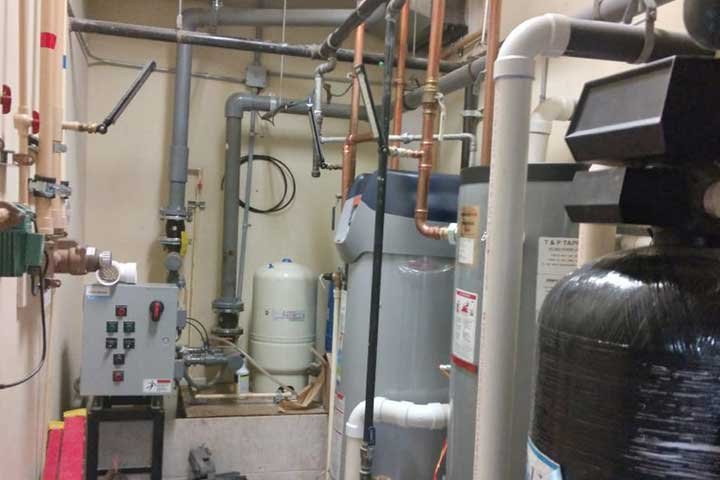
Watch out: do not treat the fall water heater flush as optional because the tank still produces hot water.
Plumbing Inspection Checklist for Homeowners: What to Check and How Often
A plumbing inspection checklist for homeowners should separate what you check monthly from what a professional handles annually. Here’s how we divide it.
| Task | How Often | Who Handles It |
|---|---|---|
| Faucet and supply line check | Monthly | Homeowner |
| Water heater flush | Annually | Professional |
| Sump pump test | Every 3 months | Homeowner |
| Washing machine hose inspection | Every 6 months | Homeowner |
| Sewer camera inspection | As needed | Professional |
| Shut-off valve exercise | Every 6 months | Homeowner |
Leak Detection and Water Pressure Testing
Leak detection starts with your water meter. Turn off every fixture, note the meter reading, wait an hour, and check again. Any movement means water is escaping somewhere. For water pressure, attach a gauge to an outdoor spigot; readings that stay high point to a failing pressure regulator. Our guide on how to find hidden pipe leaks walks through the meter method step by step.
Water Heater, Sump Pump, and Washing Machine Hose Checks
Flush the water heater annually to clear sediment accumulation, and have the anode rod inspected at the same time. Test the sump pump by pouring water into the pit and confirming it kicks on. Washing machine hoses are a frequent failure point; braided steel lines outlast rubber ones. If your sump pump needs service, our team handles sump pump service in Pinellas County, FL.
Drain Lines, Shut-off Valves, and Outdoor Spigots
Slow drains signal hard water buildup or a developing clog, not just hair. Exercise every shut-off valve twice a year so it doesn’t seize when you need it in an emergency. Check outdoor spigots for leaks at the wall connection before the rainy season. For stubborn clogs, our guide on clearing stubborn drain clogs permanently covers diagnosis and prevention.
Smart Home Plumbing Integration for Modern Homes
Smart home plumbing integration means using leak sensors and automatic shut-off devices to catch problems when you are not home. A Wi-Fi leak sensor under the water heater or washing machine alerts your phone the moment moisture appears. An automatic shut-off valve closes the main water supply when it detects abnormal flow. These devices do not replace your checklist; they back it up overnight and while you travel.
The Three Device Categories Worth Knowing
- Point leak sensors. Small battery-powered pucks placed under sinks, behind the washing machine, beside the water heater, and near the sump pit. They report moisture to an app and usually cost less than a service call. Their weakness is placement: a sensor only helps where you put it, so map them to the fixtures your monthly walkthrough already covers.
- Flow-based shut-off valves. These install on the main supply line and learn your household’s normal water use. When flow continues abnormally, they close the valve and notify you. They are the closest thing to automatic protection against a burst supply line while you are at work or away for the summer.
- Water heater and sump pump monitors. Some controllers track tank temperature, anode status, and pump run cycles. A sump pump monitor that reports run count is useful in Pinellas Park because a pump that runs constantly during the wet season is a pump that is working hard and may be near failure.
Where These Devices Fit Your Existing Checklist
Smart devices complement the manual tasks rather than replacing them. Your monthly walkthrough still catches slow cabinet staining and a running toilet that a point sensor may never see. The devices cover the hours you are asleep or away. A practical split is to keep the monthly visual checks, add point sensors at the three or four highest-risk locations, and consider a flow-based shut-off valve if you travel or leave the home vacant seasonally.
Installation Thresholds and Trade-offs
Point sensors are plug-and-play and need no plumbing work. Flow-based shut-off valves require cutting into the main supply line, which is a licensed plumber’s job and should be planned rather than rushed.
Watch out: do not install a flow-based shut-off valve and then assume the manual main valve no longer needs exercising. The manual valve is still the fallback if the device loses power or connectivity.
DIY vs. Professional Thresholds: When to Call a Plumber for Maintenance
Call a plumber for maintenance when the task involves the water heater’s internal parts, sewer lines, gas connections, or anything behind a wall. Handle the monthly visual checks yourself.
Watch out: never open a gas water heater’s connections or attempt sewer line work yourself. If you’re unsure whether a problem is urgent, our emergency plumber guide for Pinellas explains what to do first.
Book Your Pinellas County Plumbing Maintenance Visit
A checklist only works if someone acts on what it finds. CW Plumbing is family and locally owned, serving residential and commercial clients across Pinellas County with hydro jetting and sewer camera inspections. Contact our team to schedule your maintenance visit.
Your plumbing system rewards attention and punishes neglect, usually at the worst possible time. A twice-yearly professional inspection catches what a monthly walkthrough can’t see, and it’s far cheaper than water damage repair.
Frequently Asked Questions
What should be included in a plumbing inspection checklist for homeowners?
A thorough plumbing inspection checklist for homeowners should cover leak detection at faucets and under sinks, water pressure testing with a gauge, shut-off valve operation, water heater flushing and anode rod condition, drain line flow, washing machine hose condition, sump pump testing, and outdoor spigot checks. It should also note the material of your pipes, such as galvanized pipes or PVC piping, and flag any corrosion or hard water buildup. A professional inspection can add sewer line camera review.
How often should residential plumbing be inspected?
Most homes benefit from a professional plumbing inspection once a year, with monthly visual checks by the homeowner and a deeper seasonal plumbing maintenance checklist each spring and fall. Homes with older galvanized pipes, a history of clogged drains, or high water pressure may need inspections every six months. In Pinellas Park, where humidity and hard water speed up wear, annual maintenance is the minimum to catch corrosion and sediment accumulation before they cause water damage.
What monthly plumbing maintenance tasks should homeowners do?
Monthly plumbing maintenance tasks take about 15 minutes: check under sinks for faucet leaks, test shut-off valves by turning them slightly, run water in unused drains to keep traps filled, inspect washing machine hoses for bulging or cracks, and look for rust or moisture around the water heater. You can also watch drainage behavior in sinks and tubs; slow drains signal a developing clog before it becomes an emergency. These small checks support long-term plumbing integrity.
When should I call a plumber for maintenance instead of handling it myself?
Call a plumber for maintenance when you find corroded or leaking pipes, high water pressure, a water heater that needs a flush or anode rod replacement, recurring clogged drains, or any issue with the main water supply or sewer line. If a repair requires opening walls, working on gas lines, or using a sewer camera, it is a professional job. Quick fixes like replacing a faucet aerator or testing a sump pump are safe to do yourself.
What plumbing tasks should be done seasonally in Pinellas Park, Florida?
In Pinellas Park, the seasonal plumbing maintenance checklist focuses on humidity and heavy summer rain rather than freezing. In spring, test the sump pump, check outdoor spigots, and inspect for leaks after winter. Before summer storms, clear gutters and verify the main water supply shut-off works. In fall, flush the water heater and check pipe insulation in the attic. Winter rarely freezes here, but a quick check of exposed pipes and hose bibs is still worth doing.
How can I prevent clogged drains and sewer line problems?
Prevent clogged drains by using strainers in sinks and tubs, never pouring grease down the drain, and running hot water after each use. Once a month, flush drains with hot water and a drain-safe cleaner to reduce hard water buildup and sediment accumulation. Have your sewer line inspected with a camera every few years, especially if you have mature trees, since roots are a common cause of sewer line damage.
