


Book An
Appointment
Lorem ipsum dolor sit amet, consectetur adipiscing elit, sed do eiusmod tempor incididunt ut labore et
Our Services
Table of Contents
- Why Stubborn Drain Clogs Keep Coming Back
- DIY Methods for Clearing a Drain Clog
- Safety and Chemical Incompatibilities to Know
- When DIY Methods Can Damage Your Pipes
- Hydro Jetting vs Snaking: Which Clears Clogs Permanently?
- Signs of a Main Sewer Line Blockage
- How to Prevent Recurring Sink Clogs
- Frequently Asked Questions
Last Updated: October 16, 2026
Why Stubborn Drain Clogs Keep Coming Back
Most drain clogs don’t fail because you used the wrong tool. They return because you cleared the symptom, not the cause. Stubborn drain clogs are simply blockages that have rebuilt themselves faster than your last fix removed them, and that pattern almost always points to buildup that never fully left the pipe.
A sink that drains fine for two weeks, then slows to a crawl again often indicates that the residue was never fully gone; it just got pushed aside.
Diagnosing the Clog by Drain Type and Symptoms
Where the clog sits tells you what it’s made of. That distinction decides which method actually works.
- Kitchen sink, slow drain: grease, food debris, and soap scum coating the pipe walls
- Bathroom sink or tub, standing water: hair and soap scum tangled into a mat
- Toilet, rising water: a solid obstruction in the trap or branch line
- Multiple fixtures backing up at once: a main sewer line blockage, not a local clog
If one fixture drains poorly, treat it locally. If several do, stop pouring anything down the drain and read the sewer line section below.
What ‘Permanently’ Can Realistically Mean
No method makes a drain immune to future clogs. “Permanently” means removing the full buildup, not just punching a channel through it, and then keeping grease and hair out of the pipe. That’s the honest version. A drain cleared to bare pipe walls and maintained with a simple routine stays clear for years in most homes.
Permanent results come from two things: complete removal of existing buildup and stopping new buildup from accumulating. Skip either one and the clog returns.
DIY Methods for Clearing a Drain Clog
Start with the gentlest method that matches your clog type, and escalate only if it fails. Most household clogs clear with one of the four approaches below, and none of them requires a plumber’s license.
Using Baking Soda, Vinegar, and Dish Soap
This combination works on light organic buildup, not on solid blockages. Pour half a cup of baking soda down the drain, follow with half a cup of white vinegar, and cover the opening. Let it sit for 15 minutes, then flush with hot water. A squirt of dish soap before the hot water helps grease slide through. It’s a maintenance method, not a rescue method.
Hot Water, Plungers, and Drain Snakes
Boiling water loosens grease and soap scum in metal pipes. Skip it for PVC if you’re unsure of the pipe’s condition, and never use it after a chemical cleaner. For a plunger, block the second drain opening in a double sink first, then plunge with short, firm strokes to create a tight seal. A drain snake or plumbing auger reaches hair and debris the plunger can’t move. Feed it in slowly, crank through the clog, and pull the debris out rather than pushing it deeper.
Checking and Cleaning the P-Trap
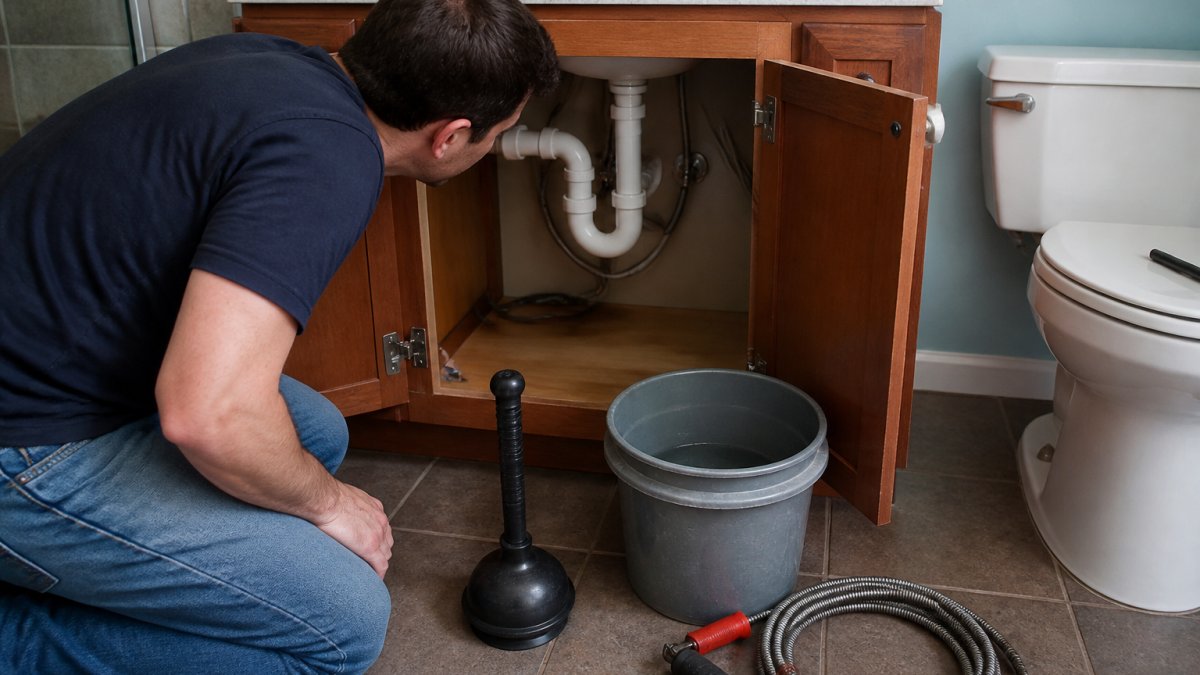
The P-trap is where most bathroom clogs actually live. Place a bucket underneath, unscrew both slip nuts, and pull the trap down. Clean the interior by hand, check the stopper and tailpiece for hair, then reassemble the pipes and run hot water to confirm the seal holds. This is the single most effective DIY step for sink clogs, and it’s the one most people skip.
| Method | Best For | Time | Limitation |
|---|---|---|---|
| Baking soda and vinegar | Light organic buildup | 20-30 min | Won’t clear solid clogs |
| Boiling water | Grease and soap scum | 5 min | Risky on older PVC |
| Plunger | Soft clogs near the opening | 5-10 min | Ineffective past the trap |
| Drain snake | Hair and debris | 15-30 min | Can scratch pipes if forced |
| P-trap cleaning | Sink clogs | 20 min | Sinks only |
Safety and Chemical Incompatibilities to Know
Chemical drain cleaners are the most dangerous item . Mixing them with anything else, including vinegar, can produce heat, fumes, or pressure inside the pipe. Never use a plunger or snake after pouring a chemical cleaner, and never pour a second product in to “finish the job.” If a chemical cleaner has already gone down the drain and the clog remains, call a professional rather than improvising.
The EPA’s guidance on household hazardous waste explains why leftover chemical cleaners need proper disposal rather than storage under the sink. Wear gloves and eye protection for any manual method, and ventilate the room.
When DIY Methods Can Damage Your Pipes
Repeated snaking and aggressive plunging cause real damage. A snake forced past a resistant clog can scratch the pipe interior, which gives future buildup a rougher surface to cling to. Over-plunging stresses joints and can loosen them. Boiling water can soften or deform older PVC and deteriorate failing seals.
If the same drain clogs three or more times in a few months, stop repeating the same fix. Repeated mechanical clearing on a deteriorating pipe turns a cleaning job into a repair job.
Hydro Jetting vs Snaking: Which Clears Clogs Permanently?
Snaking cuts a channel through a clog. Hydro jetting scours the full interior of the pipe. That’s the core difference, and it explains why one is a repair and the other is closer to a reset.
A drain snake is a mechanical tool that breaks through or pulls out a blockage, leaving the pipe walls coated with whatever remains. Hydro jetting uses high-pressure water to strip grease, scale, and organic buildup from the entire circumference of the pipe. For a recurring clog, snaking often clears the symptom while jetting addresses the cause.
Where snaking wins: a single, accessible clog, a quick fix, and lower upfront cost. Where hydro jetting wins: grease-heavy kitchen lines, root intrusion, and any drain that keeps clogging after snaking. Jetting isn’t right for every pipe, though. Older or already-damaged lines need a camera inspection first to confirm they can handle the pressure.
That inspection step matters. The U.S. EPA’s overview of sanitary sewer systems notes that aging infrastructure and root intrusion are common causes of recurring blockages, which is exactly the situation where a camera inspection pays for itself before any repair decision.
Signs of a Main Sewer Line Blockage
A main line blockage behaves differently from a local clog, and misreading it wastes time and money. Watch for these signals:
- Multiple drains backing up at the same time
- Sewage odor in the basement or lowest fixtures
- Gurgling from toilets when you run a sink or washing machine
- Water rising in one fixture when you use another
- Slow drainage throughout the whole house
Any one of these means the problem is past the branch lines. Stop using water, avoid chemical cleaners entirely, and get the line inspected. A sewer camera inspection shows exactly what’s in the pipe, whether it’s roots, grease, or a collapsed section, before anyone commits to a repair.
How to Prevent Recurring Sink Clogs
Prevention beats every method above, and it takes about two minutes a week. The routine that works is source-specific: match the step to the material that actually builds up in that drain.
Kitchen sink (grease, food scraps, soap scum)
- Wipe grease into the trash, never down the drain. Grease is liquid when hot and solidifies as it cools, coating the pipe walls and trapping everything behind it.
- Scrape plates into the trash or compost before rinsing. Even a disposal only grinds scraps smaller, it does not eliminate them.
- Run hot water for 30 seconds after every use to flush residual grease before it sets.
- Use a mesh strainer in the sink to catch scraps before they reach the trap.
Bathroom sink, tub, and shower (hair, soap residue, skin cells)
- Install hair-catching strainers in every tub and shower. Hair is the single largest contributor to bathroom drain clogs, and it tangles with soap scum into a mat that water cannot push through.
- Pull and clean sink stoppers weekly. Hair wraps around the stopper and tailpiece long before it reaches the P-trap.
- Flush bathroom drains weekly with hot water to move soap residue that would otherwise harden.
Whole-home habits
- Never flush wipes, paper towels, or products labeled “flushable.” They do not break down like toilet paper and snag on pipe imperfections, forming the core of a stubborn clog over time.
- Do a monthly baking soda and vinegar treatment on slow drains as a maintenance step, not a fix.
- If the same drain slows more than twice in a few months, stop treating and start diagnosing. Recurring slowdown is the signal that buildup is deeper than a surface remedy can reach.
Prevention is not one weekly remedy, it is matching the step to the source. Grease needs heat and a trash can; hair needs a strainer and a weekly stopper cleaning; wipes need to stay out of the pipe entirely.
That last point catches more people than any other. Products labeled flushable still snag in pipes and form the core of a stubborn clog over time.
Frequently Asked Questions
What is the strongest method to clear a stubborn drain clog?
A drain snake or plumbing auger is usually the strongest DIY tool for stubborn drain clogs because it physically breaks up or pulls out the blockage rather than dissolving it. For clogs deep in the line or caused by grease and scale, hydro jetting is more effective. Chemical drain cleaners may work on slow drains but can damage older pipes and rarely fix the underlying buildup.
Can DIY methods damage your plumbing system over time?
Yes. Repeated use of chemical drain cleaners can corrode pipes, especially older metal ones. Boiling water can soften PVC joints and warp toilet wax rings. Excessive plunging can loosen pipe connections. Used correctly, mechanical tools like drain snakes are safe, but if clogs return within weeks, the problem is likely deeper in the line and needs a professional inspection.
How do you know if a clog is a sign of a main sewer line blockage?
Multiple drains backing up at once, sewage odors, gurgling toilets, and standing water in the lowest fixtures are common signs of a main sewer line blockage. If your sink drains slowly and your toilet also struggles, the blockage is likely past the branch lines. A sewer camera inspection can confirm the location and cause before any repair.
How often should you perform preventative drain maintenance?
A weekly routine of flushing kitchen and bathroom drains with hot water helps prevent buildup. Every one to three months, use a baking soda and vinegar treatment followed by hot water. If you have older pipes or a history of recurring clogs, schedule a professional inspection annually. Regular maintenance keeps drains flowing and catches problems before they become emergencies.