


Book An
Appointment
Lorem ipsum dolor sit amet, consectetur adipiscing elit, sed do eiusmod tempor incididunt ut labore et
Our Services
Last Updated: November 18, 2026
Quick Summary
Before hiring a drain cleaning company, ask five things: whether it is licensed and insured, which cleaning methods it uses and when, how it prices the job, whether it inspects the line before quoting repairs, and how it confirms the clog is cleared. Get the total price in writing before any work begins.
- Ask for the license number and confirm it with the licensing board before work starts.
- Request a certificate of insurance and check that it is current.
- Flat-rate pricing gives a fixed total, while hourly pricing can grow if the job runs long.
- Ask whether a camera inspection is included in the quote or billed as a separate diagnostic fee.
- Never authorize work on the spot; read the written estimate first.
Table of Contents
- Why the Questions You Ask Before Hiring Matter
- Question 1: Are You Licensed and Insured for Drain Work in Pinellas Park?
- Question 2: What Drain Cleaning Methods Do You Use, and When?
- Question 3: How Do You Price the Job, and What Is the Drain Cleaning Cost in Pinellas County?
- Question 4: Will You Inspect the Line Before Quoting Repairs?
- Question 5: Do You Offer Hydro Jetting, and How Do You Confirm the Clog Is Gone?
- Getting a Written Estimate and Booking Your Drain Visit
- Frequently Asked Questions
Why the Questions You Ask Before Hiring Matter
Choosing a drain cleaning company is a decision you make under pressure. A slow drain turns into a backed-up sink, and suddenly you need someone at the door today. CW Plumbing, a family and locally owned business serving Pinellas County, FL, knows how much the first phone call shapes the rest of the job. The right questions help you separate a qualified crew from one that will simply charge you more for the same work.
A drain cleaning company is a business that clears blockages in pipes, sewer lines and fixtures. Its quality depends on who does the work, how it is done, and how transparent it is about the cost. Asking the right questions up front tells you all three.
Many homeowners hire the first company that answers the phone. That approach often leads to surprise charges or a clog that returns within weeks. Taking five minutes to ask about licensing, methods, pricing, inspection and hydro jetting protects you from both problems. The sections below walk through those five questions, followed by what to expect in a written estimate.
Question 1: Are You Licensed and Insured for Drain Work in Pinellas Park?
Start here. A licensed plumber has passed the required exams and meets state and local rules. Ask for the license number, then confirm it with the licensing board before any work begins. A company that hesitates to share it is a warning sign.
Insurance matters just as much. Ask whether the company carries general liability insurance and workers’ compensation. If a technician damages your floor or your neighbor’s property, liability coverage pays for the repair. If a worker is injured on your property and the company has no workers’ compensation, you could be responsible for the medical bills.
Local permits are another point to raise. Some sewer and drain repairs require a permit from the city or county. Ask who pulls the permit and whether it is included in the quote.
Watch out: Never accept a verbal assurance on insurance. Ask for a certificate of insurance and check that it is current.
Question 2: What Drain Cleaning Methods Do You Use, and When?
Not every clog responds to the same tool. Ask the company which methods it uses and how it chooses between them. Common options include:
- Manual augers (drum or cable machines): Good for simple clogs in sinks, tubs and toilets. Lower cost, fast results.
- **
- Hydro jetting: High-pressure water that scours pipe walls. Effective for grease, roots and heavy buildup.
- Camera-guided cleaning: A camera locates the blockage first, so the crew uses the right tool in the right spot.
A good answer explains why a method fits your specific problem, not just which equipment the company owns. Be wary of any company that recommends the same method for every job regardless of the blockage.
Question 3: How Do You Price the Job, and What Is the Drain Cleaning Cost in Pinellas County?
Pricing is where many homeowners get caught off guard. Ask whether the company charges a flat rate or an hourly rate. Flat-rate pricing gives you a fixed total for a defined job. Hourly pricing can grow if the crew needs more time than expected.
Ask about every fee, including the diagnostic or service call charge, after-hours or emergency surcharges, and any materials. Request the total price in writing before work starts.
Pricing depends on the type of blockage, how hard it is to reach, the method needed, and the time of day. For current pricing, contact CW Plumbing directly for a quote. Any company that will not explain its pricing structure is a company to skip.
Pricing varies by job, so compare the structures and fees the company spells out before approving any work.
| Pricing item | What to ask | Why it matters |
|---|---|---|
| Flat rate | Fixed total for a defined job | Costs stay predictable |
| Hourly rate | How long the crew expects to take | Total can grow if the job runs long |
| Service call or diagnostic fee | Is it charged separately | Can add to the final bill |
| After-hours or emergency surcharge | When does it apply | Often raises the price |
| Materials | Are they included in the quote | Can be billed on top |
| Written total | Get it before work starts | Protects you from surprise charges |
Question 4: Will You Inspect the Line Before Quoting Repairs?
A camera inspection is one of the most useful tools in drain work, but it is also one of the most misunderstood. Ask the company whether it inspects the line before recommending a repair, and whether the inspection is included in the quote or billed as a separate diagnostic fee. A reputable company will tell you up front what the inspection costs and what you get for it.
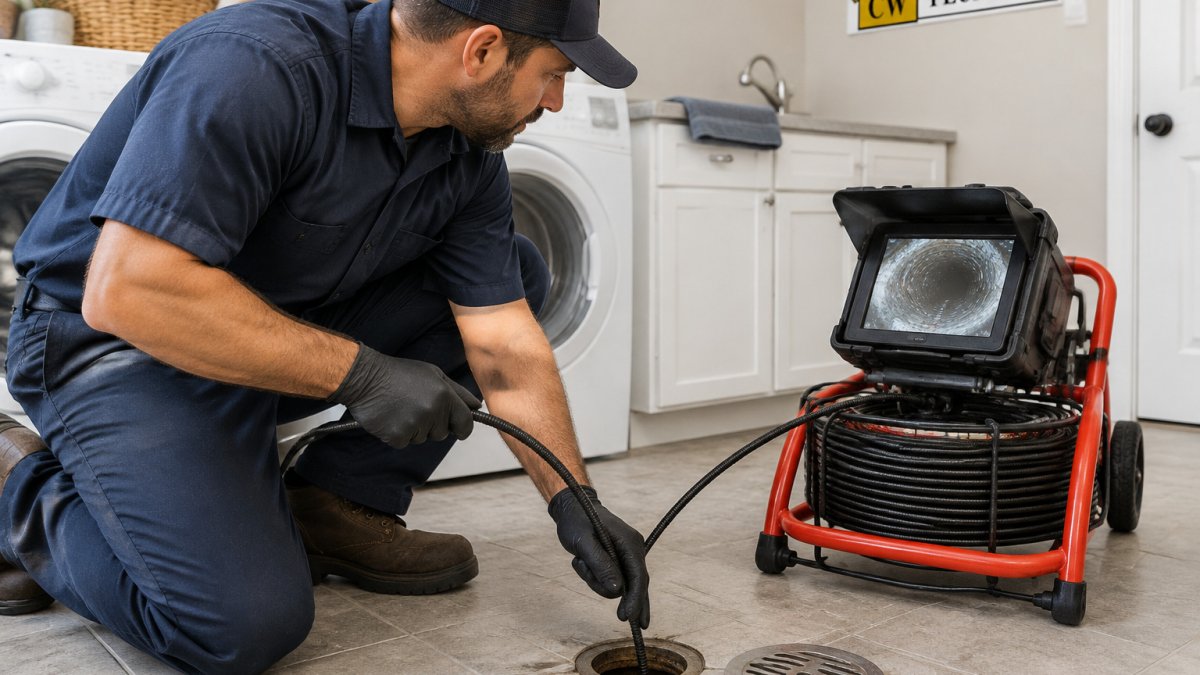
What a camera inspection can establish:
- Blockage location and nature: The camera shows whether the clog is grease, scale, roots, debris or a collapsed section, and roughly where it sits in the line.
- Pipe condition at the camera’s reach: Cracks, offset joints, bellies, corrosion and root intrusion at the point the camera passes are visible on screen.
- Whether cleaning actually worked: A post-cleaning camera pass confirms the line is clear rather than just flowing better at the fixture.
What a camera inspection cannot establish:
- The condition of pipe the camera never reaches: Buried sections beyond a collapse, lines filled with standing water, and branches the camera cannot enter remain unknown until further access is opened.
- The exact cause of every backup: A camera shows the interior at one moment; it does not prove why a backup happened or whether a repair will hold.
- The full scope of a repair: Footage informs a recommendation but does not replace a locate, a scope of work, or a written estimate.
Ask whether you can watch the monitor during the inspection and whether you will receive the footage or photos afterward. Seeing the problem yourself is the best defense against an unnecessary repair recommendation. A company that will not let you view the footage, or that quotes a major repair without showing you why, is a company to question.
Watch out: A camera inspection is a diagnostic tool, not a guarantee. If a company presents footage as proof that a full line replacement is required without explaining what the camera did not reach, ask for the reasoning in writing before you approve anything.
Question 5: Do You Offer Hydro Jetting, and How Do You Confirm the Clog Is Gone?
Hydro jetting is not a universal fix, and the right question is not simply whether a company offers it. Ask how the company decides between snaking, hydro jetting and other methods for your specific blockage, and what risks it warns you about before choosing one.
A practical way to compare the methods:
- Snaking (auger or cable): Best for soft clogs in sinks, tubs and toilets and for cutting through a single obstruction. It opens a path but does not scour pipe walls, so grease and scale can rebuild quickly.
- Hydro jetting: High-pressure water scours grease, scale, roots and debris from the full pipe wall. It is often the right choice for recurring clogs and heavy buildup, but it is not appropriate for every pipe, damaged, very old or fragile lines can be harmed by high pressure.
- Camera-guided cleaning: A camera locates the blockage first so the crew uses the right tool in the right spot and confirms the result afterward.
Ask the company to explain why its recommended method fits your blockage, not just which equipment it owns. Be wary of any company that recommends the same method for every job regardless of the blockage, and ask what it will do if the chosen method does not clear the line.
Confirming the work is done matters as much as the method. Ask the company to run water and confirm the drain flows freely, and for larger or recurring jobs, ask for a camera check after cleaning to verify the line is clear. Ask about the workmanship guarantee before you hire, and follow up if the drain backs up again within the warranty period.
Watch out: Add-on recommendations are where estimates grow. If a company recommends hydro jetting, a camera inspection and a repair in the same visit, ask which finding justifies each step and whether the diagnostic fee is credited toward the work. A trustworthy company will separate the diagnosis from the upsell and put any change to the quoted price in writing before proceeding.
Getting a Written Estimate and Booking Your Drain Visit
A written estimate is your protection. It should list the scope of work, the method, every fee, the total price and the warranty terms. Do not authorize work until you have read and understood it. If the company pressures you to approve work on the spot, that is a red flag.
When you are ready to book, confirm that the company serves your address in Pinellas County and ask about arrival windows and emergency fees. A local plumber in Pinellas County, FL can answer those questions directly. To request an estimate or schedule a visit, contact CW Plumbing today. Asking these five questions before you hire will save you money, time and frustration.
Frequently Asked Questions
How much does professional drain cleaning cost in Pinellas County?
Pricing depends on the type of blockage, how far it sits from the access point, the time of day, and whether a camera inspection is needed. For a price tailored to your situation, the most reliable step is to request a quote for your specific drain from CW Plumbing. Ask whether the price is flat-rate or hourly, whether a diagnostic fee applies, and whether the quote includes cleanup. A written estimate that lists labor, equipment and any additional services protects you from surprise charges once the work starts.
What drain cleaning methods does a plumber use?
Common methods include cable (auger) snaking for simple clogs in sinks, tubs and toilets, and hydro jetting for grease, scale and root buildup in main lines. Hydro jetting uses high-pressure water and clears more of the pipe wall than a cable, but it is not suitable for every pipe material or condition. A good drain cleaning company explains why it recommends one method over another for your blockage, rather than defaulting to the most expensive option.
Does a drain cleaning company provide an upfront estimate?
A reputable company should give you a written estimate before work begins, showing the expected total, any diagnostic or service charges, and what happens if the scope changes. Be cautious of companies that quote a low price over the phone and then add charges on arrival. If the technician finds a larger problem, you should be told what it is and approve the additional cost before the crew proceeds.
When should I ask for a sewer camera inspection?
Ask for a sewer camera inspection when a clog keeps returning, when several drains back up at once, when you suspect tree roots in an older sewer line, or before committing to a major repair. A camera can show the location and type of obstruction, pipe cracks, offsets and root intrusion. It cannot always show what lies outside the pipe or guarantee how long a repair will last, so ask the technician what the footage did and did not reveal.
