


Book An
Appointment
Lorem ipsum dolor sit amet, consectetur adipiscing elit, sed do eiusmod tempor incididunt ut labore et
Our Services
Last Updated: October 30, 2026
Quick Summary
A sewer camera inspection is worth it when the modest inspection fee is weighed against a possible four-figure or five-figure repair you would otherwise inherit. It is especially worth it before buying a house, since a standard home inspection rarely covers the sewer lateral. If you answer yes to an older home, warning signs, or trees near the line, the inspection is worth it.
- The camera travels through a cleanout and sends live video while a locator marks each defect’s depth and position.
- The inspection fee is small next to a sewer line replacement, and a spot repair commonly lands in the low thousands.
- A scope is usually best done during your inspection period, after your offer is accepted but before your contingency deadline.
- The camera cannot see through standing water, misses the pipe’s exterior, and cannot predict the future.
- Ask for the recording and written findings before you pay, and confirm in advance that you will receive both.
Table of Contents
- What a Sewer Camera Inspection Is and How It Works
- What Does a Sewer Camera Inspection Show?
- Sewer Camera Inspection Cost and What Drives the Price
- How Long Does a Sewer Camera Inspection Take?
- Sewer Scope Inspection Before Buying a House
- The Cost-Versus-Risk Math: When an Inspection Pays Off
- Inspection Limitations and False Confidence
- How to Evaluate the Inspection Report and Act on Findings
- Frequently Asked Questions
What a Sewer Camera Inspection Is and How It Works
A sewer camera inspection is a diagnostic service where a plumber feeds a waterproof camera through your sewer line to record the pipe’s condition from the inside.
The camera travels through a cleanout or access point. You get a recording and a written report you can keep. Sewer camera inspection in Pinellas County, FL is available from CW Plumbing.
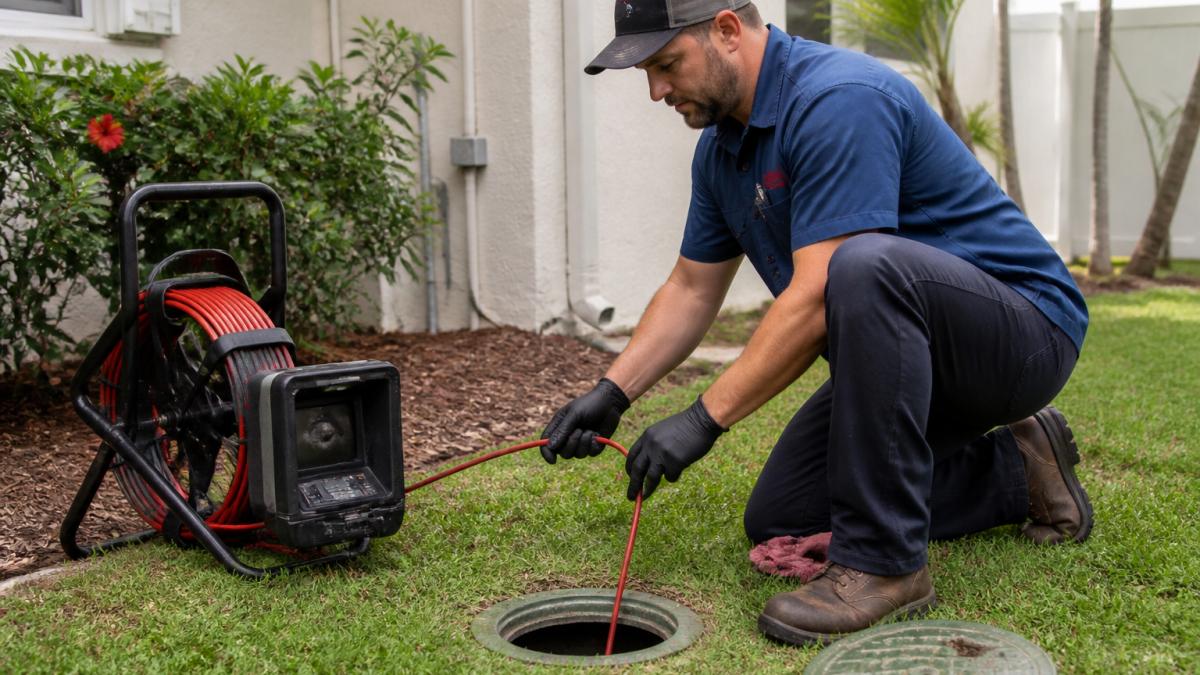
How the Camera Moves Through the Line
The technician pushes a flexible rod with a camera head through the pipe. A locator above ground tracks the camera’s depth and position. That lets the technician mark exactly where a defect sits, so any repair crew digs in the right spot.
A cleanout gives the technician a clear point of entry. Access matters, and a line without an easy entry point can take longer to reach.
What Does a Sewer Camera Inspection Show?
A sewer camera inspection shows the inside of the pipe in real time, including defects you cannot see from the surface. Our technicians look for the problems that drive most sewer repairs.
- Tree roots pushing through joints
- Cracks and corrosion in older pipe
- Misaligned joints where sections have shifted
- Bellied pipe, where a low spot holds water
The footage also reveals pipe material, which tells you how much life the line has left. Clay, cast iron, and PVC all fail differently. A slow drain that keeps coming back often has a physical cause the camera can pinpoint.
Sewer Camera Inspection Cost and What Drives the Price
Pricing for a sewer camera inspection depends on several factors. For current prices or a quote, contact CW Plumbing through its website.
Here is what moves the number:
- Access. A clear cleanout keeps it simple. Pulling a toilet or cutting a new access point adds work.
- Line length. A long run to the street takes more time than a short one.
- Blockages. Heavy roots or debris may need clearing before the camera can pass.
- Add-ons. Locating the defect and recording the footage may be priced separately.
That said, the inspection fee is small next to a sewer line replacement. For a full breakdown of what the process reveals and how local rebates may apply, see our guide to sewer camera inspection costs.
How Long Does a Sewer Camera Inspection Take?
The camera run itself is quick; the setup and locating work usually take most of the time.
A few things stretch the timeline:
- Finding and opening the access point
- Clearing roots or grease so the camera can travel
- Mapping a long or complex line
- Answering questions as you watch the feed
Watching the monitor is one of the fastest ways to understand what the inspection found, because you see it yourself instead of relying on a summary alone.
The camera run itself is quick, but several factors stretch the overall timeline.
| Factor | Effect on time |
|---|---|
| Camera run itself | Quick |
| Setup and locating work | Usually take most of the time |
| Finding and opening the access point | Stretches the timeline |
| Clearing roots or grease for camera travel | Stretches the timeline |
| Mapping a long or complex line | Stretches the timeline |
| Answering questions while you watch the feed | Stretches the timeline |
Sewer Scope Inspection Before Buying a House
A sewer scope inspection before buying a house is the single best way to avoid inheriting a failing sewer line.
A scope report can document the pipe material, the condition, and any defects with video and photos. Our guide to sewer line inspections before buying a home explains how to use the results in negotiations.
Timing matters. A scope is usually best done during your inspection period, after your offer is accepted but before your contingency deadline.
The Cost-Versus-Risk Math: When an Inspection Pays Off
The math on a sewer camera inspection is simple once you frame it as risk, not cost.
, with the exact figure driven by access, line length, and whether locating and recording are bundled.
The inspection fee is usually a small fraction of even a modest repair. The question is not whether the fee is worth it in isolation, it is whether you would rather learn about a four-figure or five-figure problem before closing or after.
Run the comparison as a short worksheet:
- Estimate your exposure. If the line failed the month after closing, could you absorb a full replacement without derailing your budget? If not, the inspection is cheap insurance.
- Weight the probability. Older homes with clay or cast iron lines, mature trees over the lateral, and a history of slow drains raise the odds of a defect. A newer home with PVC and no tree cover lowers them.
- Compare against the alternative. Sellers rarely volunteer a sewer credit. A documented defect found during your inspection period is leverage; an undocumented one found after closing is your bill.
- Account for local conditions. Soil type, frost depth, water table, and whether the lateral runs under a slab all change both the likelihood of failure and the cost to fix it. A line under a finished basement floor is a very different exposure than one under a plain lawn.
Ask yourself three questions:
- How old is the home? Older homes often have clay or cast iron lines with a limited lifespan.
- Are there warning signs? Slow drains, recurring backups, or gurgling toilets point to a physical problem.
- Are there trees near the line? Root intrusion is one of the most common causes of sewer damage.
If you answer yes to any of these, the inspection is worth it. When you are ready to schedule, contact our team to set up a visit.
Inspection Limitations and False Confidence
A camera inspection is powerful, but it is not perfect. The camera shows what it can reach and what the lens can see.
Here is where it falls short:
- It can’t see through standing water. A line full of water hides the pipe below the surface.
- It misses the outside of the pipe. The camera sees the interior, not surrounding soil or the pipe’s exterior.
- It can’t predict the future. A pipe that looks fine today may fail later; the footage is a snapshot.
- Access limits coverage. If the camera can’t pass a blockage, part of the line goes unchecked.
So treat the report as strong evidence, not a guarantee. A clean scope lowers your risk; it does not erase it.
How to Evaluate the Inspection Report and Act on Findings
A useful inspection report should be clear enough for a non-plumber to read and specific enough to act on. When you get yours, check for these items.
- Video footage you can keep and share
- Photos of each defect, with location and depth
- Pipe material and overall condition noted
- Each problem rated by severity
A report that is only a verbal summary or a few stills is hard to use in a negotiation. Ask for the recording and the written findings before you pay, and confirm in advance that you will receive both.
Reading severity without overreacting
Severity ratings vary by inspector, so translate them into plain terms. A hairline crack or minor root intrusion at a joint is often a monitoring item with a hydro jetting or spot repair path. A bellied section, offset joint, or significant corrosion is a repair decision. A collapsed section or a line the camera cannot pass is a replacement conversation.
A clean scope is strong evidence, not a guarantee. The camera sees the interior of the pipe it can reach; it does not see the pipe’s exterior, surrounding soil, or sections blocked by standing water or debris. Treat a clean report as reduced risk, not eliminated risk.
The decision path when a defect is found
- Get a second opinion on the diagnosis, not just the price. A second camera inspection from an independent provider confirms the finding and guards against a repair recommendation that is larger than the problem.
- Request itemized repair estimates. Ask for the scope of work, the pipe length and depth involved, whether permits and restoration are included, and the expected lifespan of the fix. Two estimates on the same scope are far more useful than two lump sums.
- Decide your ask. You can request the seller repair the line before closing, negotiate a credit equal to a documented estimate, or walk away if the exposure is too large. A credit is often cleaner than a seller-arranged repair, because you control the contractor and the workmanship.
- Put it in writing. Whatever you agree to belongs in the purchase contract or an addendum, with the scope and deadline spelled out.
- Proceed with eyes open. If you accept the defect as-is, budget for the repair on your own timeline rather than waiting for a backup.
If the report finds tree roots, the fix may be hydro jetting rather than replacement. Our guide on removing tree roots with hydro jetting explains when that works.
Ask questions before you approve any work. A good inspector will walk you through the footage and explain each finding in plain terms, and will note what the report cannot establish so you can plan accordingly.
Frequently Asked Questions
Is a sewer camera inspection worth the cost?
It depends on the risk you are carrying. For current prices or a quote, contact CW Plumbing through its website. If the home is older, has mature trees near the line, or shows slow drains and recurring backups, the inspection usually pays for itself by catching a problem before it becomes an emergency. On a newer home with a clean history, the case is weaker but still reasonable as a precaution.
What does a sewer camera inspection show that a standard home inspection misses?
A standard home inspection is visual and does not go inside the sewer line. A camera inspection shows the interior condition of the pipe: cracks, corrosion, misaligned joints, bellied sections, collapsed pipe, root intrusion, and blockages. It also identifies pipe material, which tells you how much life the line has left. That is information a buyer cannot get any other way before closing.
How long does a sewer camera inspection take, and can it be done during a home purchase?
Inspection time depends on line length and access. The inspector needs a cleanout or accessible drain line, so confirm access before scheduling. Ask for the video file and a written report with timestamps, not just a verbal summary, so you have documentation if you need to negotiate repairs.
What should I do if the inspection finds a defect?
Get the video and report in writing first. Then ask a qualified plumber to quote the repair so you have a real number, not a guess. Use that quote in negotiations, whether you ask the seller for a credit, a price reduction, or a repair before closing. Minor issues like a small root intrusion can often be cleared and monitored; collapsed pipe or a failed lateral usually means replacement, and that belongs in the conversation before you sign.
A failing sewer line is one of the most expensive surprises a property can deliver. If you suspect a problem, or you are buying a home and want certainty before you sign, CW Plumbing can help. Our team uses advanced sewer camera and hydro jetting equipment, serves both homes and businesses, and offers emergency service when you need it fast. Get started with CW Plumbing and see exactly what is happening in your line before you commit to a major repair.
