


Book An
Appointment
Lorem ipsum dolor sit amet, consectetur adipiscing elit, sed do eiusmod tempor incididunt ut labore et
Our Services
Table of Contents
- What Causes Water Heater Popping Noises
- Is Water Heater Popping Noise Dangerous
- How to Flush Sediment From a Water Heater
- Signs Your Water Heater Is Failing
- Other Noises That Sound Like Popping
- When to Call a Professional Plumber
- Preventing Water Heater Popping in the Future
- Frequently Asked Questions
Last Updated: October 10, 2026
What Causes Water Heater Popping Noises
A water heater popping noise typically signals that sediment has accumulated inside your tank. When water heats, it gets trapped beneath mineral deposits and turns to steam. The steam bubbles burst upward, creating that distinctive popping or rumbling sound. This is one of the most common issues, and it’s usually fixable with proper maintenance.
Sediment and Mineral Buildup
Sediment accumulates naturally as dissolved minerals in your water supply separate and sink to the tank bottom over months and years.
This sediment layer traps water underneath, which boils and creates popping sounds, reduces heating efficiency, and can eventually damage the tank.
Hard water areas see faster buildup. If your water is naturally mineral-rich, you’ll notice the popping sooner. The thicker the sediment layer, the louder the noise becomes.
Trapped Water and Steam Bubbles
The heating element sits near the tank bottom where sediment collects. Sediment blocks direct contact, trapping water in pockets beneath the mineral layer. That trapped water heats and turns to steam, building pressure until bubbles force through cracks in the sediment, creating the popping sound. This cycle repeats with each heating cycle, worsening as sediment thickens.
The popping sound is actually your heater telling you it needs maintenance. Ignoring it means the sediment keeps building, reducing efficiency and shortening your heater’s lifespan. Flushing early prevents bigger problems.
Gas vs. Electric Water Heater Differences
Electric water heaters have submerged heating elements, producing sharp, distinct popping sounds. Gas water heaters have external burners, producing rumbling or banging sounds. Both accumulate sediment and benefit from regular flushing.
Is Water Heater Popping Noise Dangerous
The popping itself isn’t immediately dangerous, but sediment buildup can become serious if ignored. Short term, the noise is harmless. Medium term, sediment reduces efficiency and increases energy bills. Long term, excessive sediment corrodes the tank, leading to leaks and expensive replacement. Flush the tank within a few weeks of hearing regular popping.
If the popping is accompanied by leaking water, unusual smells, or complete loss of hot water, stop using the heater and call a professional immediately. These are signs of tank failure, not just sediment buildup.
How to Flush Sediment From a Water Heater
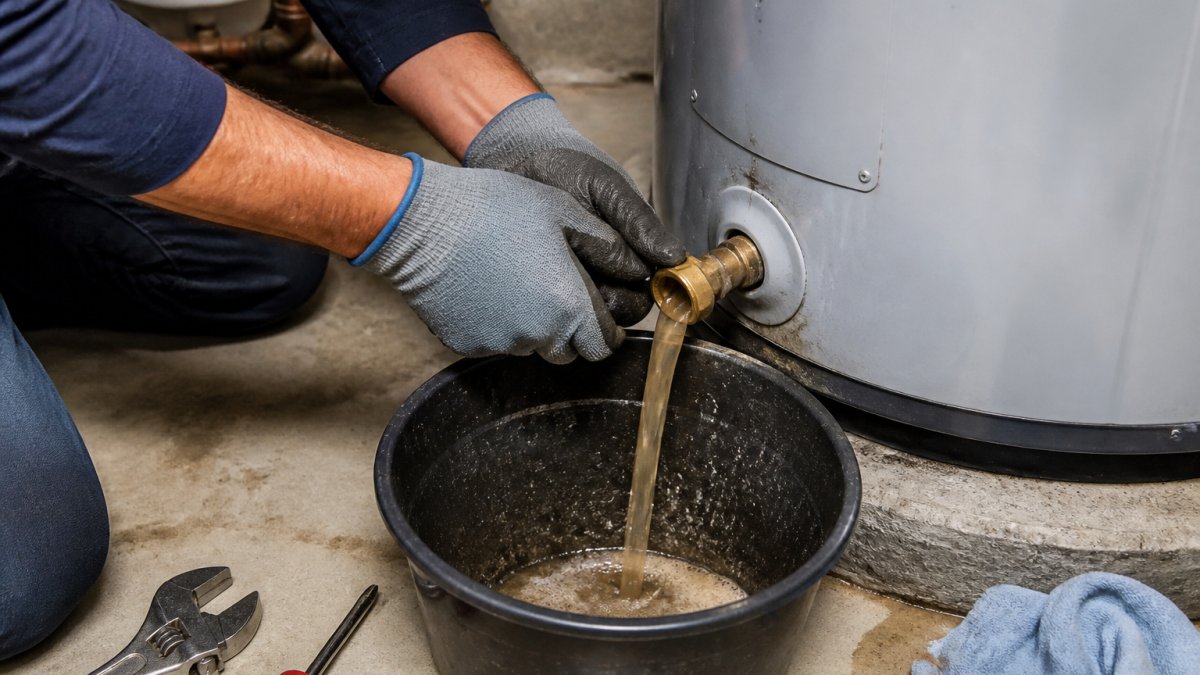
Flushing removes sediment and stops the popping. Plan for 30-60 minutes. Gather a garden hose, bucket, adjustable wrenches, work gloves, and flashlight. Turn off power (flip the breaker for electric heaters; set gas heaters to “Pilot”), then wait 30 minutes for the water to cool.
Step-by-Step Flushing for Electric Water Heaters
Step 1: Turn off power and let water cool
Flip the breaker. The water inside is very hot. Waiting a few minutes makes the work safer.
Step 2: Close the cold-water supply valve
Turn the valve at the top of the tank clockwise. This prevents new water from entering while you drain.
Step 3: Attach the garden hose to the drain valve
The drain valve sits at the tank’s lowest point.
Step 4: Open the drain valve
Turn the valve handle counterclockwise. The first water may be brown or cloudy, that’s sediment leaving.
Clear water from the drain means most sediment is gone. This is the most important step in the entire process.
Step 5: Close the drain valve and refill
Once the water runs clear, close the drain valve by turning it clockwise. Disconnect the hose and open the cold-water supply valve.
Step 6: Turn power back on
Flip the breaker back on. Wait 15-20 minutes before using hot water.
Step-by-Step Flushing for Gas Water Heaters
Step 1: Turn off the gas and let water cool
Set the control dial to “Pilot.” Wait 30 minutes for the water to cool.
Step 2: Close the cold-water supply valve (1 minute)
Turn the valve at the top of the tank clockwise. This stops new water from entering.
Step 3: Attach the garden hose to the drain valve
Step 4: Open the drain valve and let water flow
Turn the handle counterclockwise.
Step 5: Close the valve and refill (5 minutes)
Turn the drain valve clockwise to close it. Disconnect the hose. Open the cold-water supply valve.
Step 6: Turn the gas back to normal
Set the control dial back to your desired temperature (usually 120 degrees).
Signs Your Water Heater Is Failing
Watch for these red flags: rusty water from the hot tap (tank interior corroding), leaking water around the base (requires immediate replacement), no hot water at all (heating element failure or complete sediment blockage), age over 10-12 years (replacement may be more cost-effective), constant popping after flushing (tank may be severely corroded), or pressure relief valve leaking continuously (internal pressure too high).
Other Noises That Sound Like Popping
Different sounds indicate different problems. Use this diagnostic guide to identify the noise and determine whether to flush, call a professional, or take urgent action.
Sound-Based Diagnostic Guide
Popping or Cracking (Sharp, Rhythmic)
- Most likely cause: Sediment trapping water under the heating element
- Action needed: Flush the tank within 2-4 weeks. This is the most common and fixable issue.
Rumbling or Rolling (Deep, Continuous)
- Most likely cause: Sediment in a gas water heater or heavy sediment in an electric heater
- Action needed: Flush the tank. Rumbling indicates thicker sediment than popping alone.
Banging or Loud Knocking (Violent, Intermittent)
- Most likely cause: Severe sediment buildup or water hammer (pressure surge in pipes)
- Action needed: If sediment-related, flush immediately. If water hammer, you may need a pressure-reducing valve or water hammer arrestor installed by a plumber.
Ticking or Crackling (Rapid, High-Pitched)
- Most likely cause: Thermal expansion of the tank metal or light sediment causing small steam bubbles
- Action needed: If thermal expansion, it’s harmless. If accompanied by popping, sediment is likely present and flushing may help.
Hissing or Whistling (Continuous or Intermittent)
- Most likely cause: Pressure relief valve releasing excess pressure, a partially closed valve, or a small leak inside the tank
- Action needed: Check that all valves are fully open. If hissing continues, call a professional immediately, the tank may be under excessive pressure.
Screeching or High-Pitched Squealing (Loud, Sustained)
- What it sounds like: A loud, sustained squeal or screech, often from the pipes rather than the tank itself
- Most likely cause: Water pressure is very high (above 80 PSI), a valve is failing, or sediment is blocking water flow and creating friction
- When it happens: When you use hot water or during the heating cycle
- Action needed: Call a professional. This is not a DIY fix. High pressure can damage your entire plumbing system.
- Urgency: High. Do not ignore screeching.
Diagnostic Decision Tree
Step 1: When does the noise occur?
- During the heating cycle (heater actively warming water) → Likely sediment or thermal expansion
- When you turn off hot water suddenly → Likely water hammer or pressure issue
- Continuously or randomly → Likely a valve or pressure relief issue
Step 2: What does the noise sound like?
- Sharp, rhythmic popping → Sediment in electric heater or moderate sediment in gas heater
- Deep rumbling → Sediment in gas heater or heavy sediment in electric heater
- Violent banging → Severe sediment or water hammer
- Hissing or whistling → Pressure relief valve or high pressure
- Ticking or crackling → Thermal expansion or light sediment
- Screeching → High pressure or valve failure
Step 3: What type of heater do you have?
- Electric → Popping and sharp sounds are most common; flushing usually solves it
- Gas → Rumbling and banging are most common; flushing usually solves it
- Tankless → Popping is rare; if you hear it, call a professional (see section below)
Step 4: What action to take?
- Sediment-related (popping, rumbling, banging) → Flush the tank within 2-4 weeks
- Pressure or valve-related (hissing, whistling, screeching) → Call a professional immediately
- Thermal expansion (ticking) → Monitor; flushing won’t hurt but may not solve it
- Water hammer (banging when faucet closes) → Call a plumber for pressure valve installation
Tankless Water Heater Noises
Tankless water heaters rarely make popping sounds because they don’t store water or allow sediment to accumulate in the same way. However, they can still make noise:
- Popping or banging in a tankless heater usually indicates sediment has entered the heat exchanger, a more serious problem. Call a professional for descaling.
- Humming or vibration is normal in some tankless models and usually harmless.
- Whistling or high-pitched sounds may indicate high water pressure or a failing component. Call a professional.
If your tankless heater is making unusual noises, professional inspection is recommended sooner rather than later, as repairs are more complex than tank-style heater maintenance.
If you hear hissing, whistling, screeching, or violent banging, or if the noise is accompanied by leaking water, gas odor, or loss of hot water, stop using the heater and call a professional immediately. Do not attempt to diagnose or fix these issues yourself.
When to Call a Professional Plumber
Some situations require professional help. Knowing when to call saves time and prevents mistakes.
Call a professional if:
You’re uncomfortable draining hot water or working with plumbing connections.
The drain valve won’t open or is stuck.
You see rust or corrosion on the tank exterior. This means internal damage is likely severe.
Water is leaking from the tank or connections. Leaks worsen quickly and can damage your home.
The popping continues after flushing. This suggests the tank itself is failing.
Your heater is over 12 years old. Replacement may be safer and more efficient than repair.
At CW Plumbing, we handle everything from simple flushes to complete replacements.
Homeowners who want professional peace of mind without the DIY risk, or anyone dealing with a heater that’s more than 10 years old and showing multiple warning signs.
Preventing Water Heater Popping in the Future
Once you’ve flushed your heater, maintenance prevents the problem from returning.
Flush annually if you have hard water. Hard water builds sediment faster.
Keep the temperature at 120 degrees. Lower temperatures reduce sediment formation and save energy.
Install a water softener if your water is very hard. Softeners remove minerals before they enter the tank.
Have a professional inspect the anode rod every 2-3 years. The anode rod sacrifices itself to prevent tank corrosion.
Don’t ignore warning signs. Popping, rumbling, or discolored water means action is needed. Address it within weeks, not months.
Regular maintenance costs far less than emergency replacement.
Frequently Asked Questions
Is a water heater popping noise a sign of danger?
Popping noises usually indicate sediment buildup rather than immediate danger, but they shouldn’t be ignored. When sediment traps water beneath it on the tank bottom, heating creates steam bubbles that pop when they escape. This reduces efficiency and can accelerate tank corrosion over time. If popping is accompanied by leaking, rust stains, or water pooling around the base, call a professional immediately. A professional inspection can determine whether your tank needs flushing or replacement.
How do I know if my water heater is failing?
Beyond popping noises, watch for rust-colored water from hot taps, visible corrosion on the tank exterior, reduced hot water supply, leaking from the drain valve or tank seams, and a rotten-egg smell indicating anode rod deterioration. If your water heater is over 10-12 years old and showing multiple signs, replacement is often more cost-effective than repair. A professional inspection using advanced diagnostics can confirm whether repair or replacement is the right choice for your situation.
Should I flush my water heater if it’s making popping noises?
Yes, flushing is usually the first step to address popping caused by sediment. Draining the tank removes mineral deposits and calcium buildup that trap water and create steam bubbles. For electric heaters, turn off power and the cold-water supply before opening the drain valve. For gas heaters, set the thermostat to pilot mode first. If you’re uncomfortable with the process, a professional can flush your tank quickly and safely, often improving heating efficiency and extending tank life.
What’s the difference between popping and other water heater noises?
Popping typically sounds like small explosions or firecrackers and signals sediment or steam issues. Banging or knocking usually means water pressure problems or pipe expansion. Rumbling suggests heavy sediment buildup. Ticking often indicates thermal expansion in the pipes. Hissing points to a failing temperature-pressure relief valve. If you’re unsure which noise your heater is making, record it and have a professional listen, they can diagnose the cause and recommend the right fix.
If your water heater is popping and you’d rather have a professional handle it, CW Plumbing is here to help. We serve Pinellas County with expert diagnostics, efficient flushing, and full replacements when needed. Whether it’s routine maintenance or an urgent repair, our team delivers reliable service you can trust. Book an appointment with us today and get back to reliable hot water.