


Book An
Appointment
Lorem ipsum dolor sit amet, consectetur adipiscing elit, sed do eiusmod tempor incididunt ut labore et
Our Services
Last Updated: November 5, 2026
Quick Summary
Hiring a professional plumber for renovations means hiring for rough-in work, not a simple repair call: new supply lines, drain routes, venting, and shutoff locations sized for your planned fixtures. Ask about licensing, insurance, permit handling, rough-in experience, and who performs the work, and get a written scope before you commit.
- Rough-in plumbing goes in before drywall, tile, or cabinets cover it and should be pressure-tested first.
- A written estimate should separate labor, materials, fixtures, permit fees, and contingency.
- Plumbing permits are generally required when you add, relocate, or replace pipes, drains, or fixtures.
- A renovation typically needs a rough-in inspection before walls close and a final inspection after fixtures go in.
- Walk away from any plumber who asks for full payment upfront, refuses to pull a permit, or cannot produce a license number.
Table of Contents
- Why Renovation Plumbing Is Different From a Repair Call
- Questions to Ask a Plumber Before Hiring
- How to Read a Plumbing Renovation Estimate
- Plumbing Permits for Home Renovations in Pinellas Park
- The Renovation Plumbing Timeline, Phase by Phase
- Coordinating Your Plumber With Contractors and Other Trades
- Red Flags That Should Stop You From Hiring
- Book a Renovation Consultation With CW Plumbing
- Frequently Asked Questions
Why Renovation Plumbing Is Different From a Repair Call
Hiring a professional plumber for renovations is a different job than calling a professional plumber out for a leak. A repair call fixes what broke.
Homeowners across Pinellas County often call expecting the same hourly visit they had for a running toilet, then learn the project needs design decisions, inspections, and trade coordination.
Rough-in work is the core difference. In a repair, the pipes already exist and the plumber works around them.
What Rough-In Work Actually Involves
Rough-in plumbing is the stage where pipes and fittings go in before drywall, tile, or cabinets cover them. It includes running hot and cold supply lines to each fixture, routing drain and vent lines through the framing, setting the shower valve and toilet flange at the right height, and pressure-testing the assembly before anyone closes a wall.
Get rough-in wrong and the fix means demolition, which is why this phase deserves the most scrutiny.
Questions to Ask a Plumber Before Hiring
Ask about licensing, insurance, permit handling, rough-in experience, and who actually performs the work. A plumber who hesitates on any of those five is not the right fit for a renovation.
- Are you licensed in Florida, and can I verify the license number?
- Do you carry general liability insurance and workers’ compensation?
- Will you pull the plumbing permit, or is that on me?
- Who does the rough-in: your crew or a subcontractor?
That last question matters more than most people realize. Homeowners should also understand Florida’s plumbing license requirements so they can check credentials rather than take a business card at face value.
How to Read a Plumbing Renovation Estimate
A plumbing renovation estimate should separate labor, materials, fixtures, permit fees, and contingency. A lump-sum bid with no breakdown is a warning sign: you cannot compare what you cannot see.
Watch for these line items in any estimate you receive:
| Line Item | What It Should Show | Why It Matters |
|---|---|---|
| Rough-in labor | Hours or fixture count | Reveals whether the bid covers the hard part |
| Materials | Pipe type, fittings, valves | Cheap materials surface as failures later |
| Fixtures | Allowance or exact model | A vague allowance invites surprise upgrades |
| Permit fees | Separate line | Confirms the plumber plans to pull a permit |
| Contingency | Stated percentage | Honest bids admit surprises happen |
| Change-order rate | Hourly or per-item | Tells you what a mid-project change costs |
Pricing depends on scope, fixture count, and what the walls reveal once they open. Our 2026 bathroom remodel plumbing cost guide walks through rough-in, fixture, and labor factors before you budget.
What Actually Drives the Number
Renovation plumbing cost is a stack of decisions, each one moving the total:
- Fixture count and type. A half bath with a toilet and sink needs far less pipe and venting than a full bath with a double vanity, shower, and freestanding tub.
- Distance from existing stacks. The farther a new fixture sits from the main soil stack and vent, the more pipe, fittings, and framing penetrations the job requires.
- Pipe material and condition. Older supply lines may need replacement during a remodel, and upgrading pipe material changes both material cost and labor time.
- Wall and floor access. A bathroom over a crawlspace or unfinished basement is easier to plumb than one over a finished ceiling. Opening and repairing drywall, tile, or concrete adds cost outside the plumbing line itself.
Comparing Written Bids and Project Scope
Compare bids line by line, not by the bottom number. A lower total that excludes permit fees, fixture installation, or drywall repair is not actually lower.
- Allowances. If a bid carries a fixture allowance that is lower than the fixture you choose, you pay the difference. Ask whether the allowance is a cap or an estimate, and whether unused allowance is credited back.
- Exclusions. Look for language like “does not include drywall repair,” “does not include relocation of drain,” or “does not include tile.” Exclusions are where a cheap bid hides its real cost.
- Change-order terms. Confirm the hourly rate or per-item price for changes, and whether there is a minimum charge.
- Timeline and payment schedule. A bid should state start and completion expectations and tie payments to milestones, not to a calendar. Full payment upfront is a red flag covered later in this guide.
- Warranty. Ask what is covered, for how long, and whether it covers labor as well as materials.
The cheapest bid often wins the job and loses the homeowner money. Scope gaps become change orders, and change orders cost more than the original line item would have.
Watch out: a bid that lists a fixture allowance without naming the model or a price cap is not a fixed price, and the difference lands on your final invoice.
Plumbing Permits for Home Renovations in Pinellas Park
Plumbing permits for home renovations are generally required when you add, relocate, or replace pipes, drains, or fixtures; confirm requirements with the local building department.
Pinellas Park sits within Pinellas County, and permitting runs through local building departments with state code requirements layered on top. Requirements vary by project type, so confirm specifics with the authority having jurisdiction before work starts.
Two inspections usually apply to a renovation: a rough-in inspection before walls close, and a final inspection after fixtures go in. Ask your plumber who schedules each one. If the answer is “you do,” get that in writing.
The Renovation Plumbing Timeline, Phase by Phase
A typical bathroom or kitchen plumbing renovation moves through five phases: planning, demolition, rough-in, inspection, and fixture installation. Each depends on the one before it, and delays compound. Knowing the sequence helps you spot a project going sideways before it costs you.
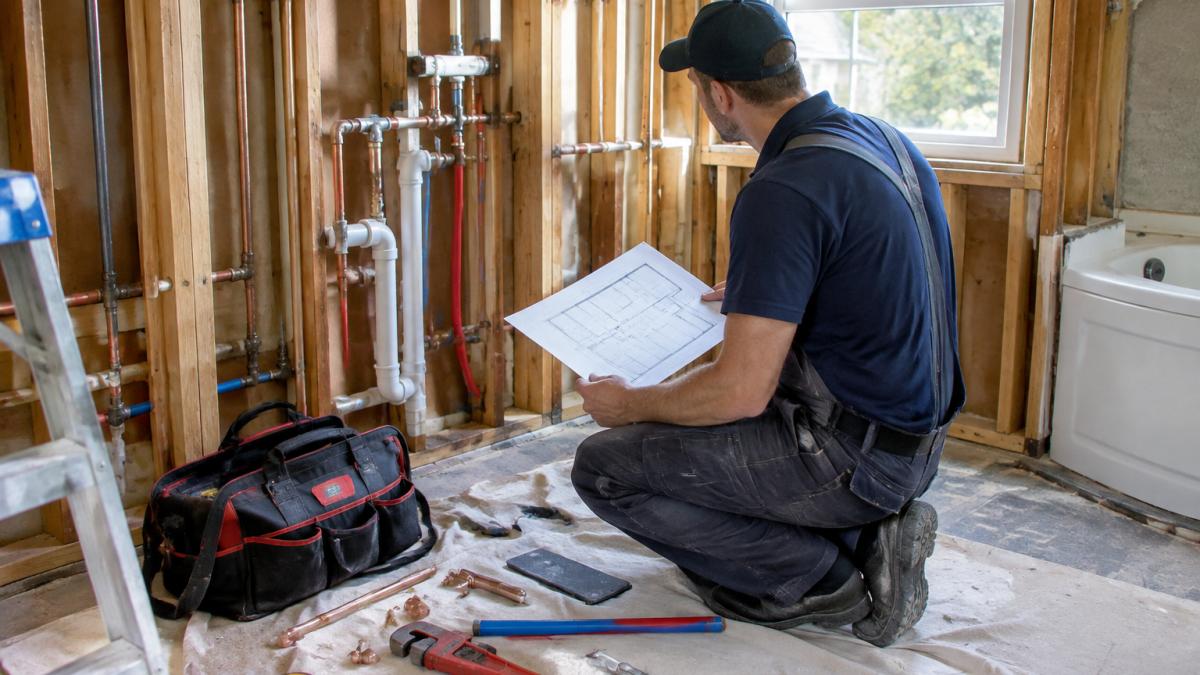
Phase one is planning and permitting, where fixture selections get locked and the permit gets pulled. Phase two is demolition, which often reveals surprises like old galvanized pipe or water damage. Phase three is rough-in.
The most common timeline killer is fixture selection arriving late. A plumber cannot rough-in a shower valve without knowing which valve. Pick fixtures before demolition begins, not after.
How the Phases Interlock With Other Trades
The phase list only helps if you understand who else is waiting on each step. Renovation plumbing is a relay, and the plumber is rarely the only runner.
- Planning and permitting. The plumber, designer, and general contractor agree on fixture locations and drain routes. The permit application usually needs fixture specifications, so selections have to be made here.
- Demolition. The plumber may need to cap or reroute live lines before the crew tears out cabinets, tub, or tile. Confirm who shuts off water and who disconnects old fixtures.
- Rough-in. Supply and drain lines go in, the shower valve gets set, and the toilet flange is positioned. The electrician often wants the same wall cavities, so the general contractor has to sequence plumbing and electrical rough-in before insulation and drywall.
- Inspection. The rough-in inspection must pass before drywall, backer board, or tile covers the work. The plumber typically schedules this with the local building department. Build that wait into the schedule.
- Fixture installation and final inspection. Tile and cabinets go in first, then the plumber sets the toilet, sink, faucets, and shower trim. A final inspection confirms the finished work before the project closes out.
A common pattern is tile setters and cabinet installers arriving before the rough-in inspection passes, forcing someone to tear out finished work to expose the pipes. Hold a short coordination call before each phase to confirm who is on site, what has to be finished, and what inspection is pending.
Where the Schedule Usually Breaks
Most renovation delays are not plumbing failures but sequencing failures:
- Fixtures ordered after rough-in begins, forcing the plumber to guess or wait.
- The electrician and plumber scheduled the same day in the same wall.
- The rough-in inspection not scheduled until the drywall crew is already booked.
- A change order that moves a drain after inspection, requiring a re-inspection.
If you are acting as your own general contractor, keep a simple written schedule that lists each trade, each inspection, and the date the next trade can start. Our kitchen remodel plumbing planning guide covers how the trades interlock on a kitchen project specifically.
Coordinating Your Plumber With Contractors and Other Trades
Your plumber must coordinate with the general contractor, electrician, and tile setter, or the schedule falls apart.
Whoever runs the project needs a single schedule everyone follows. On a kitchen remodel, the plumber typically needs the old cabinets out before rough-in and the new cabinets delivered only after inspection passes.
If you are acting as your own general contractor, hold a short coordination call before each phase.
Red Flags That Should Stop You From Hiring
Walk away from any plumber who asks for full payment upfront, refuses to pull a permit, or cannot produce a license number. Those three signals point to someone who will not be accountable when the inspection fails or the pipe leaks behind the new tile.
Other warning signs worth taking seriously:
- A bid far below every other bid, with no explanation
- Pressure to skip the permit “to save time”
- No written contract or scope
- No physical business address
- Reluctance to name who will do the rough-in
Insurance is not paperwork theater. The reasons to hire only licensed plumbing contractors go beyond legality; they are the reasons a renovation stays insured and inspectable.
Book a Renovation Consultation With CW Plumbing
Renovation plumbing rewards planning and punishes shortcuts. Homeowners who come out ahead ask hard questions before signing, compare written bids line by line, and insist on permits and inspections at every stage.
CW Plumbing is a family and locally owned business serving residential and commercial clients throughout Pinellas County, including Pinellas Park. If you are planning a kitchen or bath renovation, explore our remodeling services and see how we approach the work.
Call CW Plumbing to schedule a consultation, get a written scope, and start your renovation with the plumbing planned before the first wall opens.
Frequently Asked Questions
When should I hire a plumber for a renovation?
Bring a plumber in during the planning stage, before walls close up or cabinets are ordered. Rough-in work has to happen before drywall, tile, and fixtures go in, so a plumber who sees the plans early can flag pipe routing problems, drain slope issues, and venting conflicts while changes are still cheap. Waiting until demolition starts often means paying to redo framing or relocate a drain after the fact.
What plumbing work requires a permit in Pinellas Park?
Anything that changes the plumbing system typically needs a permit: new or relocated drain lines, water supply reroutes, water heater replacement, and fixture additions during a remodel. Cosmetic swaps like a faucet or toilet in the same location often do not. Because the rules depend on the specific scope, confirm the requirements with the local building department before work begins.
How can I verify a plumber’s license in Florida?
Florida licenses plumbing contractors through state regulators, and local registration may also apply. Ask for the license number, then look it up yourself rather than relying on a logo on a truck. Confirm the license is current and covers the type of work being done. Also request a certificate of insurance showing general liability and workers’ compensation, and call the insurer to verify it is active.
Should a plumber provide a written estimate for renovation work?
Yes, and it should go beyond a single total. A usable plumbing renovation estimate lists fixtures and materials by line item, separates labor from parts, states what happens if hidden problems turn up behind a wall, and names the payment schedule. Compare two or three written bids on scope, not just price. A bid that is far below the others usually means something was left out, not that you got a deal.
